
|
Getting your Trinity Audio player ready...
|
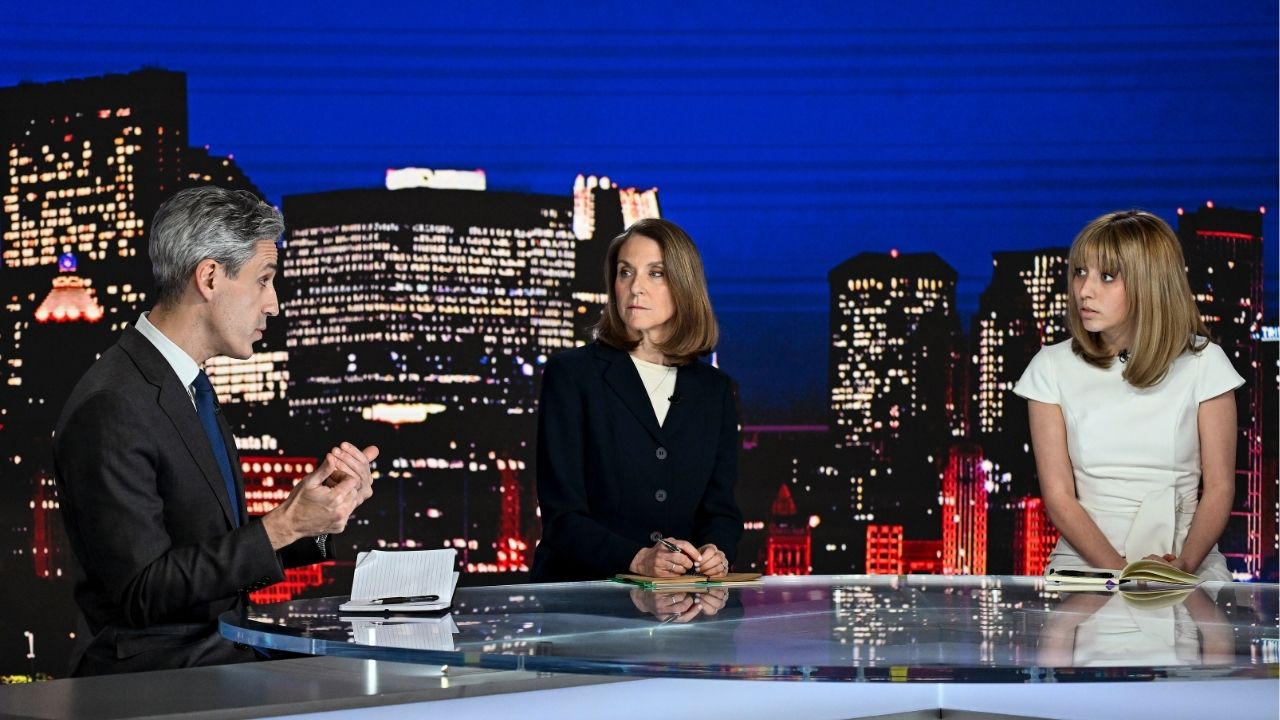
The televised debate for an open House seat in the Chicago area was zipping along smoothly, even politely, until the moderator turned from health care, housing and immigration to the knottiest issue of the campaign, the American Israel Public Affairs Committee.
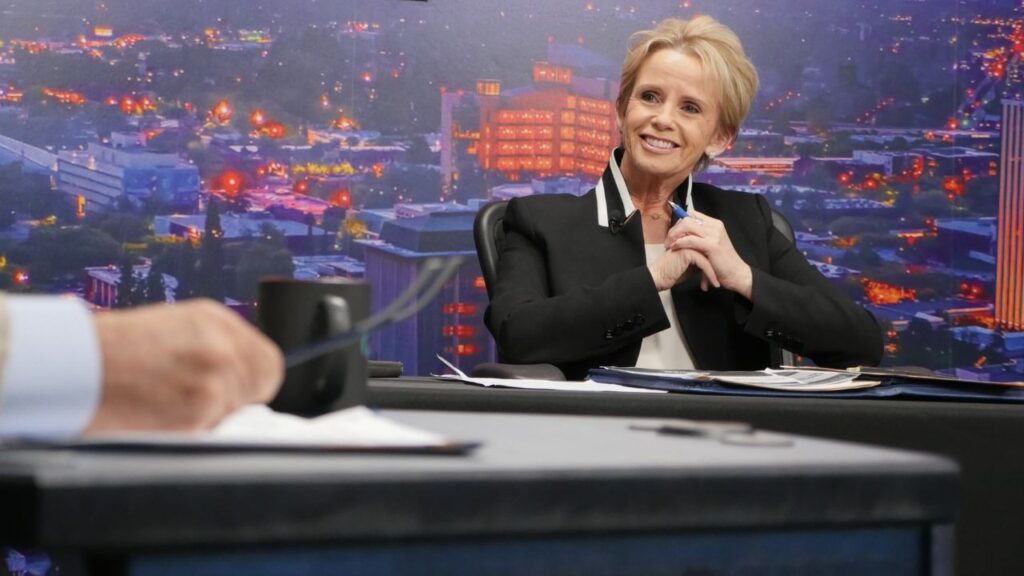
“It’s dark money,” Laura Fine, an Illinois state senator, said last week, struggling to explain how she had received hundreds of thousands in donations from super political action committees tied to AIPAC. “Our campaign does not coordinate.”
One of her opponents, Mayor Daniel Biss of Evanston, Illinois, shot back, “Your campaign is bankrolled by AIPAC and MAGA donors.” Then Kat Abughazaleh, a third candidate running to the left of Biss and Fine, jumped in to attack them for what she called “the lying, the bickering over who likes AIPAC more.”

AIPAC Becomes ‘Boogeyman’ for Democrats
AIPAC, the hard-line pro-Israel lobbying organization that once commanded bipartisan fealty, has increasingly become a boogeyman in Democratic circles, with scores of candidates distancing themselves from the group. Last month, Gov. Gavin Newsom of California, a likely 2028 presidential candidate, said he “never will” accept money from AIPAC.
Yet the group is inflaming at least four Democratic House races in and around Chicago in the final days before the primary March 17.
Nowhere is the divide sharper than in the 9th District, a crooked finger that stretches from the Chicago lakefront through suburbs north and northwest of the city, a heavily Democratic and highly educated area with many historically Jewish communities. While AIPAC has rarely been involved in a race with dueling Jewish candidates, this one, with Fine and Biss, is an exception.
And the differences between them, on AIPAC and on Israel, mirror some of the divisions tearing through the wider Jewish community.
Neither AIPAC nor its official super PAC, United Democracy Project, is officially involved in the district, which has been represented by a Jewish Democrat for 61 years — either Sidney R. Yates, starting in 1965, or the now-retiring Rep. Jan Schakowsky, elected in 1998.
Patrick Dorton, a spokesperson for United Democracy Project, declined to comment on its involvement but in a statement said that “Anti-Israel candidates — whether they are on the far left or the far right — should be looking over their shoulder” and that the group would “seize opportunities” to defeat them. The United Democracy Project has amassed $96 million to spend in the 2026 midterms.
In the Chicago area, Elect Chicago Women and Affordable Chicago Now appeared suddenly, spending at least $10.9 million in the 9th District primary and two other Illinois districts with competitive Democratic primaries.
Both new PACs have ties to groups that work closely with AIPAC. The Biss campaign and J Street, a liberal Jewish organization that is more critical of Israeli leadership under Prime Minister Benjamin Netanyahu, have called them AIPAC front groups.
Whether the deluge of money funneled from the groups will help the candidates favored by pro-Israel donors, including Fine, or backfire and drive voters critical of Israel toward one of her opponents is an open question.
‘AIPAC Is Toxic’
“In the 9th District, AIPAC is toxic,” state Sen. Mike Simmons, a candidate in the race who is critical of Israel, said in an interview.
AIPAC created a super PAC in 2022 to shore up congressional support for Israel in elections and has intervened in the three Democratic House primary cycles since. But since the war in the Gaza Strip, Democrats have been increasingly hostile toward the group. Polls show that Democrats and independents are now more likely to be sympathetic toward Palestinians than Israelis.
On Tuesday, Democratic primary voters nominated a fierce critic of Israel, the Rev. Frederick Douglass Haynes III, for a heavily Democratic House seat in Dallas. And Newsom said this week that the United States should reconsider military aid to Israel, which he compared to an apartheid state.
Illinois’ governor, billionaire JB Pritzker, was once a major donor to AIPAC, but he said in an interview last week that he “walked away” from the group around 2015, when it began to veer to the right.
“I still believe it is significantly MAGA-influenced,” said Pritzker, a Democrat.
Last month in New Jersey, AIPAC poured funds into campaign ads attacking Tom Malinowski, a moderate Democratic House candidate who supported Israel but said that U.S. aid should not be unconditional. Instead of helping a more pro-Israel opponent, Tahesha Way, the attacks turned voters from Malinowski to a pro-Palestinian progressive, Analilia Mejia, who won the race.
Although unlikely, a similar dynamic is possible in Illinois’ 9th District. Ads attacking Biss as a hypocritical politician who cut Medicaid could drive voters not to Fine but to Abughazaleh, a fierce critic of Israel and another front-runner in the race.
In Chicago, the group has focused much of its ire on Biss, a grandson of Holocaust survivors who spent many of his childhood summers in Israel, where his mother was born, and whose nuanced views on the Middle East reflect those of many liberal Jews, said Jeremy Ben-Ami, the executive director of J Street, which is backing Biss with $100,000.
“This is a guy who can’t possibly be considered anti-Israel; he is the quintessential American Jew,” Ben-Ami said. “He is at the 50-yard line of Jewish Americans, and AIPAC doesn’t want them anywhere near policy.”
Exactly who is funding the attack ads in and around Chicago will not be known until well after the primaries, when the groups finally have to disclose their donors.
—
This article originally appeared in The New York Times.
By Julie Bosman and Jennifer Medina/Joshua Lott
c. 2026 The New York Times Company