

|
Getting your Trinity Audio player ready...
|
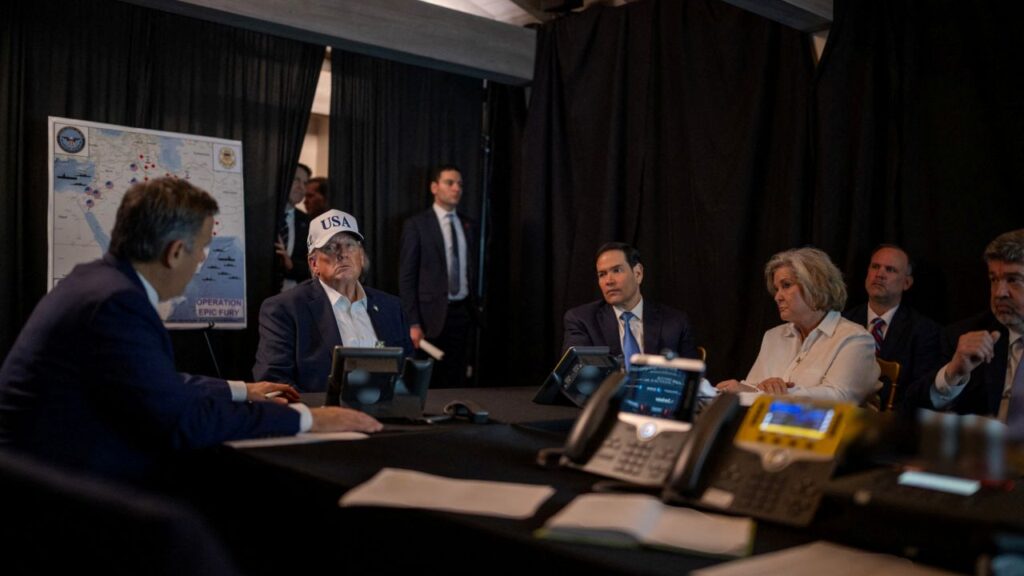
A defiant Iran unleashed deadly retaliatory strikes Sunday against Israel and the countries of the Persian Gulf, home to several U.S. military bases, in a conflict that has drawn in much of the Middle East and that critics say has no clear endgame.
Three U.S. troops were killed in action, the Pentagon said Sunday, the first Americans to die in President Donald Trump’s war with Iran. U.S. Central Command did not say where the troops were killed. At least nine people were killed in Israel, and amid fears of a wider conflagration, at least four people were killed in attacks across the United Arab Emirates, Kuwait, Qatar, Bahrain and Oman, according to official reports tallied by The New York Times.
Iran’s top national security official, Ali Larijani, announced that an interim committee would run the country until a successor to the ayatollah was chosen. He also said that the death of the ayatollah would not deter Iran, which he said would hit Israeli and U.S. targets “with a force they have never experienced before.” The supreme leader was killed in his home office in the U.S.-Israeli attack on Saturday, Tasnim, the Iranian news agency, reported.

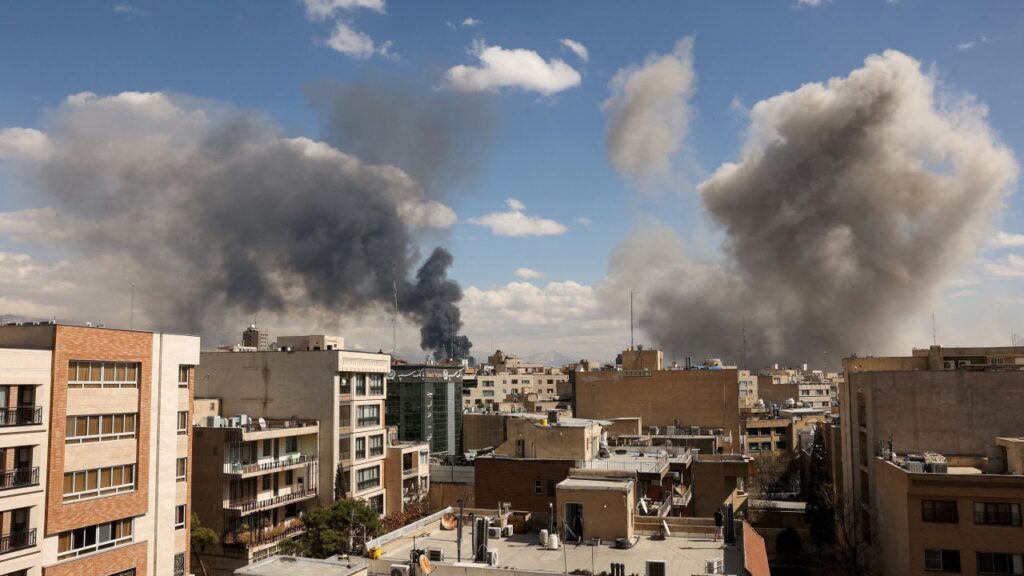
As the United States and Israel pressed on with their high-risk military campaign, the Israeli military said Sunday that its air force was again bombarding “the heart of Tehran.” Videos verified by The New York Times showed two huge plumes of gray and white smoke rising over Tehran, Iran’s capital, as airstrikes resumed.
After the United States and Israel launched strikes against Iran on Saturday, HRANA, an Iranian rights group based in Washington, said that at least 133 civilians had been killed and 200 others wounded. Iranian state media reported that dozens of children had been killed at a girls’ elementary school near a naval base. The U.S. and Israeli militaries did not comment.
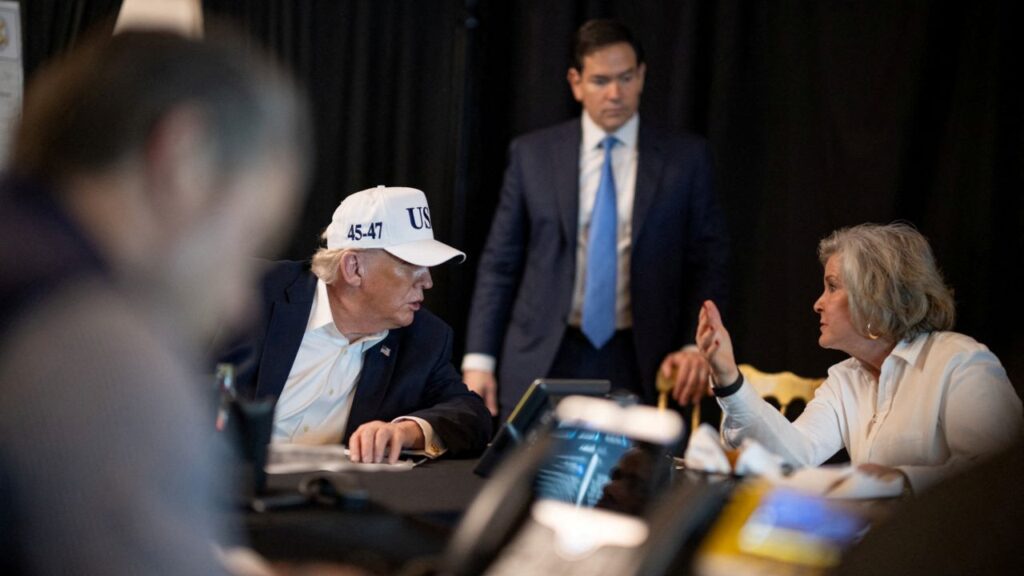
Across the region, many were still trying to understand the extent of the fallout from the stunning events since early Saturday, which began with a surprise U.S.-Israeli attack on Iran and led to Trump’s announcement that the ayatollah was dead.
While some ordinary Iranians celebrated the end of Khamenei’s authoritarian rule, his death also created deep uncertainty about Iran’s future. Israeli and U.S. officials are hoping the attacks on Iran’s leadership, military and missile program will degrade the country’s ability to fight back, but a more vulnerable Iran could also be more unpredictable.
What Else to Know
Here’s what else to know:
— American casualties: U.S. Central Command did not say where the three U.S. troops were killed, but it said that several other troops “sustained minor shrapnel injuries and concussions and are in the process of being returned to duty.” Two military officials said that an Army base housing U.S. troops in Kuwait was one of the many U.S. bases in the region that had been hit in retaliatory Iranian strikes.
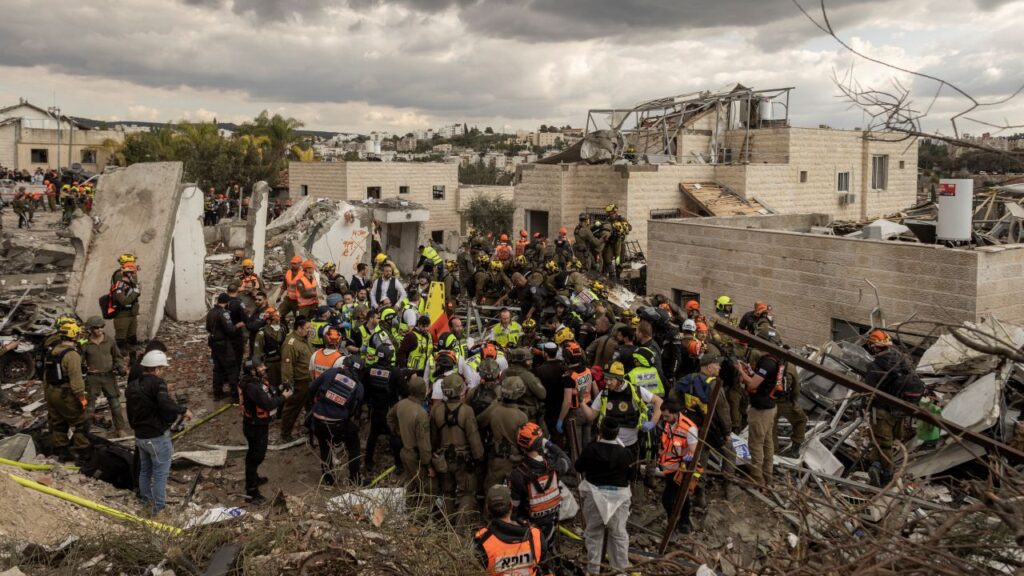
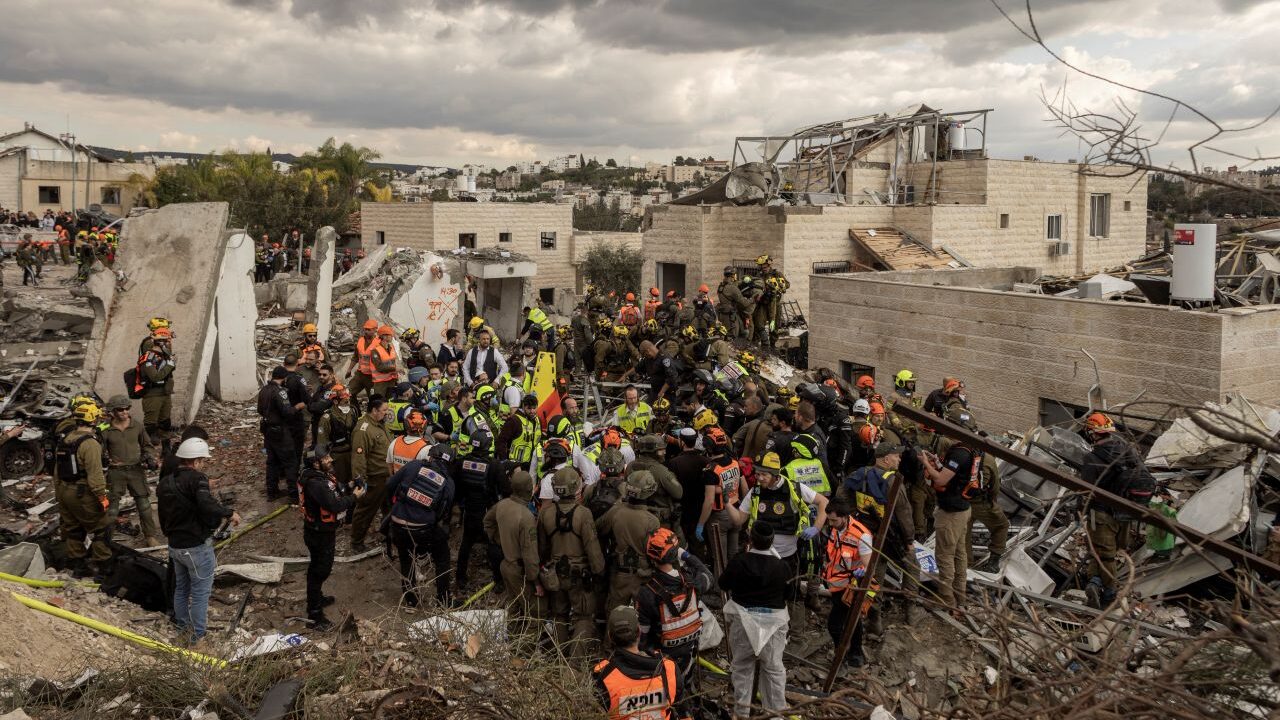
— Strikes in Israel: Iranian missile barrages repeatedly targeted Israel on Sunday, forcing much of the country into fortified shelters. The Israeli ambulance service said nine people were killed and nearly 30 others wounded in Beit Shemesh, a city about 18 miles west of Jerusalem, making it the worst casualty event in Israel since the conflict started.
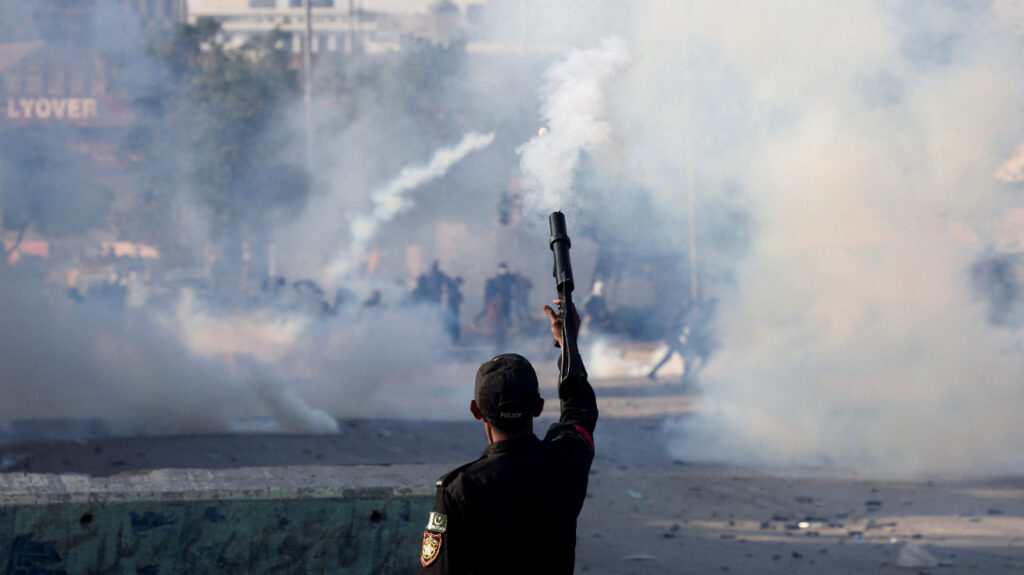
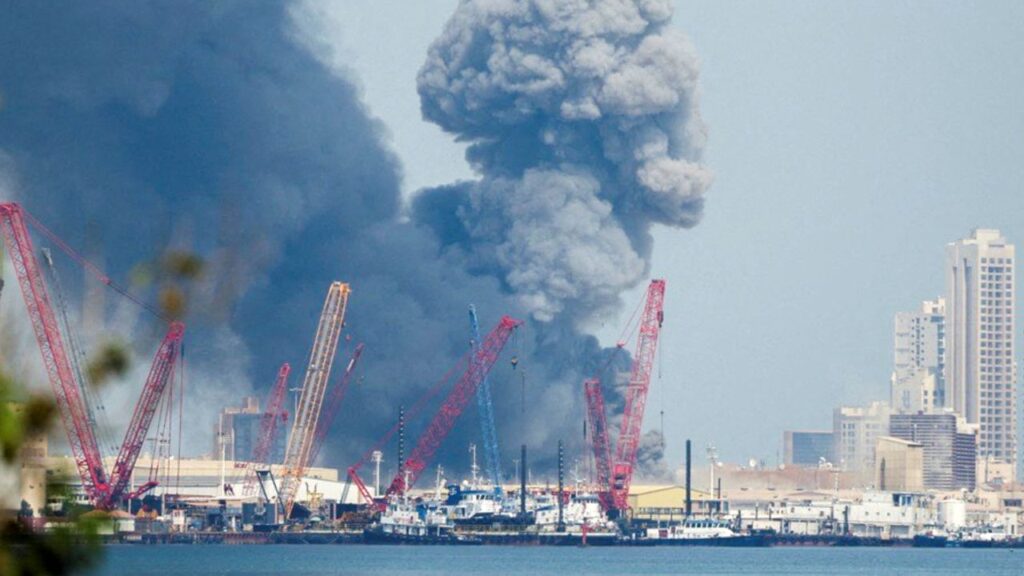
— Attacks in the Persian Gulf: Iran’s assaults on Gulf countries were shaking the region’s image as a safe haven. In Dubai, the largest Emirati city and the business and tourism capital of the Middle East, five-star hotels caught fire, explosions shattered the windows of apartment towers, and social media influencers shared videos of fiery projectiles streaking past the city’s iconic skyscrapers.
— Iranian succession: The strikes killed several other senior Iranian figures in addition to the supreme leader, Iranian state media said. The power to choose a new supreme leader rests with the Assembly of Experts, a conservative body of clerics. In the meantime, Iran’s president, the head of the judiciary and a jurist of the clerical Guardian Council will be in charge.
— Shipping impacts: The fighting has shut down shipping through the Strait of Hormuz, the conduit for one-fifth of the world’s oil supply, according to shipping companies and Tasnim, Iran’s semiofficial state media. Major airports, including Dubai International in the UAE, and a wide corridor of airspace were also closed.
— Oil prices: The eight oil-producing countries in the group known as OPEC+ said Sunday that they would increase oil production by 206,000 barrels a day in April, which could help mitigate the impact on oil prices of disrupted shipments in the Middle East.
This article originally appeared in The New York Times.
By Aaron Boxerman, Farnaz Fassihi, Zolan Kanno-Youngs and Ronen Bergman/Avishag Shaar-Yashuv
c.2026 The New York Times Company