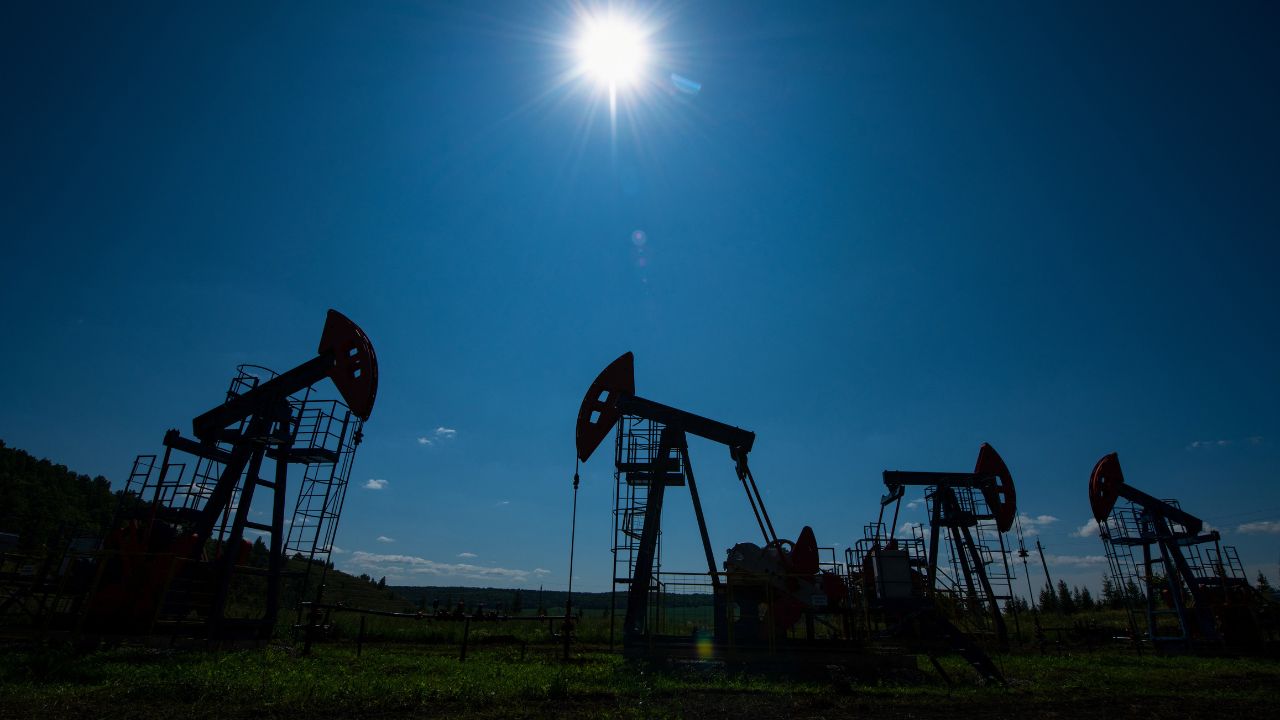
A view shows oil pump jacks outside Almetyevsk, in the Republic of Tatarstan, Russia July 14, 2025. (Reuters/Stringer)

Share
|
Getting your Trinity Audio player ready...
|
Oil prices were little changed near a seven-month high on Tuesday as traders waited for news from nuclear talks between the U.S. and Iran.
Brent futures fell 25 cents, or 0.4%, to $71.24 a barrel at 10:41 a.m. EST (1541 GMT), while U.S. West Texas Intermediate crude fell 25 cents, or 0.4%, to $66.06.
Earlier in the session, Brent was on track for its highest close since July 31 and WTI was on track for its highest close since August 1.
Iran and the U.S. will hold a third round of nuclear talks on Thursday in Geneva, Oman’s Foreign Minister Badr Albusaidi said on Sunday.
The United States wants Iran to give up its nuclear program, but Iran has adamantly refused, and denied it is trying to develop an atomic weapon.
Swiss bank UBS on Tuesday said it expects a modest decline in oil prices in coming weeks provided there is no escalation of tensions in the Middle East that could disrupt supply.
U.S. crude prices include a $3-$4 a barrel geopolitical risk premium because of tensions between the U.S. and Iran, the director of North Dakota’s Mineral Resources Department said on Monday. North Dakota is the third-largest oil-producing state in the country.
The U.S. State Department is pulling out non-essential government personnel and their families from the U.S. embassy in Beirut, a senior State Department official said on Monday, amid growing concerns about the risk of a military conflict with Iran, which, in turn, is close to a deal with China to purchase anti-ship cruise missiles, according to sources.
U.S. President Donald Trump’s first option with Tehran is always diplomacy but he is willing to use lethal force if necessary, his spokeswoman said on Tuesday as his top diplomat prepares to brief top congressional leaders on Iran later in the day.
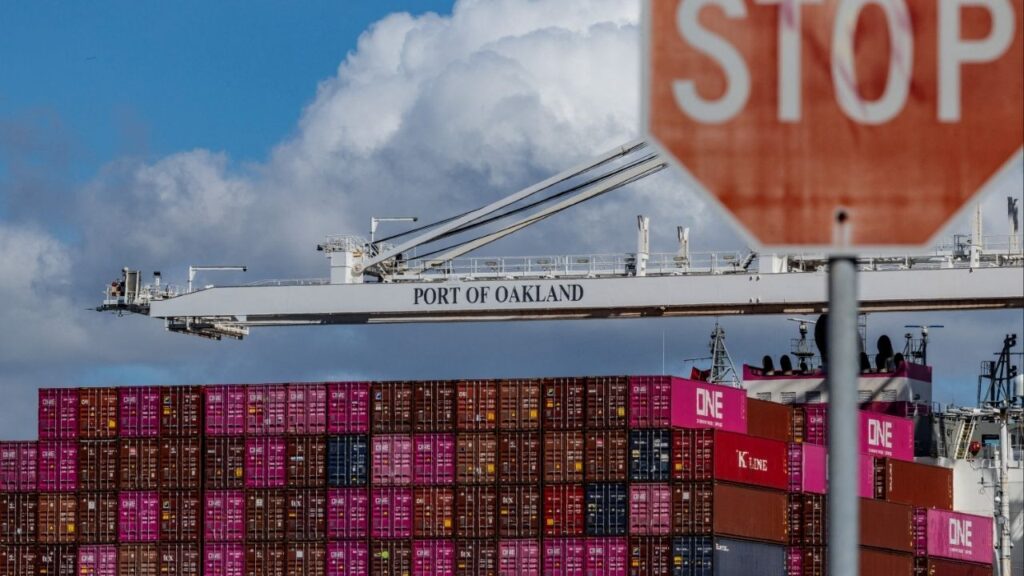
Meanwhile, the U.S. imposed a new tariff from Tuesday of 10% on all goods not covered by exemptions, the U.S. Customs and Border Protection said, rather than the 15% President Trump promised last week a day after announcing a 10% rate.
China, the second-biggest economy in the world behind the U.S., is closely monitoring U.S. policies and will decide “in due course” whether to adjust countermeasures to U.S. tariffs, a commerce ministry official said on Tuesday.
On the supply front, trading houses and buyers of Venezuelan oil have chartered the first very large crude carriers to export from the South American country since a Caracas-Washington supply deal began, which is set to speed up shipments from March while boosting deliveries to India, according to sources and data.
U.S. military forces seized a sanctioned oil tanker in the Indian Ocean after tracking it from Caribbean waters, the Pentagon said on Tuesday, adding that it was the third such interdiction in that region. The vessel was carrying crude from Venezuela that was bound for China, according to shipping reports from Venezuelan state company PDVSA.
US Oil Inventories
That lack of oil price movement also came as the market waited for direction from weekly storage reports from the American Petroleum Institute trade group later on Tuesday and the U.S. Energy Information Administration on Wednesday.
Analysts projected energy firms added 1.3 million barrels of crude to storage during the week ended February 20.
That compares with a decrease of 2.3 million barrels in the same week last year and an average increase of 3.1 million barrels over the past five years (2021-2025). [EIA/S] [API/S]
—
(Reporting by Scott DiSavino and Siddharth Cavale in New York and Shadia Nasralla in London, additional reporting by Trixie Yap in Singapore and Anushree Mukherjee in Bengaluru, editing by Jacqueline Wong, Muralikumar Anantharaman, Jan Harvey and Chizu Nomiyama)
RELATED TOPICS:
Categories

US Halts Plan for ICE Facility in New Hampshire, Governor Says

Ukraine Does Not Feel Abandoned by US Government, Envoy Says