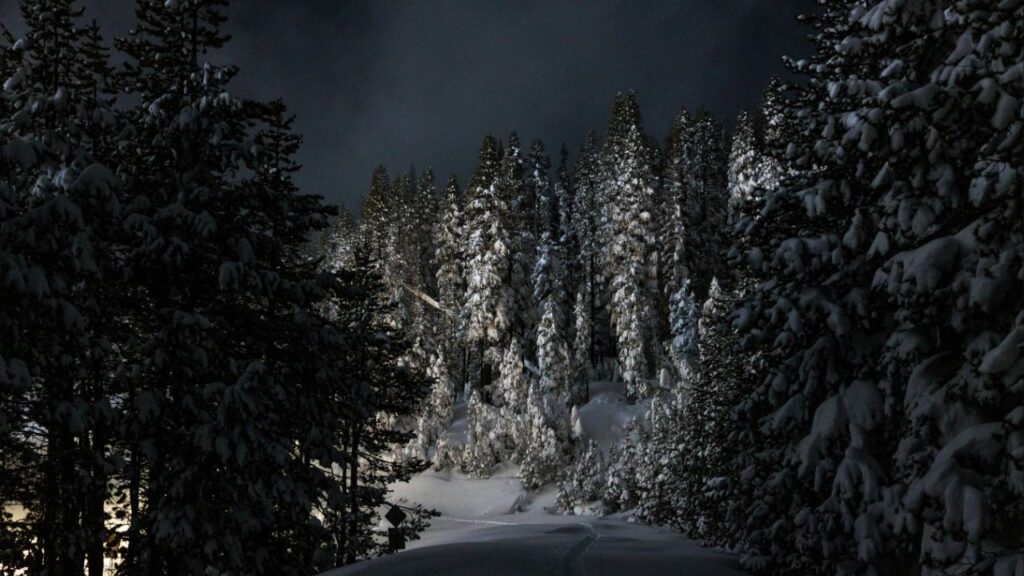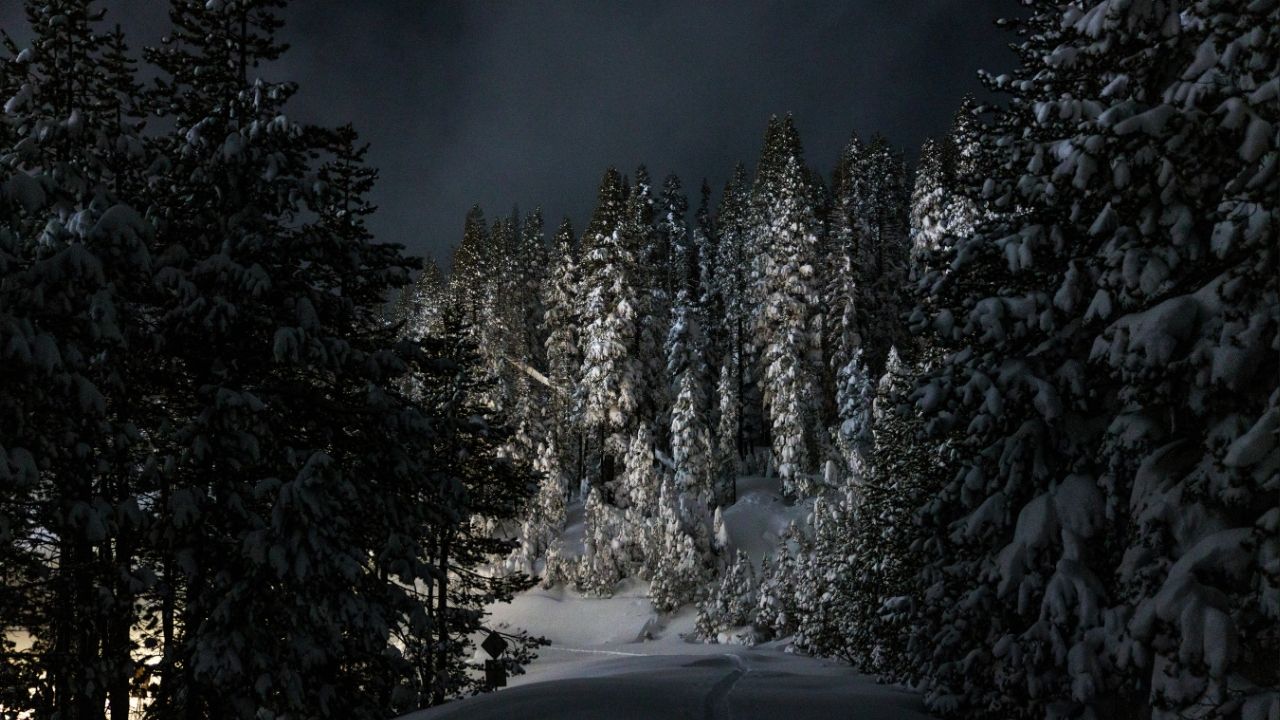
A snow-covered trail leading to Castle Peak, near Soda Springs, Calif., late Wednesday, Feb. 18, 2026. Eight skiers were killed and one other was presumed dead following an avalanche on Tuesday, the deadliest snow disaster in modern California history. Six were found alive. (Max Whittaker/The New York Times)

Share
|
Getting your Trinity Audio player ready...
|
As authorities begin to piece together what led to the deaths of at least eight people in an avalanche in the snowy backcountry near Lake Tahoe this week, the risks taken by the skiers and their guides — and who was responsible for fateful decisions — are likely to be a key area of inquiry.
California’s workplace safety agency, Cal-OSHA, said Thursday that it had opened an investigation into Blackbird Mountain Guides, the company whose guides were leading the group.
The Nevada County Sheriff’s Office said Friday that it had also begun investigating the disaster to determine if there could have been criminal negligence involved.
“It is a standard investigation,” Ashley Cuadros, a spokesperson for the sheriff’s office, said in an email. “It is too early to know if criminal charges will be applicable, as the investigation is preliminary and remains active and ongoing.”
Authorities Say 8 Have Died
Authorities have said that eight people died in the avalanche in the Sierra Nevada on Tuesday and that a ninth person is missing and presumed dead. Those nine included three experienced Blackbird guides, along with six of their clients, part of a group of mothers on the trip who knew one another and had skied regularly in the area.
Six other people in the party, including one other Blackbird employee, were rescued. The avalanche occurred near the end of the group’s three-day trip to a backcountry lodge known as the Frog Lake huts, near Castle Peak.
Authorities have not yet been able to return to the area to recover the bodies of those who died. Nevada County officials announced Friday that they were conducting aerial surveys to assess the avalanche site and determine if they might need to use explosives or other measures to prevent another avalanche before crews return. As of Friday afternoon, they had not yet sent search teams back in to find the bodies.
Authorities have released few details about what they believe occurred. However, forecasters and public safety officials had warned of a high risk of avalanches before the group began the trip, and additional warnings came during the trip itself.
Several experts and local officials cautioned that too little was yet known to assess whether Blackbird had been negligent.
Guides on Trip Were ‘Highly Trained’
In a statement Thursday, Blackbird said that the guides on the trip were highly trained. “It’s too soon to draw conclusions, but investigations are underway,” the company said.
The accident highlights the lack of regulation around backcountry skiing, whose participants are practicing a more dangerous form of the sport in remote areas, without the conventional avalanche control programs at resorts.
Beyond Cal-OSHA’s regulations for workplace safety, oversight of the mountain and the outdoor excursions on it is limited, said Larry Heywood, a longtime snow and ski safety consultant who has lived and worked for decades in North Lake Tahoe. The mountain itself is mostly on federal land, he said, and the huts where the skiers stayed were on private property owned by a land trust.
He added that the U.S. Forest Service requires guides who operate on public land to obtain special use permits, and those typically require the operators to maintain safety plans and certify that their employees have appropriate qualifications and training. Skiers who venture into wilderness areas mostly do so at their own risk.
“In winter, people go out in hazardous conditions all the time,” he said.
The avalanche occurred along a Castle Peak path that is rated as complex under an Avalanche Terrain Exposure Scale, which takes into account various risk factors, according to information provided by the Truckee Donner Land Trust, the operator of the huts where the skiers stayed.
The trust’s website also shows a separate, longer Johnson Canyon route that is rated as simple on the avalanche exposure scale, as well as a third path to the Donner Summit Rest Area that is rated as complex. The San Francisco Chronicle was first to report on the different routes, as well as the Nevada County investigation.
Experts Caution Investigators
Experts cautioned that it would be premature to conclude why the group and the guides chose the route they took Tuesday morning. There may have been mitigating factors that were considered or problems with other paths.
Heywood said that backcountry guides typically require clients to sign liability waivers before their excursions begin, but the waivers are legally flimsy and often don’t hold up in court.
He said it was clear that “this is going to be a really big lawsuit.”
“This was a guided group with a very experienced outfitter with very qualified guides,” he added. “This simply should not have happened if you’re following the protocols of ski mountaineering. We don’t know what led to this and what the decision-making process was yet. But something didn’t go right.”
Jeffrey L. Kaloustian, a lawyer who handles ski-related personal injury cases in Grass Valley, California, said that liability waivers could not insulate the mountain guides from claims of reckless conduct or gross negligence, which does have a higher legal standard. What would constitute recklessness remains to be seen, he said, but ignoring or dismissing the seriousness of the avalanche hazard or weather forecasts could make a difference.
Avalanches happen with some regularity, he said, and they are one of the inherent risks of skiing, even in an organized ski area.
“You hire a guide service, and you put the responsibility on the guide service of not just making sure that you are on the appropriate route to get from your starting point to your destination, but also to be assessing and mitigating risk along the way and making decisions,” said Kaloustian, who also was a professional ski patroller at Palisades Tahoe and a former instructor, course director and mountain guide.
The circumstances around the avalanche are likely to revive a decades-long debate in California over how to regulate access to the outdoors.
While it might seem obvious to close off a whole mountain or national forest when there is extreme danger, it doesn’t always work.
“There’s no gate big enough or net large enough,” said Kurt Summers, who was a member of the Orange County Mountain Rescue Team for 15 years. He said that prevention through education was the best course of action. By the time rescuers can be called, he added, it is often too late.
—
This article originally appeared in The New York Times.
By Christina Morales, Jill Cowan and Shawn Hubler/Max Whittaker
c. 2026 The New York Times Company
RELATED TOPICS:
Categories


How a Relaxed and Joyous Alysa Liu Won the Gold