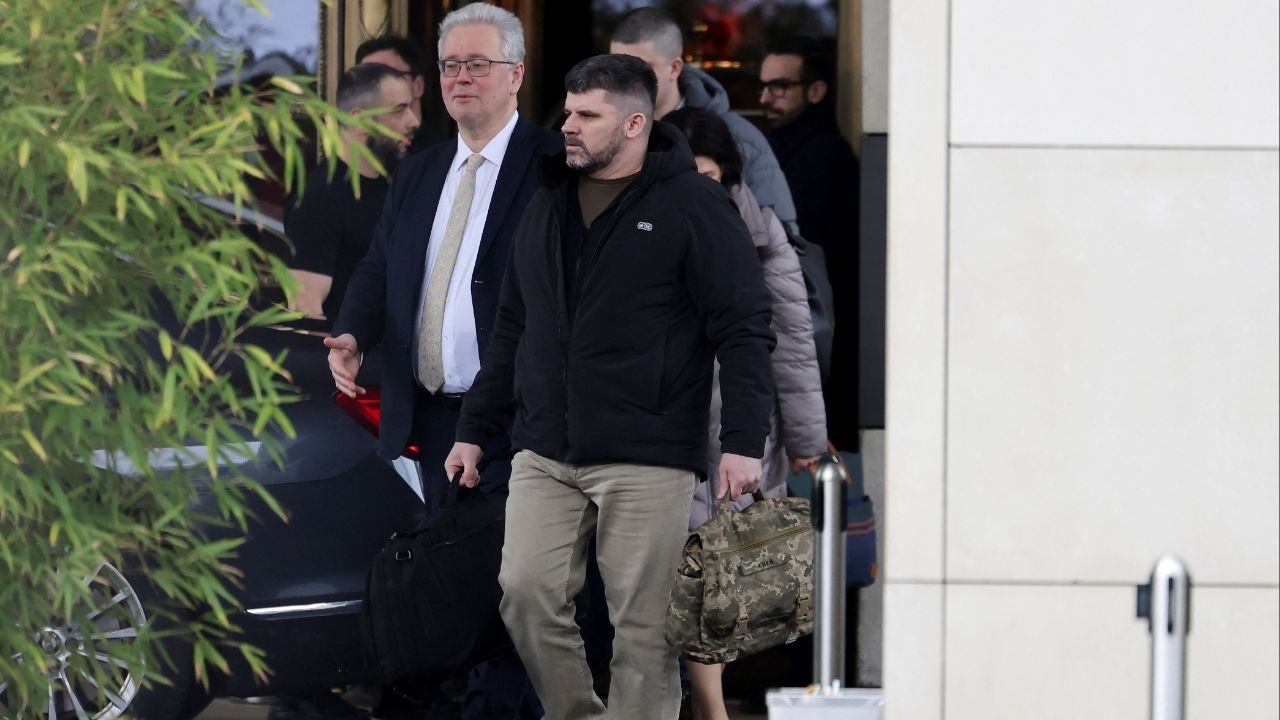
Ukrainian chief of the general staff Andrii Hnatov walks outside the InterContinental hotel on the day of U.S.-mediated peace talks between Russia and Ukraine, in Geneva, Switzerland, February 18, 2026. (Reuters/Pierre Albouy)

Share
|
Getting your Trinity Audio player ready...
|
Peace talks between Ukraine and Russia in Geneva ended on Wednesday after only two hours, with President Volodymyr Zelenskiy describing them as “difficult” and accusing Russia of deliberately delaying progress toward a deal to end the four-year-old war.
The two days of U.S.-mediated peace talks in Switzerland took place as U.S. President Donald Trump has twice in recent days suggested it was up to Ukraine and Zelenskiy to ensure the talks were successful.
“We can see that progress has been made, but for now, positions differ because the negotiations were difficult,” Zelenskiy told reporters in a WhatsApp chat shortly after talks concluded.
Rustem Umerov, the head of Kyiv’s negotiating team, said separately that the second day had been “intensive and substantive”. Both sides were working toward decisions that can be sent to their presidents, he said.
Russia’s chief negotiator, former culture minister Vladimir Medinsky, told reporters that further negotiations would be held soon, without specifying a date. Earlier on Wednesday, Zelenskiy had accused Russia of “trying to drag out negotiations that could already have reached the final stage”.
Ukrainian officials have routinely accused Moscow – which has carried out a winter bombing campaign against Ukraine’s energy system and pursued its battlefield offensive – of negotiating in bad faith.
Pressure From Trump
In an interview with U.S. website Axios published on Tuesday, Zelenskiy was quoted as saying that it was “not fair” Trump kept publicly calling on Ukraine, not Russia, to make concessions in negotiating terms for a peace plan.
Trump had told reporters on Monday that “Ukraine better come to the table fast. That’s all I’m telling you.”
Zelenskiy also said any plan requiring Ukraine to give up territory that Russia had not captured in the eastern Donbas region would be rejected by Ukrainians if put to a referendum.
“I hope it is just his tactics and not the decision,” Axios quoted Zelenskiy as saying in the interview.
Push for European Involvement
Ukrainian officials have been pushing for greater involvement of Kyiv’s European allies in the peace process, with Zelenskiy saying ahead of Wednesday’s talks it was “indispensable”. Leading European nations – including France, Germany and the UK – have been strong supporters of Kyiv’s stance.
The talks came just days before the fourth anniversary of Russia’s 2022 invasion of its much smaller neighbor. Hundreds of thousands of people have been killed, millions have fled their homes, and many Ukrainian cities, towns and villages have been devastated by the conflict.
Russia denies deliberately targeting civilians.
Russian Source Called Talks “Very Tense”
Umerov said on Tuesday that the first day of talks had focused on “practical issues and the mechanics of possible decisions,” without providing details. However, Russian news agencies quoted a source as saying that the Tuesday talks were “very tense” and lasted six hours in different bilateral and trilateral formats.
Ukrainian government bonds fell as much as 1.9 cents on the dollar in morning trade in Europe on reports of stalled progress at the talks.
Before the talks began, Umerov had played down hopes for a significant step forward in Geneva, saying the Ukrainian delegation was working “without excessive expectations”.
The Geneva meeting follows two rounds of U.S.-brokered talks in Abu Dhabi that concluded without a major breakthrough as the two sides remained far apart on key issues such as the control of territory in eastern Ukraine.
Russia occupies about 20% of Ukraine’s national territory, including Crimea and parts of the eastern Donbas region seized before the 2022 full-scale invasion. Its recent airstrikes on energy infrastructure have left hundreds of thousands of Ukrainians without heating and power during a harsh winter.
—
(Reporting by John Revill, Olivia Le Poidevin, and Ron Popeski; Editing by Michael Perry, Alexandra Hudson)
RELATED TOPICS:
Categories