
|
Getting your Trinity Audio player ready...
|
Oil prices were little changed on Tuesday as the market waited for direction from news on diplomatic relations between the U.S. and Iran, efforts to end Russia’s war in Ukraine and data on the U.S. economy and U.S. oil inventories.
Brent futures fell 16 cents, or 0.2%, to $68.88 a barrel at 1:44 p.m. EST (1844 GMT), while U.S. West Texas Intermediate (WTI) crude fell 31 cents, or 0.5%, to $64.05.
Traders are “hesitant to press either direction until there is a clearer signal from diplomacy, the next inventory prints, or any confirmation that supply flows are being materially affected rather than merely threatened,” analysts at energy consulting firm Gelber & Associates said in a note.

Nuclear talks with the U.S. allowed Tehran to gauge Washington’s seriousness and showed enough consensus to continue on the diplomatic track, Iran’s foreign ministry spokesperson said on Tuesday.
U.S. and Iranian diplomats held talks through mediators in Oman last week in an effort to revive diplomacy, after U.S. President Donald Trump positioned a naval flotilla in the region, raising fears of new military action.
“The market is still focused on the tensions between Iran and the U.S.,” said Tamas Varga, oil analyst at brokerage PVM. “But unless there are concrete signs of supply disruptions, prices will likely start going lower.”
About a fifth of the oil consumed globally passes through the Strait of Hormuz between Oman and Iran, making any escalation in the area a major risk to global oil supplies.
Iran and fellow Organization of the Petroleum Exporting Countries (OPEC) members Saudi Arabia, United Arab Emirates, Kuwait and Iraq export most of their crude via the strait, mainly to Asia.
Iran was the third-biggest crude producer in OPEC behind Saudi Arabia and Iraq in 2025, according to U.S. Energy Information Administration data.
Russia, Ukraine, and Venezuela
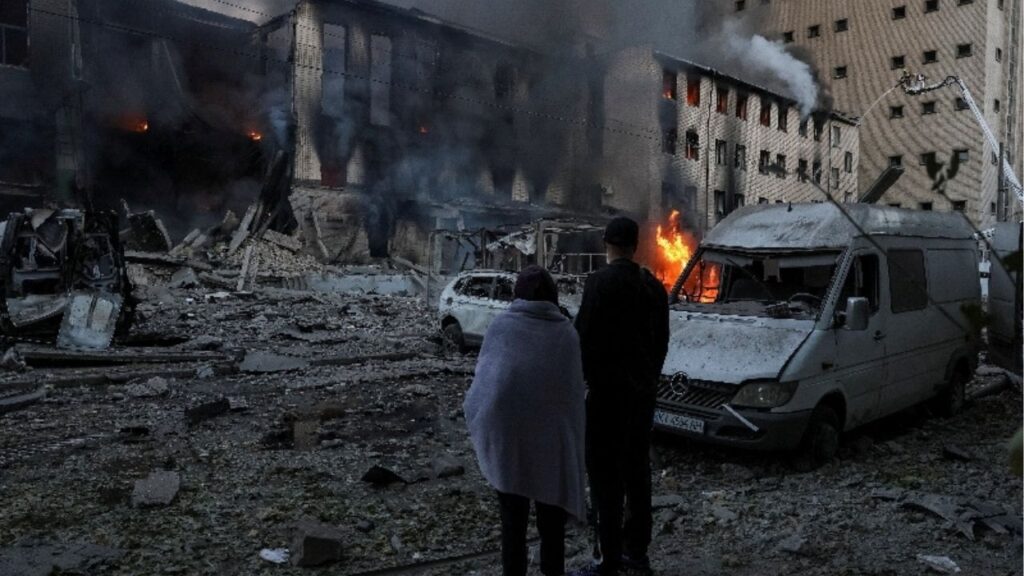
European Union foreign policy chief Kaja Kallas said on Tuesday she would propose a list of concessions that Europe should demand from Russia as part of a settlement to end the war in Ukraine.
The move is part of efforts to squeeze Russian revenue. Russia was the world’s third-biggest crude producer behind the U.S. and Saudi Arabia in 2025, according to EIA data.
Indian Oil Corp bought six million barrels of crude from West Africa and the Middle East, traders said, as India steered clear of Russian oil in New Delhi’s push for a trade deal with Washington.
In Venezuela, expanded U.S. licenses are expected to restore the South American OPEC member’s oil production by mid-2026 to levels seen before a U.S. naval blockade in December, the EIA said on Tuesday.
US Economy and Oil Inventories
U.S. retail sales were unexpectedly unchanged in December as households scaled back spending on motor vehicles and other big-ticket items, potentially setting consumer spending and the economy on a slower growth path heading into the new year.
Analysts said investors will scrutinize a slate of U.S. economic data releases scheduled for this week, including January’s nonfarm payrolls report on Wednesday and inflation data on Friday, for clues to the Federal Reserve’s interest rate path.
Central banks, like the Fed, raise and lower interest rates to keep inflation in check. U.S. President Trump has pressured the Fed to lower interest rates, which is politically popular because it reduces consumers’ costs and can boost economic growth and energy demand, but could also result in an unwanted rise in inflation.
In the energy market, traders are waiting for weekly U.S. oil inventory data from the American Petroleum Institute trade group on Tuesday and the EIA on Wednesday. [EIA/S] [API/S]
Analysts forecast U.S. crude stockpiles rose by 0.1 million barrels last week. That compares with an increase of 4.1 million barrels during the same week last year and an average increase of 1.4 million barrels over the past five years (2021-2025).
—
(Reporting by Scott DiSavino in New York and Anna Hirtenstein in London; Additional reporting by Anushree Mukherjee in Bengaluru and Sam Li in Beijing; Editing by Susan Fenton, David Goodman, Nick Zieminski and Nia Williams)