
|
Getting your Trinity Audio player ready...
|
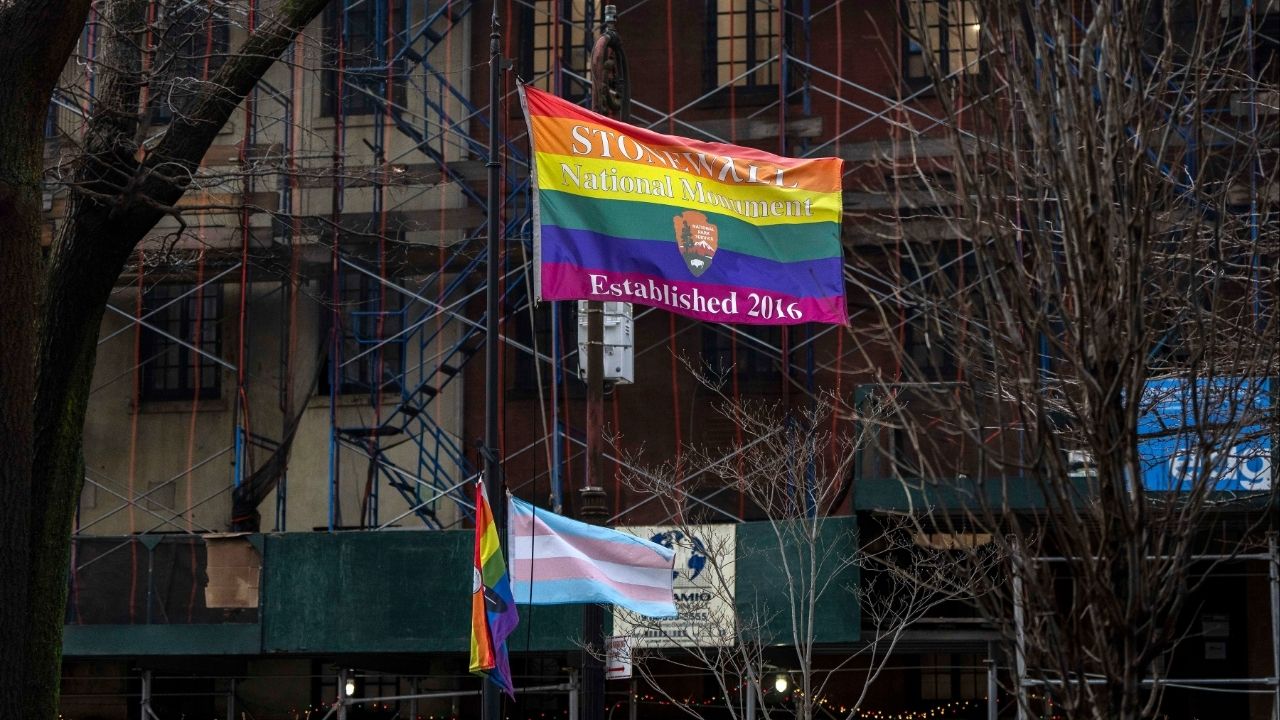
A large Pride flag was quietly removed from the Stonewall National Monument in Manhattan after a directive from the federal government, the latest step in the Trump administration’s nationwide assault on diversity initiatives and the second time in less than a year it has targeted the Greenwich Village site, which commemorates the birth of the LGBTQ+ rights movement.
The flag’s removal came weeks after the Department of the Interior issued federal guidance on displaying “nonagency” flags in the National Park System, which includes a small park in front of the Stonewall Inn, the bar for which the federal monument is named. Elected officials and bar employees said they realized the rainbow flag was gone Monday morning.
Stacy Lentz, an owner of the bar, said its owners had been surprised by the removal, especially since a year has passed since the administration removed references to transgender people from the monument’s website and other materials.

“To think you can go to Stonewall and just take down the Pride flag — that is telling of the time we are living in,” Lentz said. “It is unbelievable. The flag is not just an abstract symbol; it tells LGBTQ people, especially younger ones, that their history will not be sidelined again.”
The Trump administration directive that led to the removal of the flag was issued Jan. 21. A copy of the memo was provided to The New York Times by Brad Hoylman-Sigal, the Manhattan borough president.
In response to questions about the flag’s removal, the National Park Service on Tuesday pointed to that memo, saying in a statement that “only the U.S. flag and other congressionally or departmentally authorized flags are flown on NPS-managed flagpoles, with limited exceptions.”
“Any changes to flag displays are made to ensure consistency with that guidance,” it added, saying that the monument continued to preserve the site’s historic significance through exhibits and programs.
Since Trump’s inauguration last year, his administration has mounted a broad assault on what it views as diversity initiatives, including by removing symbolic displays like flags and images and regulating the language used at historical and other public sites.
The push has enlisted the National Park Service, a government agency that was previously more concerned with woodland management than with the policing of historical narratives.
In the last year, the Park Service has removed an exhibit on George Washington’s ownership of slaves from Independence National Historical Park in Philadelphia, dismantled a plaque about climate change at Muir Woods National Monument in California, and stopped showing films about immigrant and female textile workers at Lowell National Historical Park in Massachusetts.
The administration has also acted against Pride flags displayed at American sites overseas, through a State Department order issued last year requiring that only U.S. flags be flown at U.S. embassies and consulates worldwide. That marked a shift from the Biden administration, which at times displayed Pride and Black Lives Matter flags.
Lentz said she was deeply troubled by how secretive the Pride flag’s removal seemed to have been.
“Government institutions have not always been reliable narrators of history, and that isn’t an accusation, it’s a historical fact,” she said. “The concern isn’t about the symbolism of the flag necessarily; it’s about what decisions are being made when the narrative isn’t controlled by the people who have lived that history.”
Chuck Schumer, the Senate minority leader and a New York Democrat, denounced the flag’s removal in a statement.
“The removal of the Pride rainbow flag from the Stonewall National Monument is a deeply outrageous action that must be reversed right now,” he said. “New Yorkers are right to be outraged, but if there’s one thing I know about this latest attempt to rewrite history, stoke division and discrimination, and erase our community pride, it’s this: That flag will return. New Yorkers will see to it.”
Hoylman-Sigal also criticized the decision in an interview.
“The mean-spiritedness of the Trump administration seems to know no bounds,” said Hoylman-Sigal, who is gay. “But we as a community are not going to take it standing by idly as our history, and by extension our human rights, are attempted to be erased.”
Park Services Criticized for Changes
The Park Service has previously been criticized for changes it has made at the Stonewall National Monument. Last February, the agency removed the word “transgender” from prominent sections of the monument’s website, prompting hundreds of people to gather in Greenwich Village to protest what they saw as an attack on the symbolic heart of the gay rights movement.
Stonewall is the first historic site in the United States dedicated to the nation’s LGBTQ+ rights movement. The Stonewall Inn, on Christopher Street, has long been seen as a cradle of the movement after a police raid there in June 1969 set off three days of protests and riots in the surrounding streets.
The original Pride flag debuted in 1978, according to the Park Service website, with each of the eight colors symbolizing an aspect of the LGBTQ+ community’s experience.
In 2016, President Barack Obama designated the 7.7-acre site a national monument, encompassing the Stonewall Inn, Christopher Park and several nearby streets and sidewalks. Parts of the site are also designated as a city landmark and a state historical site.
Hoylman-Sigal said he and other local representatives were planning to raise the flag at the monument again at a demonstration Thursday.
“We may be prevented from doing so,” he said. “But if we don’t seize this moment, and this outrage, I think we’ll let down generations of queer activists.”
—
This article originally appeared in The New York Times.
By Liam Stack, Jonathan Wolfe and Yan Zhuang/Hiroko Masuike
c. 2026 The New York Times Company