
|
Getting your Trinity Audio player ready...
|
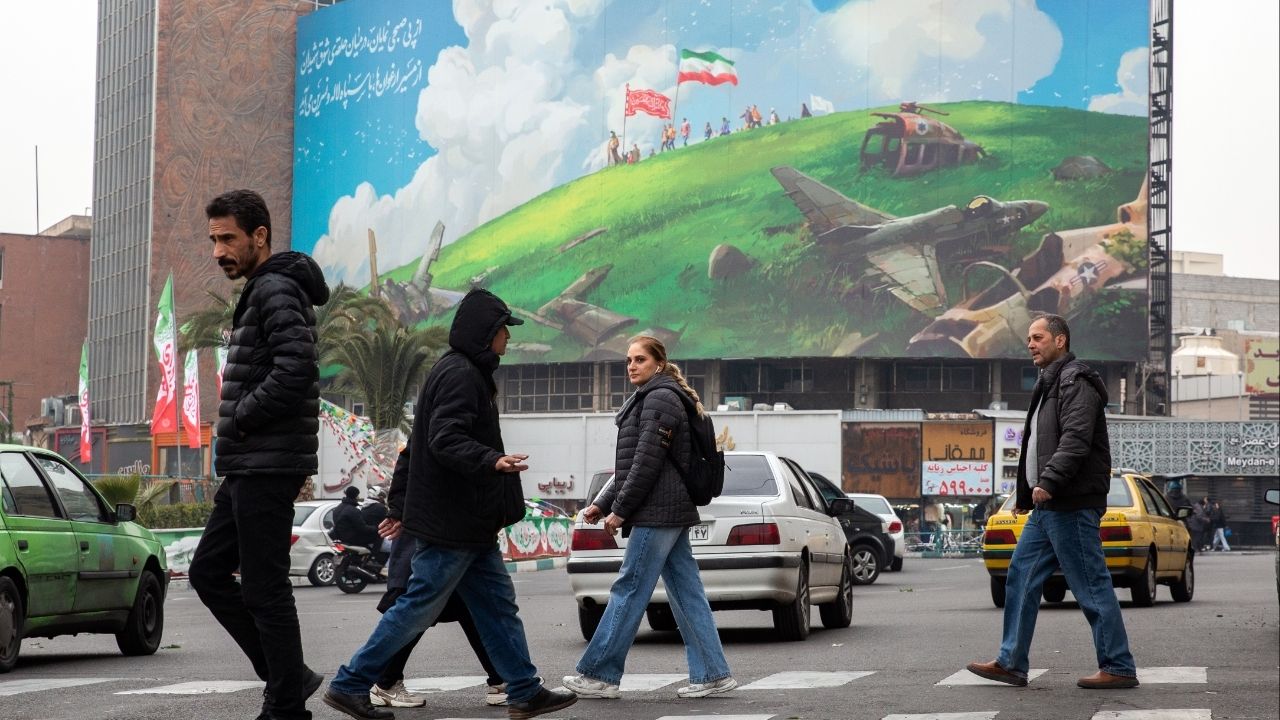
Iranian authorities detained at least five prominent figures from the country’s reformist opposition movement in the past two days, according to state-affiliated media, as the government expands a fierce crackdown on dissent.
The arrests come weeks after security forces used deadly force to crush nationwide protests, killing thousands, and amid a string of draconian measures to prevent any further unrest. They include mass arrests that rights groups say have swept up more than 40,000 people.
Iran’s reformists, many of whom have served as government officials, are an internal opposition movement that had long sought to change, but not overthrow, the authoritarian clerical regime. Members of the movement had begun in recent weeks to more forcefully criticize the government crackdown and the death toll, which the government puts at 3,117. Rights groups say that vastly underestimates the number killed, with the rights group HRANA estimating more than 6,900 dead.

Targeting reformists in the crackdown is not only a message from the regime to its own population, said Ali Vaez, a senior Iran analyst at the International Crisis Group. It is also aimed at those watching from outside, as negotiations restart between the United States and Iran while President Donald Trump’s “armada” of warships waits in Persian Gulf waters.
“This is clearly a regime that has now demonstrated that it is willing to fight for its survival at any cost,” Vaez said. “At home, they’re signaling that there’s no room for any kind of dissent, whether it’s within the public or within the political elite. And they’re sending this message abroad that they’re still very much in control.”
Iranian officials often describe those who they are arresting as “rioters” or “terrorists” supported by Israeli and U.S. efforts to sow unrest in the country.
On Monday, several semiofficial local news outlets reported that authorities had arrested Azar Mansouri, head of the Reformist Front; former diplomat Mohsen Aminzadeh; and Javad Emam, secretary-general of Iran’s Assembly of Veterans. They also arrested longtime politician Ebrahim Ashgarzadeh, who was among the leaders of a group of Iranian students in 1979 who held U.S. Embassy staff in Tehran, Iran, hostage for more than a year.
Semiofficial news outlet Fars said the charges they face include coordinating with enemy propaganda, stoking political divisions, and secretly plotting to overthrow the system.
Iran’s judiciary did not publicly identify the reformists detained, but said authorities had arrested four who were “actively working in favor of the Zionist regime and the United States,” according to a statement published by its media outlet Mizan on Monday.
Hossein Karroubi Detained
On Tuesday, local media reported that Hossein Karroubi, the son of Mehdi Karroubi, the reformist leader and former prime minister, had also been detained. Karroubi, who has been under house arrest for 14 years, recently released a statement calling for an independent inquiry into the crackdown on protests and a public referendum on Iran’s governance as “the only peaceful way out of this crisis.”
The son was accused of being the “instigator, drafter and publisher” of that statement, according to Fars. But no specific charges against him have been mentioned in local media reports.
According to Mizan, several other leading reformist figures were also summoned for questioning.
The large death toll from the recent protest wave had deepened long-standing tensions between Iran’s reformist leaders and their base, which has grown increasingly disillusioned with the Islamic Republic and sought a tougher stance toward the country’s rulers.
On Jan. 26, Mansouri, head of the Reformist Front, released a statement addressing protesters and their families.
“We will not allow the blood of these loved ones to be forgotten or the truth to be lost in obscurity,” it said. “No power, no justification, and no passage of time can cleanse this great tragedy.”
By pursuing such a forceful crackdown, the long-term risk for Iranian authorities is that they may push reformists to eventually take a stronger oppositional stance, said Sanam Vakil, the director of the Middle East and North Africa program at Chatham House, a London-based think tank.
“This is a signal things are going to get worse before they get better,” she said. “This is not going to be a snap back to life as normal.”
—
This article originally appeared in The New York Times.
By Erika Solomon/Arash Khamooshi
c. 2026 The New York Times Company