
|
Getting your Trinity Audio player ready...
|
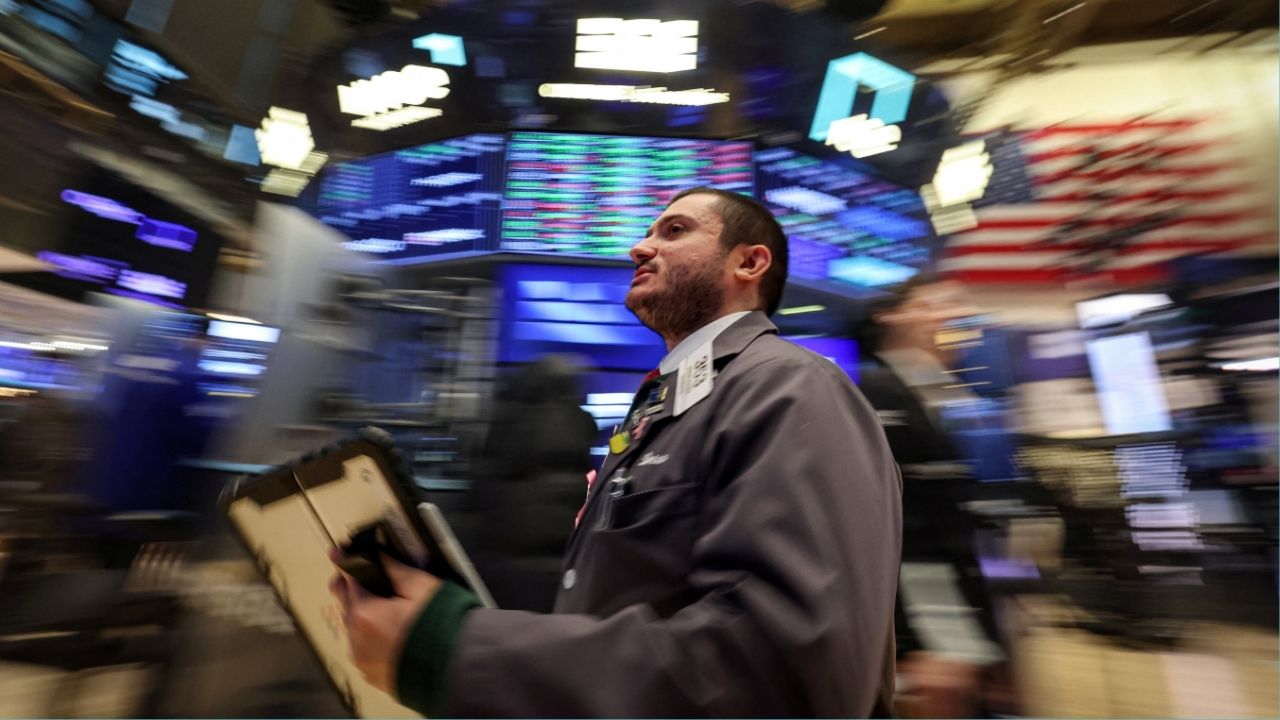
Wall Street indexes rebounded on Friday following a bruising selloff in technology shares through the week, but optimism was tempered by Amazon’s drop after it became the latest Big Tech to ramp up spending on artificial-intelligence infrastructure.
The S&P 500 and the tech-heavy Nasdaq advanced after three straight days of declines.
Amazon slid 9% after the company forecast a more than 50% jump in capital expenditures this year, intensifying the AI-driven spending spree already underway among its “Magnificent Seven” peers.

Investor skepticism around AI spending has heightened since Microsoft’s blowout capex plans late last month thrust mega-cap investment budgets into the spotlight.
Alphabet’s surge in spending plan deepened the tech selloff on Thursday, pushing the Nasdaq to close at its lowest in more than two months.
“Just as with any great technological innovation, there’s a stage where there’s almost unabashed enthusiasm and then there’s a period of greater discernment,” said Kristina Hooper, chief market strategist at Man Group.
“So it’s not just thinking about who’s going to be impacted by AI, like the software names certainly came under pressure, but also the hyperscalers and now of course punishing those that are spending a lot on AI capex.”
The Google parent slipped 0.7%, while Microsoft gained 1%. Nvidia, which stands to benefit from heavier AI spend and remains the last Mag 7 company to report, rose 3%.
Software and data-services shares also reversed a week-long slide triggered by fears that fast-improving AI tools could eat into demand for traditional businesses.
ServiceNow and CrowdStrike were up 0.7% and 2.6%, respectively. Still, the S&P 500 Software and Services index was headed for declines of more than 8% in the week, its worst performance since March 2020.
Major Markets Gain
At 09:33 a.m. ET, the Dow Jones Industrial Average rose 1.08%, to 49,437.32. The S&P 500 gained 0.88%, to 6,858, while and the Nasdaq Composite advanced 0.77%, to 22,713.67.
The CBOE volatility index, Wall Street’s fear gauge, dropped for the first time in three days, down 2.54 points at 19.23.
Chip stocks, caught in the cross-currents of the tech rout, steadied as well, with Broadcom up 4.8%. The S&P 500 tech index added 2.8%.
The AI trade, one of the biggest engines of last year’s rally, is facing a substantial stress test as money flows into defensive havens such as consumer staples and telecoms. That rotation is unfolding just as risky assets are scaling back, with bitcoin down 50% from its October peak.
The Russell 2000 index added 2.2%. Both the S&P 600 small-cap index and the S&P 400 mid-cap index were headed for gains of over 1% this week, while the S&P 500 value index rose more than 1% for the week.
Roughly 80% of the 270 S&P 500 companies that have reported quarterly earnings so far have beaten analyst expectations, according to LSEG data. In a typical quarter, that rate is 67%.
Molina Healthcare slumped 29% after the health insurer forecast 2026 profit at less than half of Wall Street expectations. Centene forecast annual profit above estimates, yet its shares fell 6.2%.
Roblox gained more than 5% after the video game platform projected fiscal 2026 bookings above Wall Street expectations.
Meanwhile, recent inflation readings suggest the U.S. economy is holding up, even as a range of labor-market indicators point to a jobs picture that remains under strain, putting more significance on next week’s delayed release of the January payrolls report.
—
(Reporting by Pranav Kashyap and Twesha Dikshit in Bengaluru; Editing by Shilpi Majumdar)