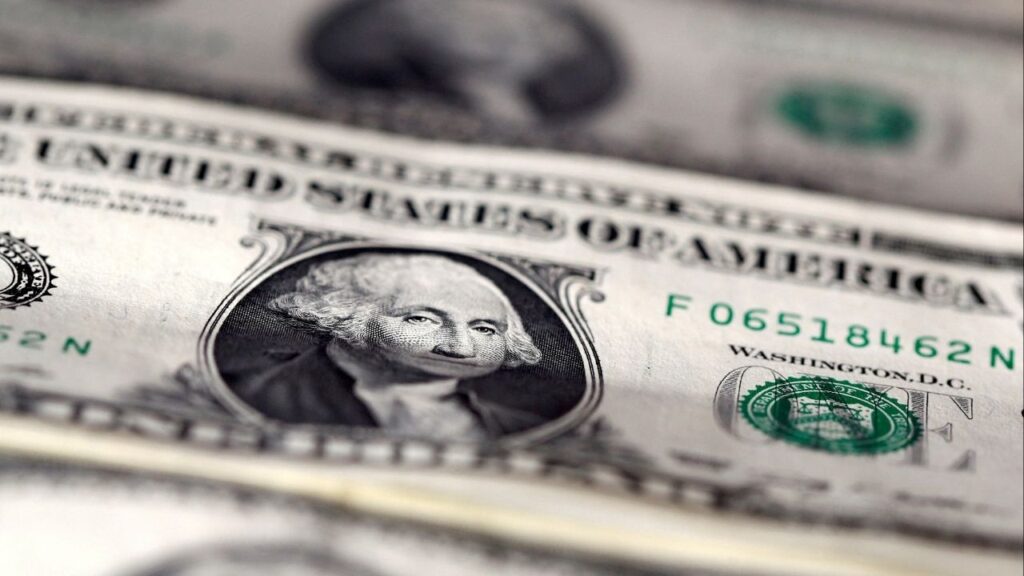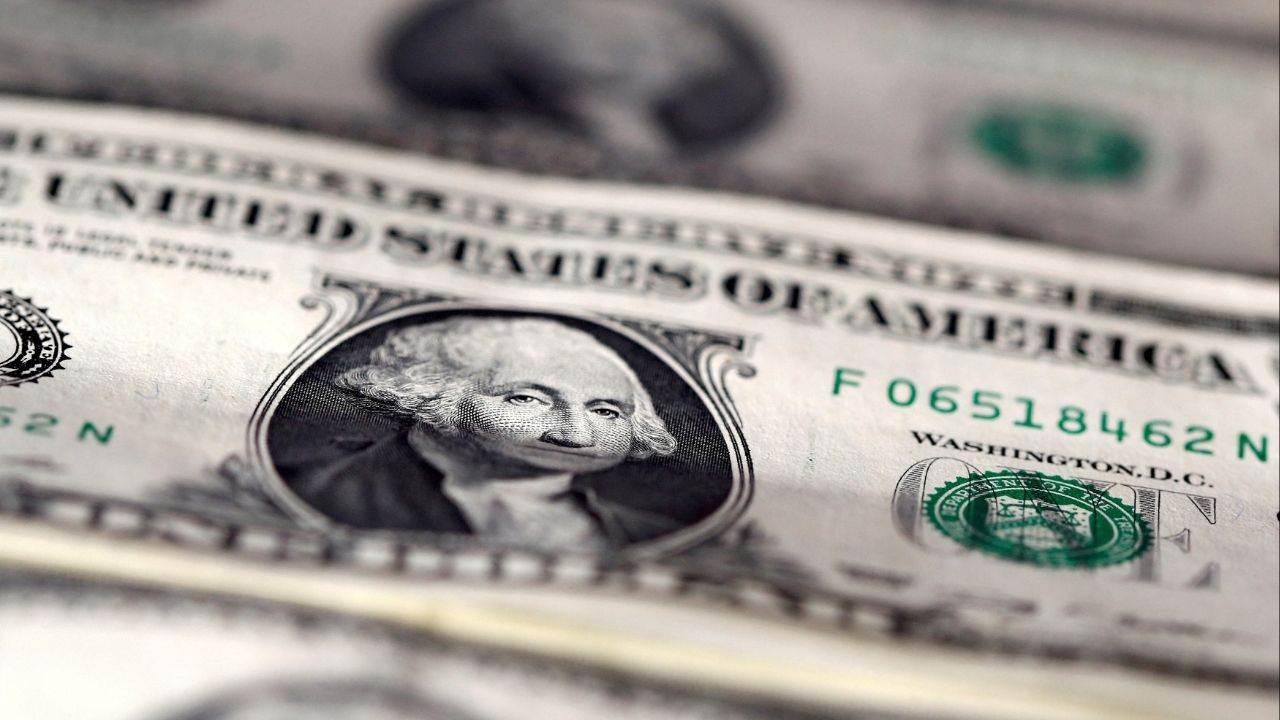
U.S. dollar notes are seen in this November 7, 2016 picture illustration. (Reuters File)

Share
|
Getting your Trinity Audio player ready...
|
The U.S. dollar fell across the board and the Japanese yen jumped to a more than two-month high on Monday as speculation mounted about joint U.S.-Japan currency intervention after remarks from Tokyo’s prime minister and Japan’s leading currency diplomat.
Investors also scaled back their dollar positions ahead of a Federal Reserve meeting and a possible announcement by the Trump administration of a new Fed chair. Worries about another U.S. government shutdown also pressured the dollar.
The dollar was 1% lower against the yen at 154.15, on pace for a nearly 3% slide over the last two trading sessions, the worst such weakening since April 2025 following the “Liberation Day” tariff-related market upheaval.
Tokyo continued to preoccupy investors after Japan’s Prime Minister Sanae Takaichi said on Sunday her government would take the “necessary steps” against speculative market moves.
Precursor to Intervention
A source on Friday told Reuters that the New York Federal Reserve had checked dollar/yen rates with dealers, which is considered to be a precursor to intervention. The rush to exit short yen positions has lifted the currency by over 3% off Friday’s low.
“Clearly if you’ve got both the MOF (Japanese Ministry of Finance) and the U.S. Treasury looking to limit the upside in dollar-yen, that’s going to be a more powerful driver,” said Dominic Bunning, head of G10 FX strategy at Nomura.
Japanese Finance Minister Satsuki Katayama declined to comment on the rate checks, while currency diplomat Atsushi Mimura said the government would maintain close coordination with the United States on foreign exchange and act appropriately.
The U.S. has not joined a coordinated effort to intervene in the Japanese currency since March 2011, when it sold yen following the Fukushima earthquake.
“We think the signal for intervention is even stronger than in 2022 or 2024 given U.S. participation, making it likely that any actual intervention would be coordinated,” analysts at Goldman Sachs said in a note.
“However, the impact of direct operations is often only temporary when the broader backdrop justifies the pressures on the currency, as it does today,” they said.
The yen is under pressure in part because of concerns over Japan’s government debt that stands at more than double its economic output. A historic rise in market interest rates has raised fears for Japan’s ability to service its debt, but Takaichi has said she will cut taxes as she campaigns for a snap election on February 8.
Bank of Japan money market data on Monday indicated that a spike in the yen rate against the dollar on Friday was unlikely to be the product of official Japanese intervention.
Dollar Selloff Boosts Euro and Sterling
Dollar selling on Monday helped push the euro and the British pound to four-month highs, while the Australian dollar hit its strongest since October 2024.
The euro was last up 0.4% at $1.18585, sterling was 0.3% higher at $1.3691, while the Aussie advanced 0.5% to $0.6931.
“This is a reinvigorated ‘Sell America trade,’ and it has to do with prediction markets showing that government shutdown is back on the table,” Jonathan Petersen, macro strategist at investment research firm Variant Perception.
The top Democrat in the U.S. Senate, Chuck Schumer, said his party would vote against funding legislation that includes money for the Homeland Security Department that oversees ICE, the federal immigration agency. U.S. immigration agents shot and killed a U.S. citizen in Minneapolis on Saturday, sparking fierce protests and condemnations from local leaders in the second such incident this month.
Congress faces a January 30 deadline to fund the government or risk a partial government shutdown.
“There are a lot of things going on right now in the U.S. like the protests against the latest Minnesota shooting. Trump could also be naming the successor to Jay Powell this week. So the markets are nervous about both,” said Marc Chandler, chief market strategist at Bannockburn Capital Markets in New York.
U.S. President Donald Trump said on Thursday he would soon announce his pick for the next Federal Reserve chair, to replace Chair Jerome Powell, with BlackRock’s Rick Rieder now favorite on betting site Polymarket with a 48% probability.
The U.S. Federal Reserve sets interest rates on Wednesday, with markets expecting no changes but for policymakers to flag further cuts, with about 50 basis points of easing priced in for the year.
—
(Reporting by Saqib Iqbal Ahmed in New York, Samuel Indyk in London; Additional reporting by Gregor Stuart Hunter and Tom Westbrook in Singapore and Gertrude Chavez in New York; Editing by Toby Chopra and Nick Zieminski)
RELATED TOPICS:
Categories


Wall Street Indexes Close Higher Ahead of Earnings, Fed Meeting