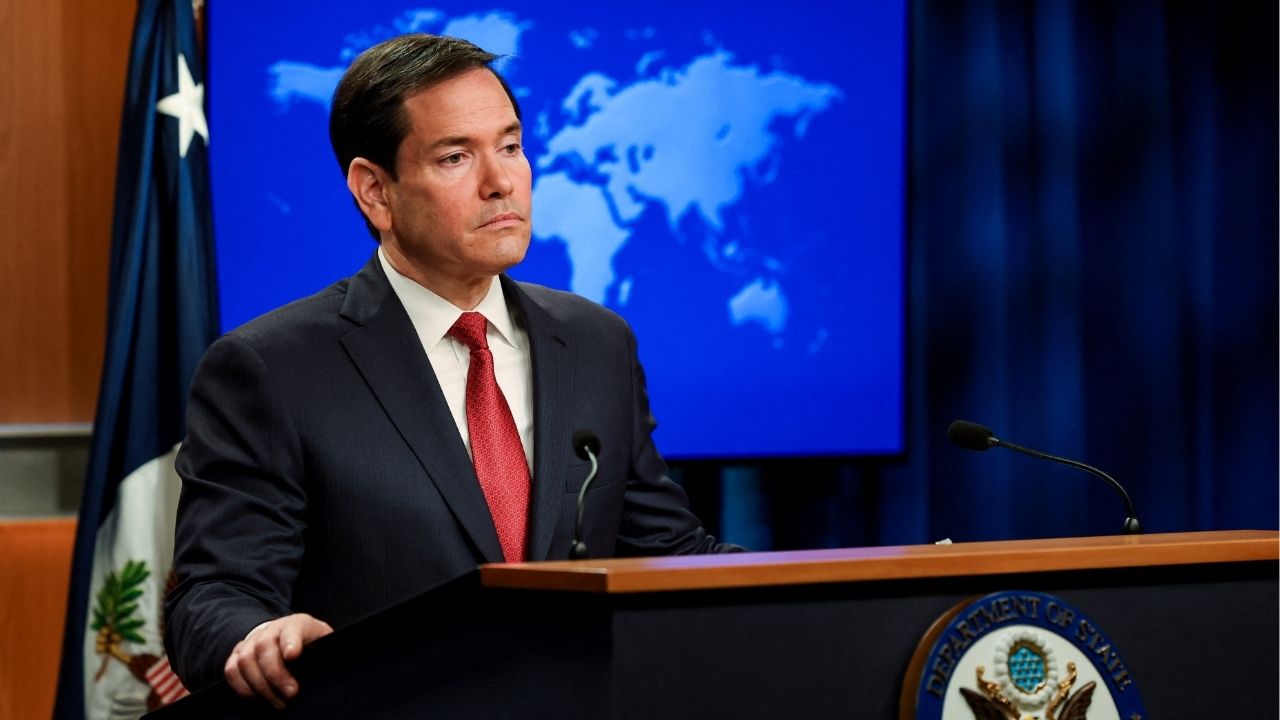
U.S. Secretary of State Marco Rubio holds his end-of-year press conference at the State Department in Washington, D.C., U.S., December 19, 2025. (Reuters/Kevin Mohatt)

Share
|
Getting your Trinity Audio player ready...
|
WASHINGTON — Secretary of State Marco Rubio personally approved the deportation of five student activists last year after receiving memos largely describing their participation in pro-Palestinian protests and their writings about the war in the Gaza Strip, according to internal government documents unsealed by a federal judge Thursday.
The documents reveal new details about how the Trump administration decided to target the activists, who were all foreign students. They had been in the United States legally but were arrested and threatened with deportation in the spring.
The several hundred pages were submitted as evidence in a trial held in Massachusetts in July over noncitizen students’ freedom of expression.
After hearing testimony and examining the documents, Judge William G. Young, an appointee of President Ronald Reagan, ruled last year that the Trump administration had illegally targeted the students for deportation based on their speech — in particular their opposition to the Israeli government and its military operations in Gaza.
Young had acceded to requests from the government to seal the documents because of details they contained about federal investigations. But last week he agreed to a request from The New York Times and other media outlets that they be released as a matter of public interest.
The documents include several batches of memos, prepared by the Department of Homeland Security and sent to the State Department, which contained the formal recommendations that five students — Mahmoud Khalil, Rumeysa Ozturk, Mohsen Mahdawi, Badar Khan Suri and Yunseo Chung — be deported.
The documents indicate that in nearly all instances, the arrests of the students were recommended based on their involvement in campus protests and public writings, activities the Trump administration routinely equated to antisemitic hate speech and support for terrorist organizations. They also show officials privately anticipated the possibility that the deportations might not hold up in court because much of the conduct highlighted could be seen as protected speech.
“Given the potential that a court may consider his actions inextricably tied to speech protected under the First Amendment, it is likely that courts will scrutinize the basis for this determination,” read one memo describing the effort to deport Madhawi, who had a green card and was an undergraduate at Columbia University at the time of his arrest.
A State Department spokesperson said that Rubio’s determinations were a matter of national security and were aimed at keeping “terrorist-supporting” individuals out of the country.
—
This article originally appeared in The New York Times.
By Zach Montague
c. 2026 The New York Times Company