
|
Getting your Trinity Audio player ready...
|
Airlines and airports on Friday were preparing for widespread disruptions this weekend as a powerful storm threatened to blanket large parts of the country in ice and snow.
The storm was expected to hit much of the Southern United States on Friday, prompting some targeted flight cancellations. Delta Air Lines had proactively canceled some Friday flights in northern Texas, Oklahoma, Arkansas, Louisiana and Tennessee, but most cancellations were on the weekend.
By midday Friday, American Airlines, which is based in Fort Worth, Texas, had canceled 19% of flights planned for Saturday, while Southwest Airlines, based in Dallas, had canceled 10%, according to FlightAware. At Dallas Fort Worth International Airport, about two in three flights scheduled for Saturday were canceled, according to Cirium, an aviation data firm. There was less disruption elsewhere.

Airlines have an easier time managing around bad weather at a single airport, but this storm is much more dangerous because of its breadth.
“You have a storm that’s going to progress from the center of the country all the way to the East Coast and a very wide swath north to south,” said Bob Mann, an industry consultant and a former airline executive. “The area of impact and the duration of the impact is far longer than the standard weather event.”
Slowest of the Year
This week and next are typically among the slowest of the year, according to Transportation Security Administration airport screening data. As a result, carriers may have more flexibility and resources to respond to disruptions over the weekend.
By Friday, many airlines had waived fees to change weekend travel, allowing customers to postpone travel from or through many major airports in the eastern half of the United States. Carriers encouraged travelers to confirm their flight status before leaving for the airport, and several airlines said they were shoring up resources to better handle the chaos expected in the coming days.
Delta said it expected the storm to affect about 80 cities it flies to. The airline also said that it was sending experts from its hubs in colder climates to help with deicing and baggage support in southern airports, including those in Atlanta; Birmingham, Alabama; and Nashville, Tennessee.
Preparing to bounce back after a disruption is often as important as managing the disruption in the first place. American said in a statement that it was moving personnel and planes around to be prepared in the storm’s aftermath.
“We’re repositioning aircraft, aligning crew resources and reinforcing staffing at key airports while coordinating with our partners to help minimize disruption and set the stage for a fast, safe recovery,” the airline said.
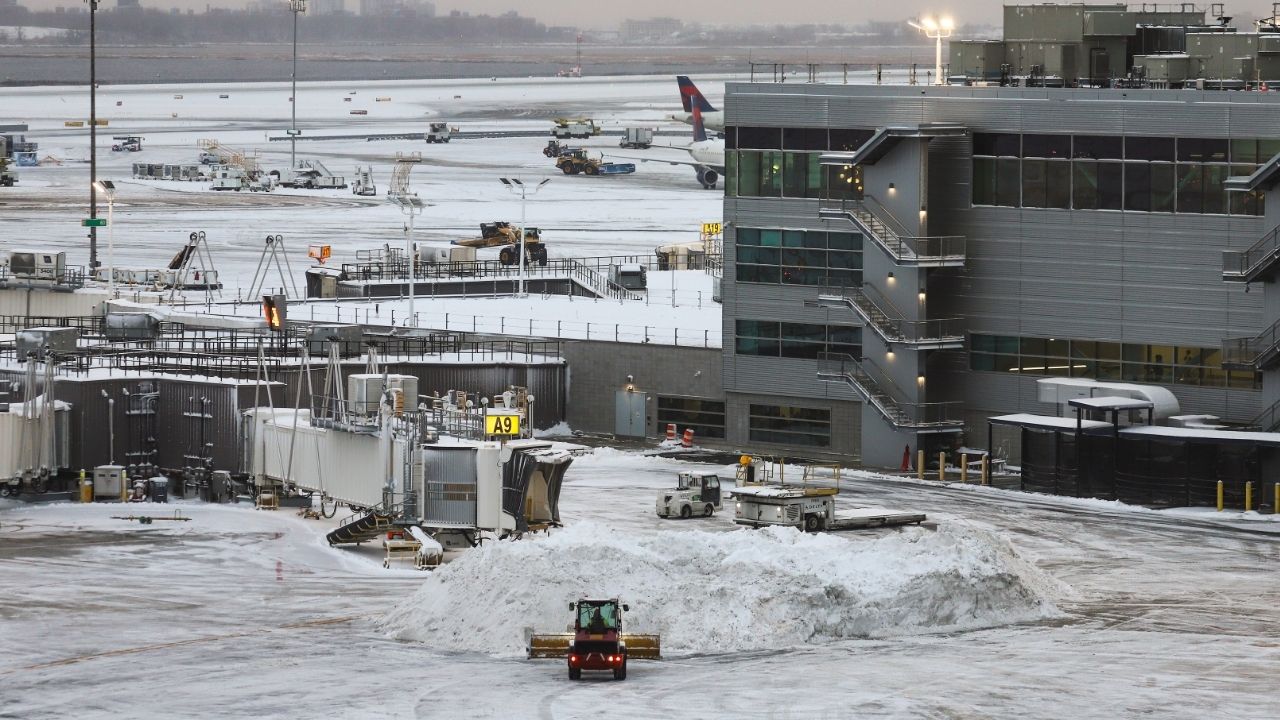
The most ominous weather forecasts called for ice and a foot or more of snow in some places. In such conditions, airport runways and taxiways have to be plowed for planes to safely move about, and jets often line up to be doused in deicing fluid to remove and prevent ice accumulation, slowing operations even at airports that are used to such conditions.
—
This article originally appeared in The New York Times.
By Niraj Chokshi/Gabe Castro-Root
c. 2026 The New York Times Company