

|
Getting your Trinity Audio player ready...
|
BERLIN — Friedrich Merz, the chancellor of Germany, urged European leaders on Thursday to strengthen their militaries and shed bureaucracy to survive in an international order whose “very foundations have been shaken” by Russia, China and the United States.
Echoing Mark Carney, the prime minister of Canada, Merz used a speech at the World Economic Forum in Davos, Switzerland, to rally European countries and like-minded midsize powers. He called on them to recommit to strong national defense, robust free trade and the streamlining of red tape to help businesses compete and economies to thrive in a more protectionist and isolationist world.
“This new world of great powers is being built on power, on strength, and when it comes to it, on force. It’s not a cozy place,” Merz said. “We do not have to accept this new reality as fate. We are not at the mercy of this new world order. We do have a choice. We can shape the future. To succeed, we must face harsh realities and chart our course with clear-eyed realism.”

In a direct shot at leaders of the European Union in Brussels, Merz repeated his long-standing calls to pare back continental burdens on business growth. “We have become the world champion of overregulation,” he said. “That has to end.”
Leaders Reactions to Trump’s Speech in Davos
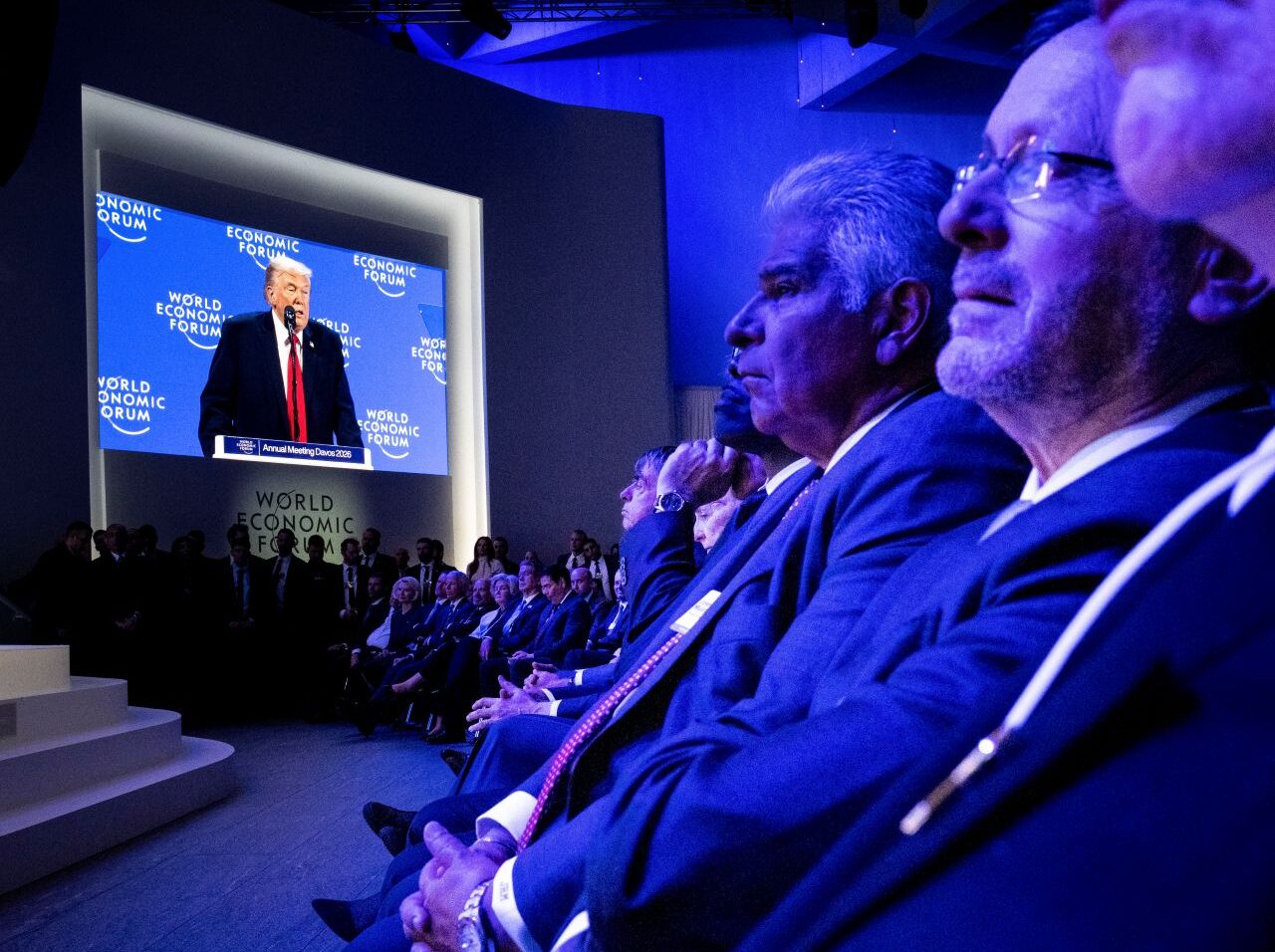
The chancellor also implicitly chided President Donald Trump for his demeaning treatment of European allies, including during Trump’s own speech in Davos on Wednesday, in which he assailed European society and threatened economic warfare if Europe did not bend to his will.
“Democracies do not have subordinates,” Merz said. “They have allies, partners and trusted friends.”
Against that backdrop, the chancellor appealed for European unity and commended an apparent deal struck on Wednesday between Trump and Mark Rutte, the secretary-general of NATO, to strengthen Arctic security — a move that appeared to defuse Trump’s efforts to gain ownership of Greenland for the United States. Merz said that Europe would not have tolerated an effort to seize the Danish territory by force and that it would have responded to tariffs meant to pressure Denmark into a sale, which Trump threatened days ago.
Merz also seemed to direct a message to Trump — with whom he has built a friendship — about the value of allies even for the most powerful countries.
“We must never forget one thing,” he said. “The world where only power counts is a dangerous place, first for small states, then for the middle powers, and ultimately, for the great ones.”
—
This article originally appeared in The New York Times.
By Jim Tankersley/Doug Mills
c.2026 The New York Times Company