


BERLIN — Negotiations to resolve the future of Greenland have focused in recent days on proposals to increase NATO’s presence in the Arctic, give America a sovereign claim to pockets of Greenland’s territory and block potentially hostile adversaries from mining the island’s minerals.
Those elements, described by eight senior Western security and diplomatic officials, offer the fullest picture yet of the contours of a potential Greenland compromise that President Donald Trump announced Wednesday without details. His move appeared to at least temporarily defuse an American-made trans-Atlantic crisis over the Danish territory.
Critically, the proposals under discussion would stop short of Trump’s goal of transferring ownership of all of Greenland to the United States from Denmark, according to the officials, all of whom spoke on condition of anonymity to discuss sensitive diplomacy. The officials cautioned that many details have yet to be finalized.

It is unclear if these discussions will ultimately yield agreement over the territory. Denmark, which publicly opposes ceding ownership of any Greenlandic land, may not agree to the plans on the table. Still, the officials said they were hopeful that they could simultaneously address Trump’s stated concerns about securing the Arctic against possible threats from Russia and China while holding to Europe’s “red line” that Greenland was not for sale.
To Do That, the Proposals Would:
— Create a significant new NATO mission in the Arctic. Multiple officials have dubbed this mission “Arctic Sentry,” in a nod to similarly named NATO missions in the Baltic Sea and Eastern Europe that are meant to counter an increasingly aggressive Russia.
— Update a pact signed between Denmark and the United States in 1951. The pact gives the U.S. military wide access to Greenland, an autonomous Danish territory, for operations including the construction and operation of military bases. U.S. officials have said they are concerned that this access could be curbed or ended if Greenland were to obtain independence. NATO officials have discussed expanding the 1951 pact with a new agreement that would effectively create pockets of American soil in the territory.
— Such an agreement would likely be modeled on a “sovereign base area” agreement in Cyprus, where Britain’s military bases are regarded as British territory. That would give the United States greater control over the land than it currently exerts over U.S. embassy sites. Trump and other officials have said that territory in Greenland could prove important for his plans to build a so-called Golden Dome missile defense system for the United States, which could include components stationed in Greenland.
— Restrict non-NATO member countries, particularly Russia and China, from obtaining rights to mine the rare-earth minerals that lie deep under Greenland’s ice sheet.
Discussion Inside NATO
All of those plans have been under discussion inside NATO over the last year, as a direct response to Trump’s stated ambitions. Since returning to the White House in 2025, Trump has described publicly, with increasing intensity, his desire to own Greenland. Denmark, with equal intensity, has insisted it would not sell, with Danish leaders saying that the island’s fate is up to Denmark, not NATO. Greenland’s prime minister, Jens-Frederik Nielsen, said Thursday he was not in favor of giving the United States sovereignty over military bases there. “We are ready to discuss a lot of things,” Nielsen said, adding, “Sovereignty is a red line.”
The idea of giving the U.S. a sovereign claim to its bases in Greenland, similar to Britain’s bases in Cyprus, was raised among NATO and Western military officials Wednesday, according to two officials, one of whom was present in those discussions. Asked for comment, Gen. Alexus G. Grynkewich, the top NATO commander in Europe, said in a brief conversation with The New York Times on Thursday that the idea was discussed as a matter for political leaders to resolve rather than the military.
Prime Minister Mette Frederiksen of Denmark did not respond to a request for comment. But in a public statement Thursday, posted on social media, she appeared to accept some of the details under discussion while rejecting others, including the idea of transferring ownership of any part of Greenland.
“We can negotiate on everything political; security, investments, economy. But we cannot negotiate on our sovereignty,” the statement said.
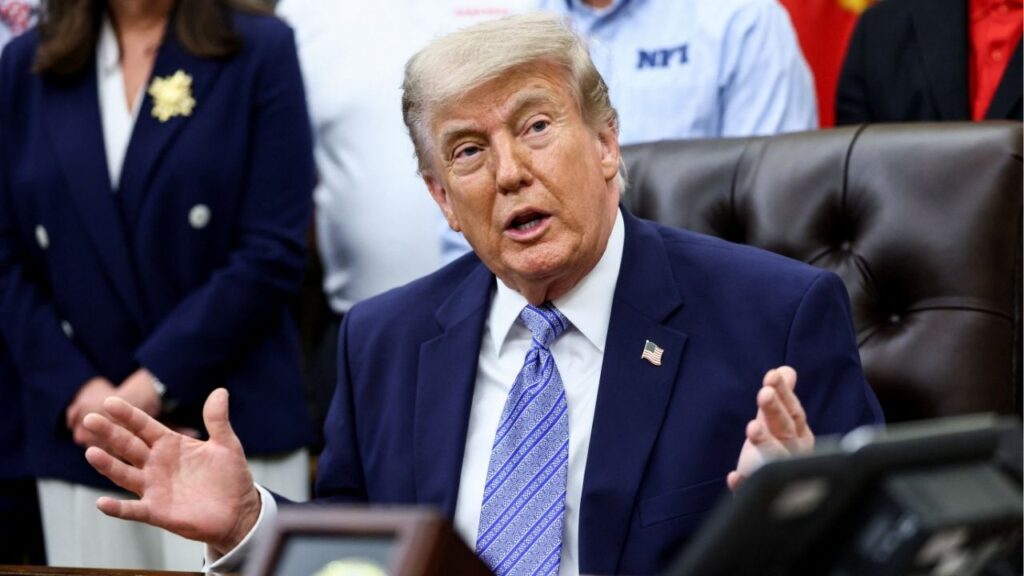
Trump gave almost no details of the agreement Wednesday evening in brief interviews with reporters in Davos that followed it or in his public statements on social media.
Asked about the proposed agreement, Adm. Giuseppe Cavo Dragone, the Italian chair of the NATO Military Committee, said at a press briefing Thursday that officials were “at the very early stage” of creating a framework for securing the Arctic and Greenland.
Grynkewich said that “We’ve done no planning yet” for the joint Arctic operations. He added: “We have not received political guidance to move out.”
There was a spreading sense of relief Thursday among European leaders that the escalating crisis over Greenland had been defused.
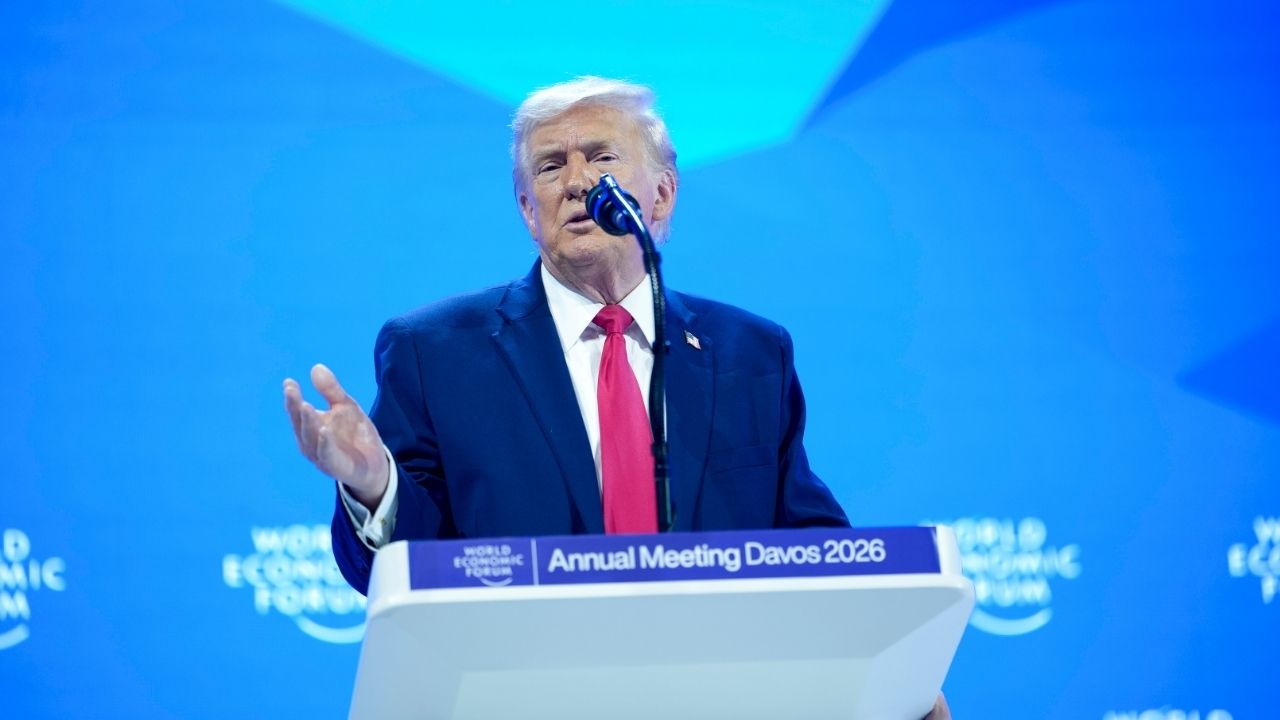
In a speech in Davos, Switzerland, on Wednesday, Trump ruled out using military force to take the island but raised the specter of imposing economic pain on allies if he didn’t get what he wanted.
Then, that evening, he abruptly announced he had reached a deal with Rutte, and he called off the tariffs he had planned to impose on imports from Denmark and many of the European countries that had risen to its defense over Greenland.
Some European leaders Thursday welcomed Trump’s announcement and expressed optimism that it would eventually result in a victory for Arctic security and NATO unity.
“We will protect Denmark, Greenland, the north, from the threat posed by Russia,” Friedrich Merz, chancellor of Germany, said in a speech at Davos on Thursday morning.
“We will uphold the principles on which the trans-Atlantic partnership is founded, namely sovereignty and territory,” Merz said. “We support talks between Denmark, Greenland, the United States on the basis of these principles.”
—
This article originally appeared in The New York Times.
By Jim Tankersley, Lara Jakes and Adam Goldman/Doug Mills
c. 2026 The New York Times Company