
|
Getting your Trinity Audio player ready...
|
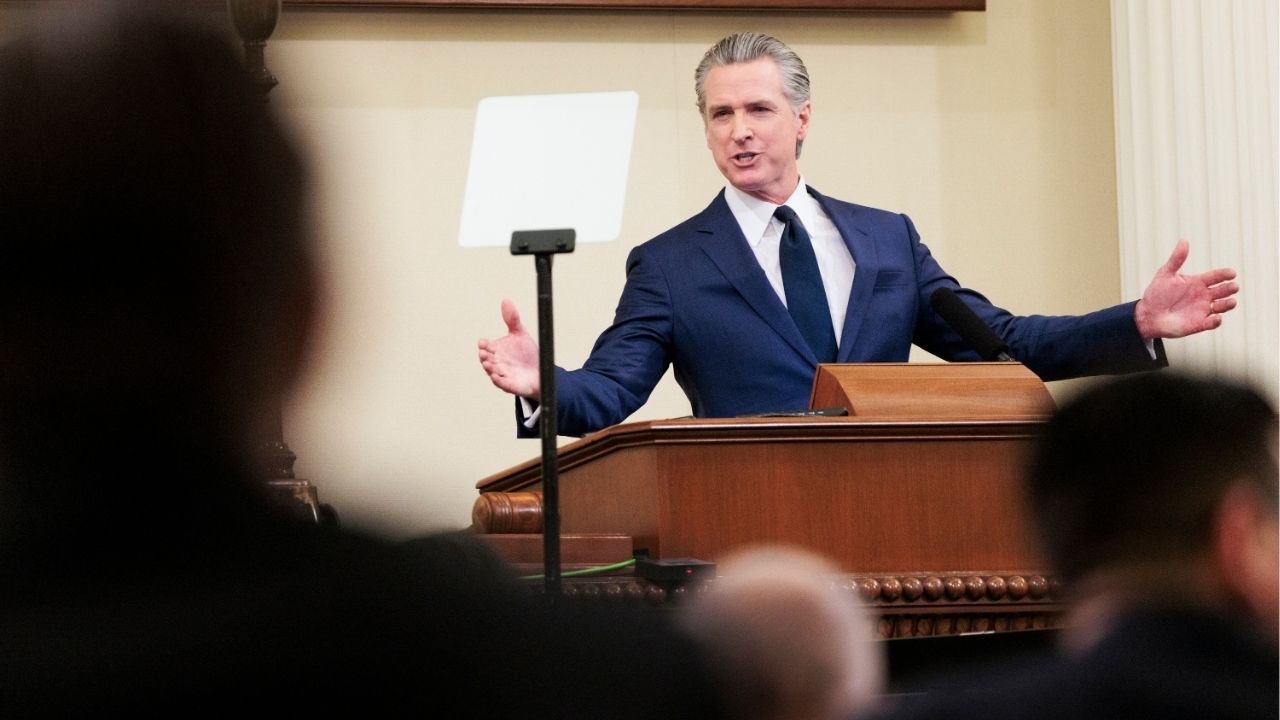
SACRAMENTO, Calif. — Gov. Gavin Newsom vowed on Monday to stop a proposed wealth tax in California, saying that its mere introduction had already hurt the state by driving some billionaires to relocate and take their tax dollars with them.
Newsom, a Democrat, said in an interview with The New York Times that he had been relentlessly working behind the scenes against the proposal, and that he would fight the measure if it reached the November ballot.
“This will be defeated — there’s no question in my mind,” Newsom said.

“I’ll do what I have to do to protect the state,” he added.
The governor has long opposed a wealth tax because of concerns that it would stifle innovation in California, where the booming tech industry has sent state revenues soaring and driven the economy for years. Despite his opposition, tech influencers and conservatives have tried to pin the latest idea on Newsom, taking aim at a leading potential Democratic candidate for president in 2028.
In past years, he has quashed legislative wealth tax proposals by making it clear that he would not sign them into law. The issue has urgency now, though, because a large health care union is trying to place a new billionaire tax on the ballot.
The One-Time Tax
The initiative would require Californians with a net worth beyond $1 billion to pay a one-time tax equal to 5% of their assets. It would apply retroactively to anyone who was living in California as of Jan. 1, and taxpayers could spread their payments across five years starting in 2027.
While Newsom helped stop past wealth tax bills in the state Capitol, the new proposal is being driven by the Service Employees International Union-United Healthcare Workers West through the initiative process and beyond the reach of his veto pen.
The union argues that the tax is necessary to make up for the deep cuts to health care that President Donald Trump signed into law last year, including reductions in Medicaid, Affordable Care Act subsidies and food assistance. The union’s proposal calls for the state to spend 90% of the new tax money on health care, with the rest devoted to food assistance and education. The funding would help to keep hospitals open and preserve Californians’ access to health care, said Suzanne Jimenez, the chief of staff for the labor union.
“The governor is focused on the wrong problem here,” she said. “The problem is not just about the preferences of 200 ultrawealthy individuals. The problem is millions will lose health care, and that’s really the problem we’re trying to solve.”
California’s nonpartisan legislative analyst and the governor’s Department of Finance said in a joint review that the tax would probably deliver tens of billions of dollars in one-time money for the state, but that it could lead to hundreds of millions or more in continuing losses from billionaires leaving California to avoid the tax.
Evidence suggests that has already begun to happen, even though the proposal is a long way from becoming law. Larry Page and Sergey Brin, who together founded Google in a friend’s garage in Silicon Valley, have begun cutting ties with California. So has tech venture capitalist Peter Thiel.
“This is what I feared, and it’s come true,” Newsom said in the interview.
As a former mayor of San Francisco, Newsom has long-standing relationships with many of the Silicon Valley leaders who would be forced to pay the new tax. Marc Benioff, the CEO of Salesforce, is a close friend and the godfather of the governor’s eldest child. Brin and Page were guests at Newsom’s wedding in 2008.
Business leaders in California are raising money to oppose the wealth tax, setting the stage for an expensive showdown if it reaches the ballot. Rob Lapsley, the president of the California Business Roundtable, said the proposal “would undermine our economy, decimate the state budget, drive investment out of the state and ultimately make everyday life more expensive for working families.”
Supporters Gain Nearly 900,000 Signatures
Supporters of the wealth tax proposal have begun collecting the nearly 900,000 signatures that are necessary to place the measure on the ballot, Jimenez said. Interest groups in California often use the threat of ballot initiatives as leverage to pressure the Legislature into passing a new law, sometimes reaching an agreement in the Capitol to ward off a ballot fight. Jimenez, whose union has a history of using ballot measures to squeeze employers in labor negotiations, said that was not her union’s intention with this proposal.
“I want to be adamant and very clear: This is a ballot measure we are putting on the ballot,” she said. “We’re going to have voters vote on it in November.”
California’s state budget relies heavily on high earners, who, under the state’s progressive tax structure, pay most of the state’s income taxes.
Not every billionaire is angry. Jensen Huang, the CEO of Nvidia, who is among the world’s wealthiest people, told Bloomberg Television this month that he was “perfectly fine” with the wealth tax proposal.
“We chose to live in Silicon Valley,” he said, “and whatever taxes they would like to apply, so be it.”
Still, losing tax revenue from wealthy residents would have ramifications for the state budget, Newsom said — ones that would last longer than the windfall from the proposed tax.
The governor defended the state’s progressive income tax as a righteous approach. But he said a wealth tax, which taxes assets instead of income, was “something very, very different.”
California has more billionaires than any other state, and Newsom has long said that taxing their wealth would put the state at a competitive disadvantage. While he opposes a California-based wealth tax, the governor said he might feel differently about an approach that was national in scope.
“It’s one thing to have a prism of the nation, and you can talk about 50 states,” he said. “It’s another when you’re competing against 49 other states.”
—
This article originally appeared in The New York Times.
By Laurel Rosenhall/Max Whittaker
c. 2026 The New York Times Company