
|
Getting your Trinity Audio player ready...
|
Israel’s parliament passed new legislation Monday formally removing diplomatic immunity from the United Nations agency for Palestinian refugees, part of an ongoing Israeli crackdown against the body.
The legislation could potentially expose the United Nations Relief and Works Agency — widely known as UNRWA — to legal action in Israeli courts. It also bars Israeli companies from providing water, electricity or financial services to UNRWA institutions. The law will also allow Israeli authorities to expropriate two UNRWA offices in Jerusalem.
Israel banned the agency last year, alleging that Hamas had effectively transformed its Gaza Strip branch into a puppet of the Islamist militant group. The legislation barred UNRWA from all contact with Israeli authorities, hampering its operations in the West Bank and Gaza.

UNRWA says Israel is trying to discredit the agency, which provides education and heath care to millions of Palestinians across the Middle East.
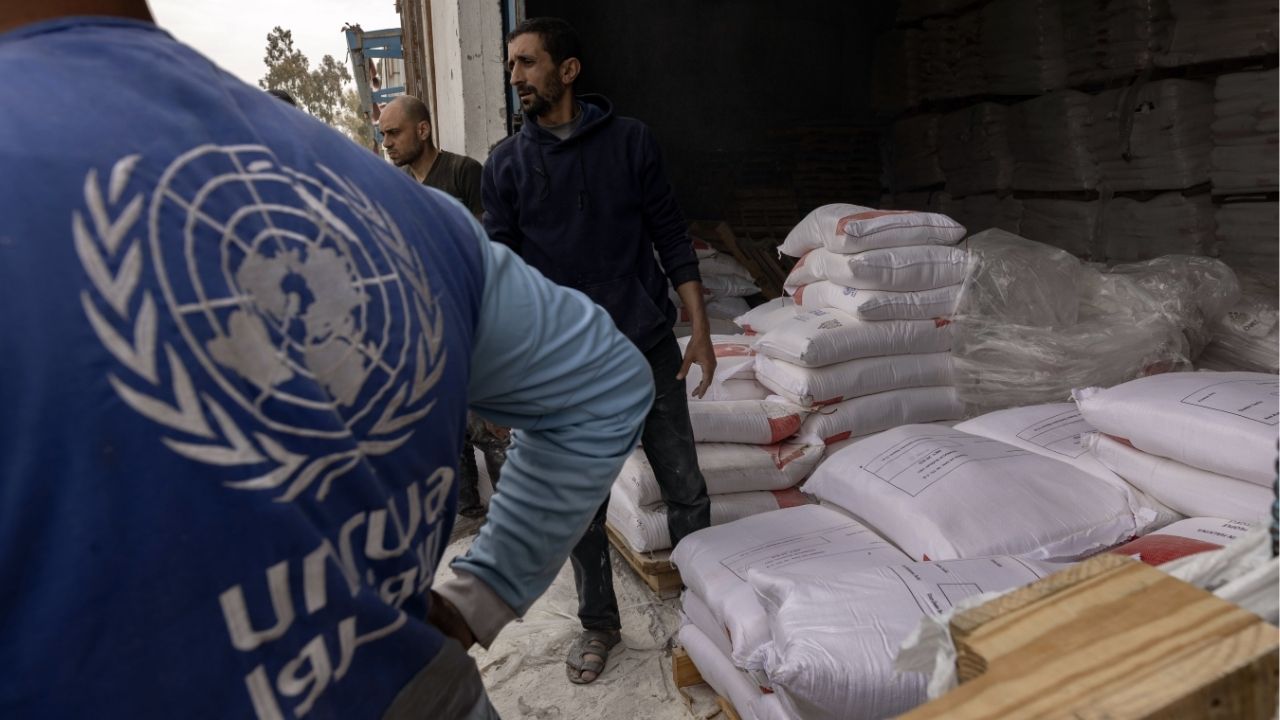
After the Israel-Hamas war began in 2023, UNRWA played a key role in distributing food, medicine and other aid to Palestinians during the humanitarian crisis. The agency’s schools were turned into shelters hosting displaced Palestinians.
Changed After Ban
That changed after last year’s ban, which severely hobbled the U.N. agency’s efforts in the West Bank and Gaza. Israel stopped providing new visas for UNRWA staff members to travel to Israel and Gaza; as a result, its Jerusalem offices are now largely vacant.
An UNRWA spokesperson did not immediately respond to a request for comment.
Monday’s law was just the latest blow in a yearslong clash between Israel and UNRWA that has escalated sharply since the Hamas-led attack on southern Israel on Oct. 7, 2023, set off the war in Gaza.
Founded in 1949, UNRWA serves Palestinians displaced by wars surrounding the founding of Israel, as well as their descendants. More than 700,000 Palestinian Arabs fled or were forced from their homes in what became Israel, and the agency grants refugee status to them and their descendants, who now number nearly 6 million.
Israeli officials have bristled at both the existence of a special agency for Palestinians and allowing their children and grandchildren to also claim the status of refugees. They have long argued that UNRWA perpetuates the conflict by tacitly encouraging Palestinians to seek a right of return to Israel.
UNRWA’s role was particularly pronounced in Gaza, where more than 1.5 million people were registered with the agency. Its schools and health clinics — as well as the salaries paid to its employees — provided a modicum of stability in the impoverished enclave.
Israel accuses Hamas, which seized full control of Gaza in 2007, of extensively infiltrating UNRWA. The agency has strongly denied that it has been compromised, saying that its employees were routinely examined by Israel.
Israeli officials also accused at least 18 UNRWA employees of participating in the Hamas-led attack on southern Israel. A subsequent U.N. inquiry found that at least nine employees may have participated in the assault, leading to their dismissal.
—
This article originally appeared in The New York Times.
By Aaron Boxerman and Johnatan Reiss/Saher Alghorra
c. 2025 The New York Times Company