

|
Getting your Trinity Audio player ready...
|
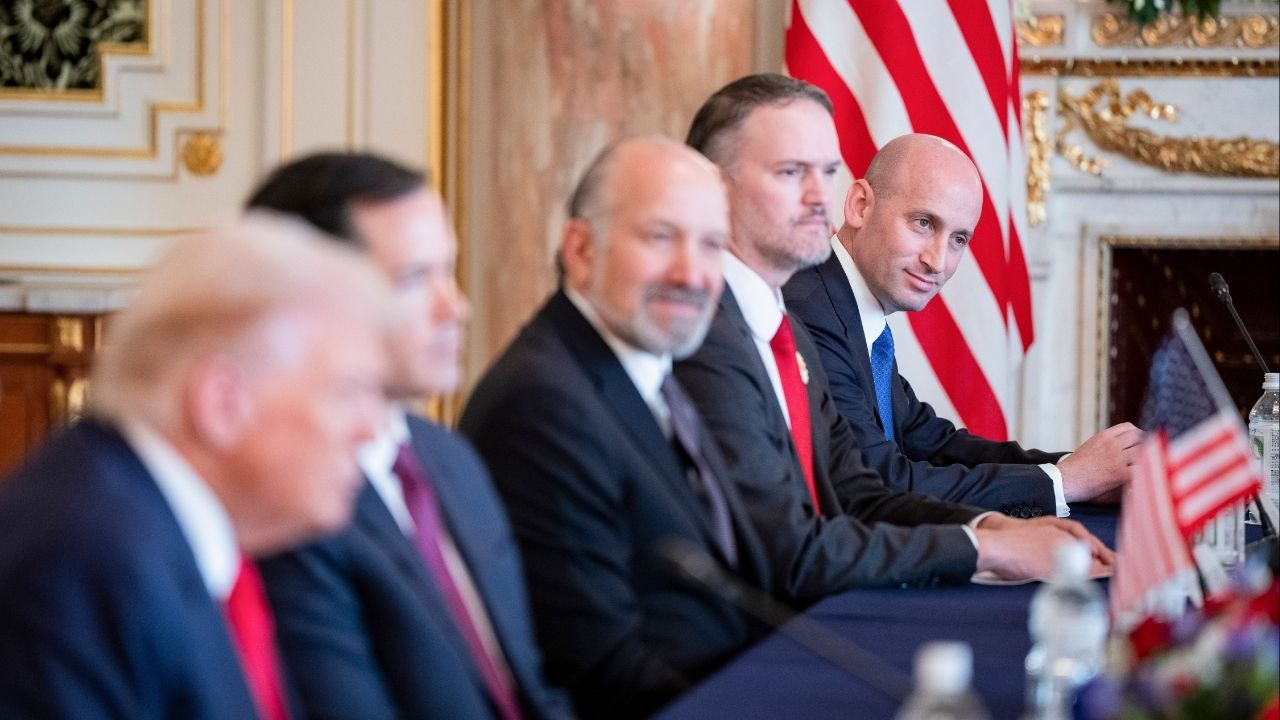
WASHINGTON — When Stephen Miller, one of President Donald Trump’s top advisers, makes the case for the Trump administration’s crackdown on immigration, he is focused not only on the actions of those who came to the United States from another country.
Increasingly, he blames their children as well.
Miller’s belief that seven decades of immigration has produced millions of people who take more than they give — an assertion that has been refuted by years of economic data — is at the heart of the Trump administration’s campaign to restrict immigration and deport immigrants already in the country.

But he is now stressing an argument that immigrants bring problems to the United States that extend through generations.
“With a lot of these immigrant groups, not only is the first generation unsuccessful. Again, Somalia is a clear example here,” Miller said on Fox News this month, adding: “You see persistent issues in every subsequent generation. So you see consistent high rates of welfare use, consistent high rates of criminal activity, consistent failures to assimilate.”
The attack line comes as the administration is calling for the Supreme Court to uphold Trump’s executive order ending birthright citizenship, the long-held principle that children born on U.S. soil are automatically citizens.
The argument by Miller and others in the administration hearkens back to the anti-migrant rhetoric of the early 20th century, when lawmakers used the 1924 National Origins Act to impose strict quotas to keep out immigrants from Asia and southern and Eastern Europe, and their families.
And while there is no legal basis to revoke U.S. citizenship from U.S.-born children and grandchildren of immigrants, Miller’s statements signal an even more aggressive effort to remake the country by shedding the recent arrivals and their offspring.
“He wants to unilaterally upend the idea that we are a nation where immigrants can ever become citizens with full and equal rights as native-born Americans,” said Andrea Flores, a former White House official in the Biden administration who worked on immigration matters.
Experts questioned the underlying argument made by Miller.
“Just as we saw with immigrants who arrived around the turn of the 20th century, the children of immigrants who have arrived to the United States since the 1960s consistently learn fluent English, obtain more education than their immigrant parents and achieve higher earnings, showing strong patterns of integration,” said Julia Gelatt, associate director of the U.S. immigration policy program at the Migration Policy Institute. “Study after study has demonstrated the upward mobility of children of immigrants.”
Miller’s hard-line stance comes at a moment when the public’s views on immigration are shifting to the right. Trump returned to the White House in large part because of dissatisfaction about immigration in the United States. During the Biden administration, communities struggled to keep up as people from all over the world arrived in the country, straining government resources and, for many, any kind of openness to immigration.
The Trump administration has made sweeping changes to limit legal immigration, including halting the naturalization process for people from countries that the White House put under a travel ban this year, predominantly in Africa and the Middle East.
“Stephen is correct to point out that aliens who come to our country en masse and refuse to assimilate to American society only re-create the same conditions that are destroying the nations they fled from,” said Abigail Jackson, a White House spokesperson. “We cannot allow their problems to become America’s problems.”
The Supreme Court announced this month that it would hear a landmark dispute over the constitutionality of Trump’s effort to end birthright citizenship.
Trump on his first day back in office signed an executive order declaring that children born to immigrants in the country without legal permission and to some temporary foreign residents would no longer be granted citizenship automatically. The executive order, which was paused by the courts, could throw into doubt the citizenship of hundreds of thousands of babies born each year.
But as the case makes its way to the Supreme Court, the rhetoric from the administration has heated up. Miller and Trump have targeted Minnesota’s Somali community as they make their case to crack down on illegal and legal immigration.
They have seized on an investigation into fraud that took place in pockets of the Somali diaspora in the state, using it to denounce the entire community, which Trump has called “garbage.”
“This is the great lie of mass migration,” Miller wrote on social media. “You are not just importing individuals. You are importing societies. No magic transformation occurs when failed states cross borders. At scale, migrants and their descendants recreate the conditions, and terrors, of their broken homelands.”
Pratheepan Gulasekaram, a law professor at University of Colorado Law School, said that Miller was treating people as “forever branded by their origins, distinct and antithetical to the fabric of our community.”
“In short,” Gulasekaram said, “he views immigration solely through the lens of cultural threat.”
—
This article originally appeared in The New York Times.
By Hamed Aleaziz/Haiyun Jiang
c. 2025 The New York Times Company