
|
Getting your Trinity Audio player ready...
|
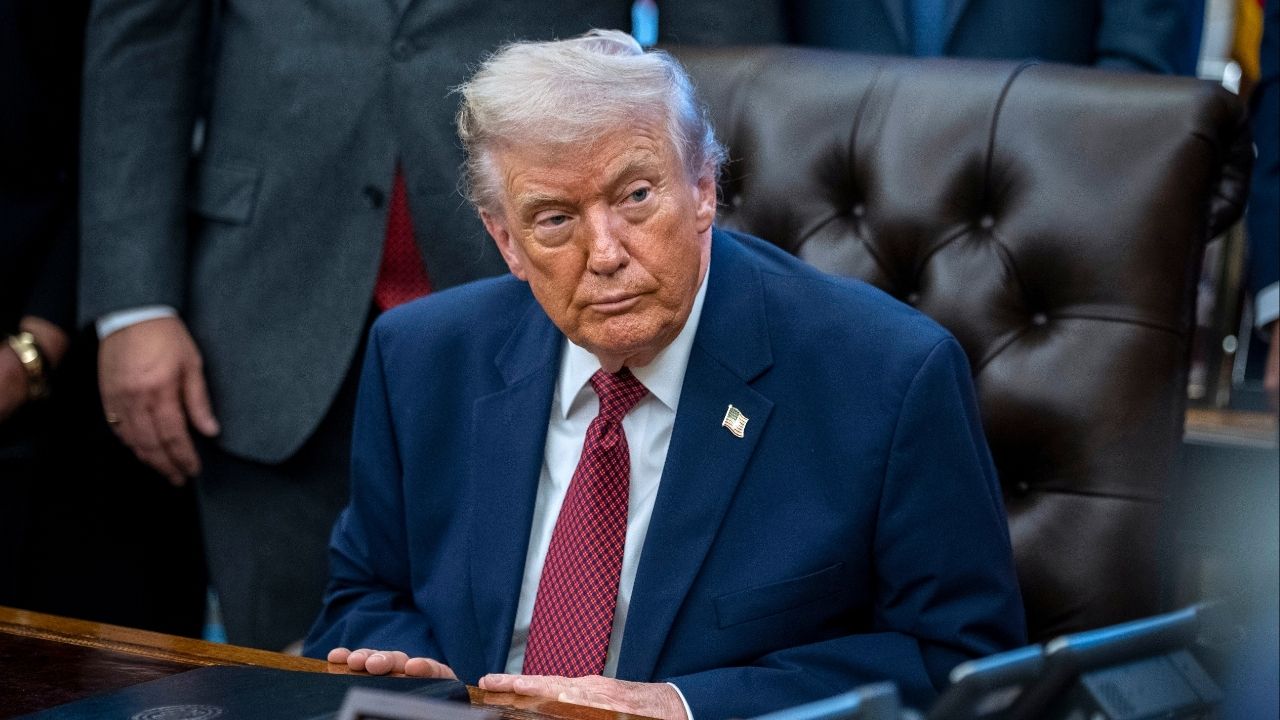
After months of holding steady, President Donald Trump’s approval rating has taken a dip over the past several weeks, according to a New York Times analysis of public polling.
As Americans voice broad concerns about the economy, Trump is facing discontent from across the political spectrum, with even some of his longest-serving allies raising complaints and urging the administration to refocus on economic issues.
Favorable views of the president’s job performance have slipped in recent weeks, as disapproval has grown, leaving the president with a net approval rating that is underwater by 14 percentage points, a widening gap from 10 percentage points just weeks ago, according to The New York Times’ polling average.

Although the shift is relatively small, it is notable after months of stability in Trump’s approval rating.
Over the summer, as Trump ordered National Guard troops into Democratic-led cities, imposed record-breaking tariffs, targeted his political enemies for prosecution and pressured colleges and universities to change their policies, public opinion on the president barely budged.
Asked for comment on the polling, Kush Desai, a White House spokesperson, said the administration was working to “deliver economic relief for the American people, from signing historic drug pricing deals to securing working-class tax cuts.”
“More work remains,” he added, “but Americans can rest assured that the same policies that created a historic economy in President Trump’s first term are set to repeat the success in his second term.”
Much of the drop in support for Trump’s job performance has come among voters who describe themselves as political independents; just 31% said they approved of his job as president in a November Marquette University Law School poll, down from 41% in July.
The president has also lost support among men, particularly white, college-educated men. Among them, his approval rating has dropped to 40%, down from 47% in June, according polling from Fox News. Exit polls suggest Trump won 50% of college-educated white men in November last year.
And yet, even with cracks showing in Trump’s base, punctuated by his messy rupture with Rep. Marjorie Taylor Greene, R-Ga., the president has maintained strong support within his party. Ninety-one percent of Republicans approved of his job performance, according to the Marquette poll.
A low but steady 5% of Democrats expressed satisfaction with Trump.
A look at the top issues driving Trump’s job approval rating — the economy and immigration — provides a window into his recent decline in the polls. While the president is underwater with voters on his handling of immigration, his numbers have been remarkably stable, even amid sweeping immigration crackdowns in cities across the country. And a majority of voters nationwide approve of how Trump is handling border security.
Economy Approval Dips
On the economy, however, the president’s numbers have been steadily declining. In July, 43% of voters approved of Trump’s handling of the economy, according to Marquette University polling. By November, just 36% approved. Here, there was a noticeable drop in approval in the president’s party, from 82% who approved of his handling of the economy in July to 75% in November.
Across surveys, voters expressed frustration with the current state of the economy. A majority of voters said they had been hurt by Trump’s economy in the Fox News poll, and three-quarters of Americans said their grocery costs had gone up in the past year, according to polling from Marquette University Law School. Just 26% said Trump was doing a good job at managing the cost of living, according to a Reuters/Ipsos poll.
After Democrats won elections across the country last month, in part because of their promises to bring down costs, Trump and his top aides tried to project a renewed focus on the economy. But the president has oscillated between promising to be the “affordability president” and railing against cost-of-living concerns, calling the issue of affordability a “con job.”
“They just say the word,” he said this week of Democrats focusing on affordability. “It doesn’t mean anything to anybody. They just say it — affordability. I inherited the worst inflation in history. There was no affordability. Nobody could afford anything.”
The drop in Trump’s approval rating coincided with the federal government shutdown, though there is little evidence that the shutdown hurt the president more than others in government. Voters were about equally likely to blame the president for the shutdown as they were Democrats or Republicans in Congress.
And while views of the president by both Democrats and Republicans also fell during the same window, as voters expressed frustration writ large with the leadership in Washington, those declines were more modest.
Though Trump’s approval among Republicans remains strong, the president has, in recent weeks, faced some pockets of resistance from his party. He changed course on releasing files related to Jeffrey Epstein, the convicted sex offender, after growing pressure from Republicans. He has repeatedly called for Republican senators to abolish the filibuster, though there appears to be little appetite for doing so. And he has expressed frustration with Republican lawmakers in states that have not supported his redistricting efforts.
—
This article originally appeared in The New York Times.
By Ruth Igielnik and Tyler Pager/Doug Mills
c. 2025 The New York Times Company