
|
Getting your Trinity Audio player ready...
|
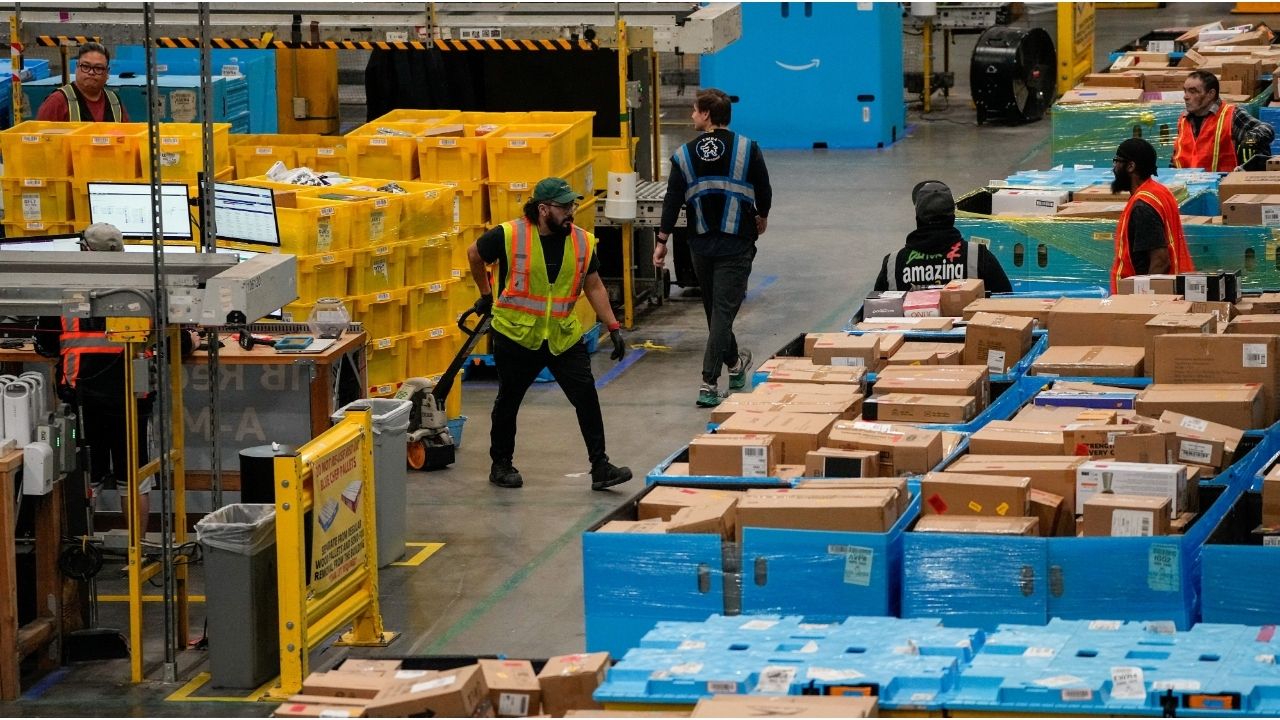
U.S. consumers are expected to spend $14.2 billion on Cyber Monday, according to Adobe Analytics, after a strong Black Friday weekend that saw wealthier consumers spend freely and lower-income shoppers hunt for deals.
Americans are expected to spend 6.3% more online than last year’s Cyber Monday – traditionally the country’s biggest online shopping day, and the culmination of the four-day shopping frenzy that begins the day after Thanksgiving.
U.S. online spending on Black Friday hit a record $11.8 billion, and $23.6 billion for the weekend overall – up about 9% from last year, according to Adobe, which tracks 1 trillion visits that shoppers make to online retail websites.

In-store shopping was weaker, dropping 5.3% for the weekend versus last year, according to data from RetailNext, a foot traffic analytics company.
Wealthy Consumers Spend Freely
Digging past top-line spending, early data suggests a bifurcation between wealthier consumers, who spent more freely, and lower-income shoppers who sought affordable goods at stores like Walmart and Target, said Marshal Cohen, chief retail advisor at consumer research firm Circana.
“When you look at unit consumption rather than dollar spend, you clearly see a difference,” said Cohen, citing shopper survey data and in-store observations. “Lower-income shoppers are either buying lower-priced items or buying fewer items.”
Luxury items are expected to slightly outpace overall growth, Cohen said.
Holiday spending has slowed overall since the pandemic, at least online. Adobe data show single-digit upticks each of the last five years, after double-digit growth each year between 2015 and 2020.
Low-income consumers, who received government stimulus funding during the pandemic, have grown more price-conscious as that money has dissipated, said Mark Mathews, chief economist at the National Retail Federation, an industry trade group.
Still, top-line sales growth was notable given the recent U.S. government shutdown and weak consumer confidence in an era of high tariffs.
That reflects the strength of economic indicators, like real wage growth and disposable income growth, despite consumers’ fears, said Mathews. “Consumers spent their wallets, not their psyches,” he said.
Cohen added that consumers often stretch during the holidays for the sake of loved ones. Tariff-driven price hikes have been modest, he said, and higher prices on once-a-year gifts do not bother consumers as much as price hikes for essentials like eggs and gasoline.
Retailers were more careful with discounts, while launching early promotions to lock in sales. Walmart’s sales began on November 14 and will run in three phases through December 1, with Walmart+ members getting early access.
Artificial Intelligence to the Fore
Consumers made strong use of chatbots and other AI features to compare prices and secure discounts from tariff-driven price increases.
“AI is the ultimate purchase accelerator, guiding consumers with clear intent straight to the buy button,” said Caila Schwartz, director of consumer insights at cloud computing company Salesforce.
More than half of online spending on Cyber Monday is expected to be driven by three categories – electronics, apparel and furniture – according to Adobe. AI-driven traffic to U.S. retail sites is expected to increase by 670% from last year, Adobe said, when AI tools such as Walmart’s Sparky or Amazon’s Rufus had not yet been launched.
—
(Reporting by Nicholas P. Brown in New York and Chandni Shah in Bengaluru; Editing by Anil D’Silva, Sriraj Kalluvila and David Gregorio)