
|
Getting your Trinity Audio player ready...
|
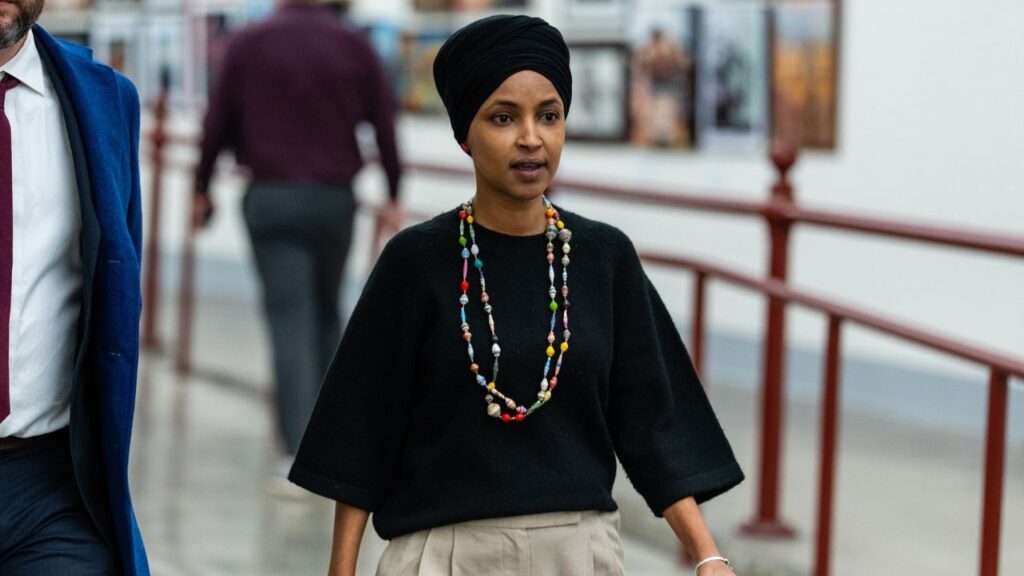
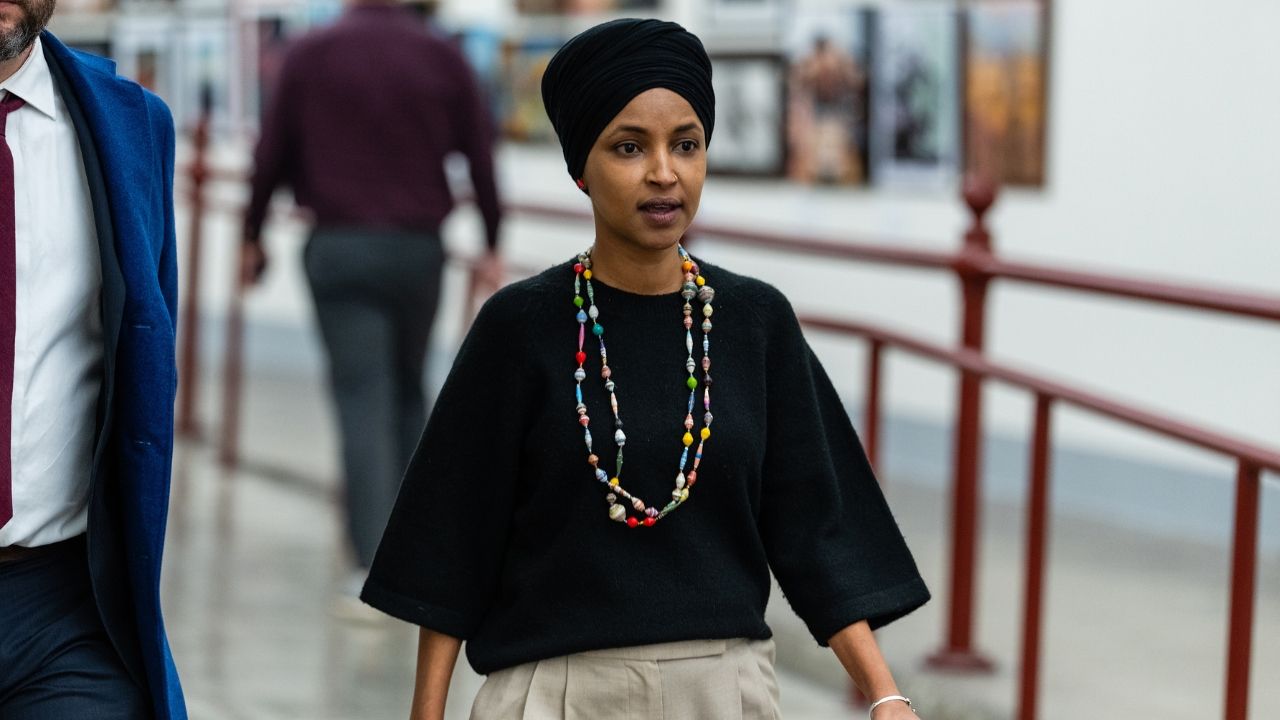
MINNEAPOLIS — Federal prosecutors filed a felony charge earlier this year against a man who briefly served as a bodyguard for Rep. Ilhan Omar in what his lawyer described as an unusual gambit to obtain incriminating information about the lawmaker.
The case against the bodyguard, Abdullahi Mohamed, who was accused of lying to a government official under oath, provides new insight into the Justice Department’s efforts to build a criminal case against Omar, D-Minn., who last week won a fifth term in Congress.
Federal prosecutors are reviewing Omar’s family immigration history as part of a sprawling criminal investigation that focuses in part on whether she entered into a sham marriage to help a man suspected of being her brother obtain a green card — a claim she has repeatedly denied. Mohamed’s case reveals that investigators have simultaneously been scrutinizing the lawmaker’s financial dealings.

The immigration case burst into the open last month after federal agents searched Omar’s Washington home and issued subpoenas to compel several people close to her to testify before a grand jury. Omar has denied wrongdoing and called the investigation a form of political persecution by President Donald Trump, who has long denigrated her and fellow Somali immigrants in racist and xenophobic terms.
Mohamed’s lawyer, Bruce Rivers, said that prosecutors spent months trying to turn the bodyguard into an informant to bolster their case against Omar. In a move he described as shocking, Rivers said that prosecutors repeatedly told him and Mohamed that the investigation into Omar was “100% being run by 1600 Pennsylvania Ave.,” the address of the White House.
“I’ve never seen anything like this in my almost 28 years practicing law in federal court,” said Rivers, a veteran criminal defense lawyer in Minneapolis.
Justice Department officials — who dropped the charge against Mohamed in September — declined to answer questions about the case. In an emailed statement, the department said it was “completely unrelated to any current investigations.” Reached by phone in Nairobi, Kenya, Mohamed declined to comment last week, saying he intended to discuss his experience when the “time is right.”
The case against Mohamed drew virtually no notice, and its link to the Omar investigation has not been previously reported. Two people familiar with the case, who spoke on the condition of anonymity to discuss a sensitive investigation, said that federal law enforcement officials identified Mohamed’s green card application as an opportunity to gather evidence against Omar.
The president and top administration officials have repeatedly made clear their interest in investigating Omar. In March, during an event in the Oval Office to launch an anti-fraud task force led by Vice President JD Vance, Trump said he hoped Omar would be investigated, calling her “one of the ringleaders.”
Later that month, Vance told a conservative commentator that he had discussed Omar’s case with Stephen Miller, a top White House aide who was promoted to chief of staff last week. Vance said the two had discussed how to hold her accountable for immigration fraud.
The case against Mohamed, who holds Somali and British citizenships, began in October 2025 when an immigration official interviewed him, a routine step for green card applicants. He was seeking to become a permanent resident after marrying an American citizen in Minnesota, according to court records and Rivers.
During the interview, Mohamed was asked a handful of questions that are not standard, Rivers said. Among them: whether he had worked on behalf of the Somali government while in the United States and whether he had “any interactions with any government officials or politicians in the United States.”
Mohamed, who Rivers said has a limited command of English, answered no to both, despite having briefly served as part of a security detail for Omar during an overseas trip and having visited her Capitol Hill office. He did not understand the questions, Rivers said.
His green card petition was denied. In February, Mohamed received a letter from the Justice Department notifying him that he was under criminal investigation for lying to a government official under oath, a crime punishable by up to five years in prison.
The move was unusual, according to former federal prosecutors and immigration lawyers. Immigration officials routinely deny green cards if they believe an applicant has lied, but those situations seldom lead to criminal charges. Court records show the case was assigned to two senior prosecutors in the U.S. attorney’s office in Minnesota: the chief of the criminal division and head of the fraud and public corruption section.
In March, federal prosecutors in Minneapolis invited Mohamed to a meeting known as a proffer, and it became clear why investigators had zeroed in on him and why top prosecutors had been assigned to a seemingly simple case, Rivers said. During such sessions, law enforcement officials ask people under criminal investigation questions after promising immunity for any incriminating statements they might make. Proffers often pave the way for plea deals and agreements to serve as a cooperating witness in a case against a higher-profile defendant.
The main focus of the meeting was Omar, according to Rivers, who was present. The investigators asked Mohamed about Omar’s immigration journey from Somalia and her marital history, which includes a 2009 marriage that became the source of rumors about possible immigration fraud.
They also asked whether he had knowledge of a $10,000 payment involving Omar and a brother of Mohamed, which Rivers said the investigators described as a possible bribe. Court records do not shed light on the government’s theory about that payment, and officials declined to answer questions about it.
The investigators offered to intervene to prevent Mohamed from getting deported if he provided derogatory information about the legislator, Rivers said.
“The overarching theme was ‘give us everything and anything,’” Rivers said. “It was a fishing expedition without a lot of direction.”
Jackie Rogers, a spokesperson for Omar, said the congresswoman had never directly employed Mohamed. She said it was “outrageous” that the government had allegedly offered to assist in Mohamed’s immigration case in exchange for damaging information about her.
“This is a staggering abuse of presidential power and a blatant weaponization of the full federal government to intimidate political opponents,” Rogers said.
Rivers said his client sought to be helpful but had no incriminating information about Omar to share.
Mohamed told investigators that he had briefly worked as a bodyguard for Omar during a trip she made to Puntland, in northeastern Somalia, but insisted that the two weren’t close, Rivers said. A video posted on Mohamed’s TikTok account last week shows Omar giving him a tour of her Capitol Hill office sometime in the past.
“They asked him if he knew who she was married to and that kind of stuff,” Rivers said. “He didn’t know any information about that stuff.”
To underscore the government’s interest in using Mohamed as a witness, Rivers said a prosecutor at the meeting — whom he declined to identify — repeatedly “told me that this was coming from the White House.”
After the meeting, Mohamed asked his brother about the $10,000 and later relayed to prosecutors that his brother told him the payment had settled a loan, according to Rivers.
Rogers declined to answer questions about the lawmaker’s relationship with Mohamed or whether she was involved in a $10,000 transaction involving one of his brothers.
After failing to turn Mohamed into a cooperating witness, Rivers said, prosecutors secured a grand jury indictment against him in early April. A trial was scheduled for Oct. 26.
On Sept. 3, prosecutors had Mohamed testify before a grand jury in Washington that has been reviewing evidence in the investigation into Omar, Rivers said. Prosecutors offered Mohamed immunity for anything he might say that could be incriminating, the lawyer said.
Rivers said that his client reiterated to the grand jury what he had told prosecutors about the $10,000 payment and his lack of substantive knowledge about the lawmaker’s immigration and marriage history.
The following day, prosecutors filed a motion to dismiss the indictment against Mohamed. Their stated reason: In August, the government had placed Mohamed in deportation proceedings. “There is no longer a federal interest in continuing prosecution in light of his anticipated removal from the United States,” the government said in the filing.
The government lawyers assigned to the case were early-career federal prosecutors who were promoted to leadership roles in the U.S. attorney’s office in Minneapolis after several veteran attorneys left the office early this year in protest over its handling of the Trump administration’s immigration crackdown in Minnesota. The criminal chief at the time resigned the week Mohamed’s case was dismissed, telling colleagues in an email that “no immediate concern or issue precipitated this decision.”
Ryan Wood, a former federal prosecutor and senior immigration judge in Minnesota, called Mohamed’s prosecution deeply unusual. Pursuing a false statement charge based on information from a green card interview is all but unheard-of, Wood said.
Prosecutors have an ethical duty to file charges only when they believe they can prove a crime beyond a reasonable doubt, which Wood called questionable given the language barrier and the vagueness of the questions Mohamed was accused of answering untruthfully.
Had the government succeeded in turning him into a cooperative witness, the offer to help on his immigration case as a reward would have made his testimony against Omar of dubious value, Wood and other former prosecutors said.
“You don’t want to have such explicit promises,” Wood said. “Even if they had found something they could use, this would have been a worthless witness.”
Soon after the case was dismissed, Mohamed left the United States, leaving behind his wife, a nursing student, Rivers said.
“He’s very in love with his wife and she’s very in love with him,” Rivers said. “They’re just trying to make things work the best they can.”
—
This article originally appeared in The New York Times.
By Ernesto Londoño and Abdi Latif Dahir/Eric Lee
c. 2026 The New York Times Company