
|
Getting your Trinity Audio player ready...
|
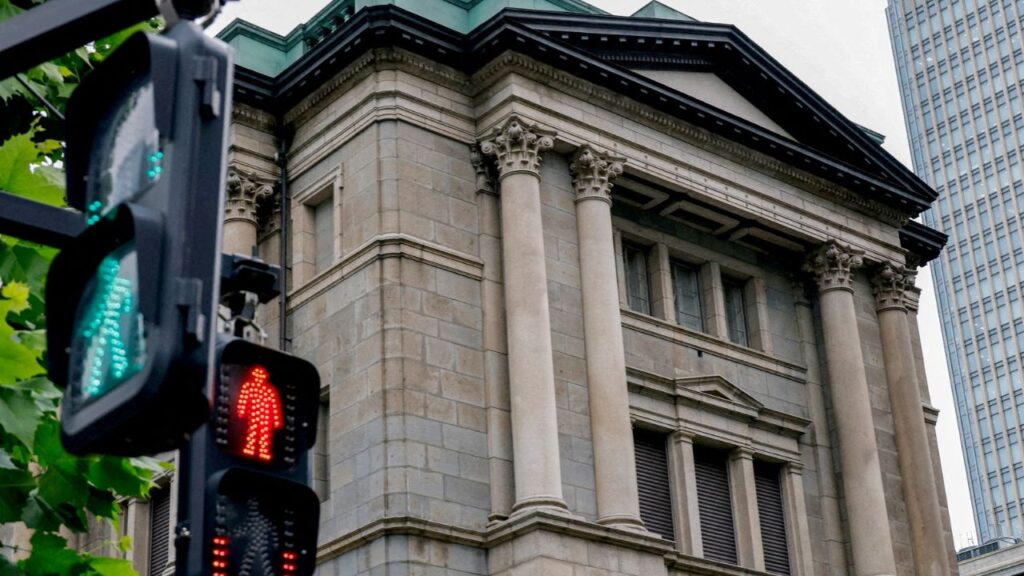
The Bank of Japan will raise interest rates in December to 1.50%, following June and September increases, according to a majority of economists in a Reuters poll, keeping up a quicker pace in a campaign that started with just one rate rise a year.
Rising energy and import costs, worsened by a weak yen and the war in the Middle East, are adding to inflation pressure in Japan, and there are more forecasters expecting at least two more rate rises to 2.0% by the middle of next year.
A period of relative stability in the yen, which spent most of the year under crushing selling pressure, triggering interventions from the Japanese authorities as well as the US Treasury, also supports the case for a December increase.

Last week, board member Junko Koeda said the central bank should not become overly cautious about raising rates, at their highest in 31 years, given the significant upside risks to inflation.
Nearly 70% of economists, 54 of 78, in the October 13-19 survey expected the BOJ to raise its policy rate to 1.5% this quarter, almost double the share in the previous poll.
Of the 54 respondents who specified a month, about 80% chose December, while only 2% chose the BOJ’s next two-day policy meeting, which concludes on October 30.
“With rate hikes in the United States and Europe looking likely before year-end, there is a risk that yen selling could accelerate if the BOJ postpones its move until the new year,” said Kazutaka Maeda, senior economist at Meiji Yasuda Research Institute.
The BOJ is unlikely to raise rates this month, while the US Federal Reserve and the European Central Bank are expected to raise borrowing costs in December, separate Reuters polls found.
“The economy is not overheating to the extent that would warrant consecutive rate hikes, and price developments are also within the BOJ’s expected range,” said Takeshi Minami, chief economist at Norinchukin Research Institute.
Sources have told Reuters many BOJ officials prefer to assess more data on how previous increases have affected financial conditions.
Rates to Reach 2% or Higher
Looking into next year, 39 of 65 analysts, or 60%, expected the policy rate to reach 1.75% by end-June, a median unchanged from the September poll.
Almost half of 41 respondents who answered an additional question said 1.75% would be the terminal rate. But the share expecting it to reach 2.00% or more rose to 51%, from 40% in September and 36% in August.
In September, two board members nominated by Prime Minister Sanae Takaichi who support looser fiscal policy opposed the decision to raise rates to 1.25%.
Traders saw the dissent as a sign the BOJ’s rate-hike plans could continue to face opposition from Takaichi’s administration, briefly pushing the yen lower.
Nearly three-quarters of respondents, or 23 of 32, said further dissenting votes when the Policy Board next raises rates could weigh on the yen, which is only about 4% stronger than its 2026 low of around 164 per dollar.
“If the dissenting vote were cast in particular by a board member appointed under the Takaichi administration, it could be interpreted as the administration’s attempt to restrain rate hikes, potentially heightening concerns that future policy tightening could fall behind the curve,” said Kei Fujimoto, senior economist at Sumitomo Mitsui Trust Asset Management.
Bond Issuance Seen Below 40 Trillion Yen
Japanese government bond (JGB) yields have risen recently alongside a global market rout, but also on expectations of further BOJ rate hikes and concerns Takaichi’s big spending and tax-cut plans will worsen the country’s already strained finances.
Takaichi has said the government aims to keep new bond issuance at around 40 trillion yen ($251 billion) for the fiscal 2027 budget. She reiterated on Monday Tokyo would “appropriately” control the size of its debt issuance.
Nearly two-thirds of economists surveyed, 15 of 23, said new issuance would be kept below 40 trillion yen.
“The government is likely keen to increase JGB issuance as a source of funding for growth investment,” said Junya Takemoto, senior economist at Sumitomo Mitsui Banking Corporation.
“However, as it becomes more conscious of rising interest rates in the market, it may seek to contain issuance by undertaking a full-scale review of budgets for existing subsidies and funds, ensuring that JGB issuance does not differ markedly from historical levels.”
(Other stories from the Reuters global economic poll)
(Reporting by Satoshi Sugiyama; Polling by Pulkit Khanna and Renusri K; Editing by Vivek Mishra, Ross Finley, Alexandra Hudson)