
|
Getting your Trinity Audio player ready...
|
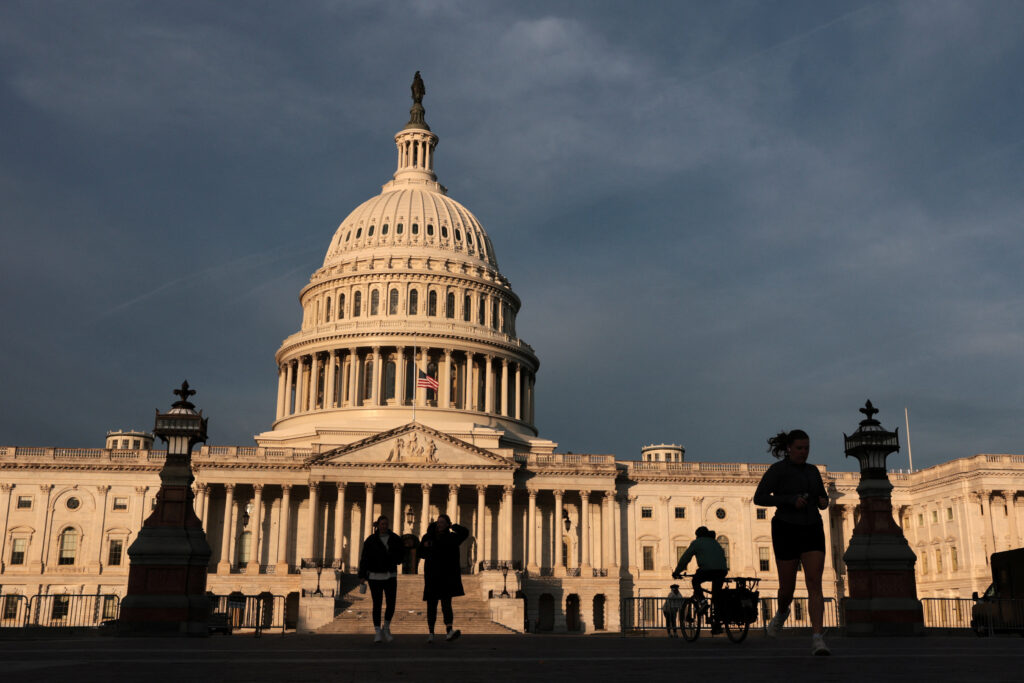
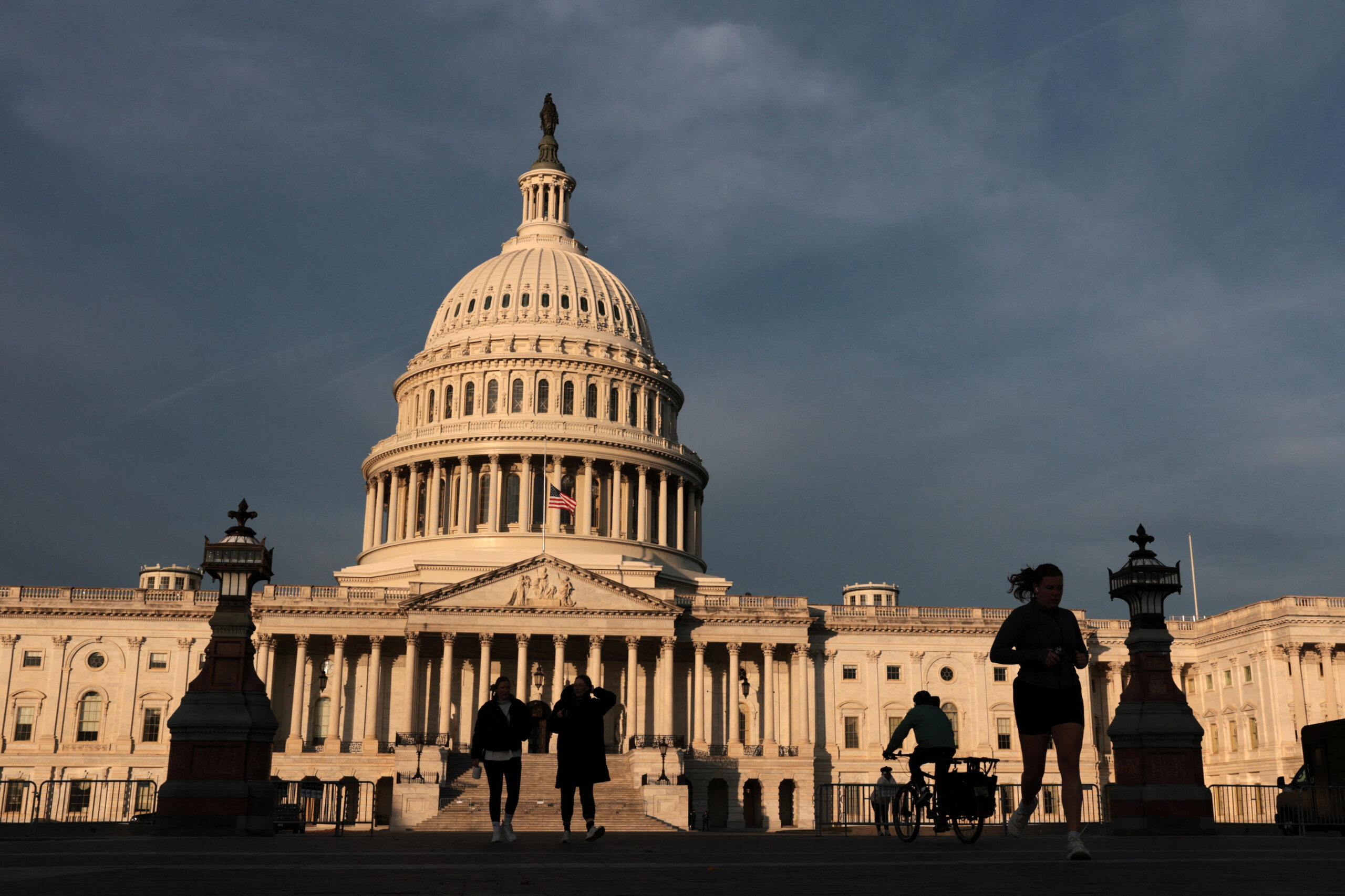
WASHINGTON — Senate Republicans bypassed an opportunity Monday to try to force a quick end to the shutdown at the Department of Homeland Security, leaving the closure in place while lawmakers remained on a two-week recess with no resolution in sight.
Despite urging from House GOP leaders, Senate Republicans did not try to use a brief ceremonial session Monday morning to push through an eight-week extension of funding for the agency, which Democrats had said they would object to.
Instead, Sen. John Hoeven, R-N.D., who presided over the roughly 30-second session, said lawmakers were continuing to discuss how to proceed.

“If we had something good to go today, we could have done it today, but we weren’t quite ready,” Hoeven told reporters at the Capitol afterward. “We continue to negotiate.”
Even if Republicans had attempted to plunge ahead, Democrats would have been able to block the effort with a single objection. They have said that a funding measure approved by the Senate early Friday — which would not fund immigration enforcement — was the surest way out of the impasse, because it represented a bipartisan agreement to end the shutdown.
“I’m here to object to any effort to undo that,” said Sen. Chris Coons, D-Del., who ultimately did not have to speak since Republicans made no move to push ahead with the House measure. “We followed the process, followed the rules and funded the government.”
The stalemate, now in its seventh week, has snarled airport security lines and caused other disruptions in government services, though Transportation Security Administration workers were to begin getting overdue paychecks this week under an order signed by President Donald Trump last week.
A potential end had appeared possible Friday when senators passed and sent to the House legislation to fund most of the agency except Immigration and Customs Enforcement and Border Patrol, which have been operating under a separate pot of money pushed through Congress last year by Republicans. Democrats have insisted they would not approve any money for immigration officers without new restrictions on their conduct, but they have been unable to reach a deal with the administration after weeks of talks.
House Republicans erupted in anger at the Senate’s bill as well as its leadership and refused to put the legislation on the floor. Instead, the House approved a two-month extension of funding on a nearly party-line vote, even though it had no chance of passage in the Senate, where it would need 60 votes including several Democrats, who are opposed. Still, Speaker Mike Johnson encouraged Senate Republicans to push it through as soon as they could.
Hoeven said that talks were underway to try to find some alternative that could advance, even as he acknowledged that the Senate legislation could likely pass the House through a combination of Republican and Democratic votes if Johnson were willing to put it on the floor.
“It was set up so that if some Republicans wanted to vote no, they could have voted no, but ultimately we think it would have passed,” Hoeven said.
Senate aides said Republicans had not given up on the House eventually accepting their chamber’s legislation, though that seemed unlikely given the depth of opposition and Trump’s own harsh criticism of the bill.
“The Senate is playing it too soft,” Trump told reporters Sunday night, suggesting that Republican senators had given in to Democrats who are “very sick individuals.”
On Monday, Karoline Leavitt, the White House press secretary, said Trump was “encouraging Congress to come back to Washington to permanently fix this problem and to fund and reopen the Department of Homeland Security entirely.”
Hoeven said that given the Democratic opposition, congressional Republicans also would move ahead with plans to fund the department for the next three years through a special budgetary bill that skirts the normal congressional appropriations process and protects legislation from a filibuster.
“We are going to send them something that actually funds DHS for the next three years,” he said. “We are not going through this again with the Democrats.”
That process, however, could take months and expose Republicans to a series of tough votes just before the midterm elections.
The Senate standoff on the funding bill and a separate new Republican election measure opposed by Democrats has intensified calls by Trump and other Republicans for the Senate GOP to take procedural steps to gut the filibuster so they can proceed on their own.
“End the filibuster, terminate the filibuster, just vote, and you’ll get everything you want,” the president told reporters Sunday night.
But Sen. John Thune, R-S.D., the majority leader, has been unwilling to take that step and at the moment does not have sufficient Republican votes in the Senate to do so even if he wanted to.
“I know, but that’s part of being a leader,” Trump said, when pressed on Thune’s assertion that he lacks enough GOP support to kill the rule. “You have to get the votes.”
With the spending legislation stuck and lawmakers out for recess until mid-April, some conservatives have encouraged Trump to order Congress back to get to work.
“The only way out of this DHS funding mess is for the Senate to COME BACK TO DC and ELIMINATE the filibuster NOW!” Sen. Rick Scott, R-Fla., wrote on social media.
But he was not on hand Monday morning when the Senate briefly convened. Despite the pleas from Scott and others, Hoeven was the only Republican senator at the momentary session.
—
This article originally appeared in The New York Times.
By Carl Hulse
c. 2026 The New York Times Company