

|
Getting your Trinity Audio player ready...
|
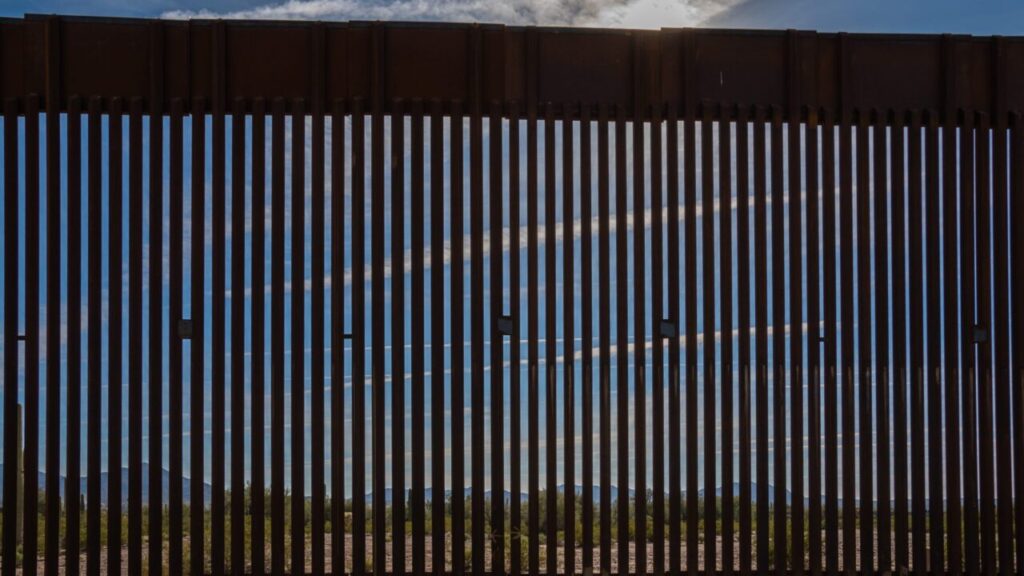
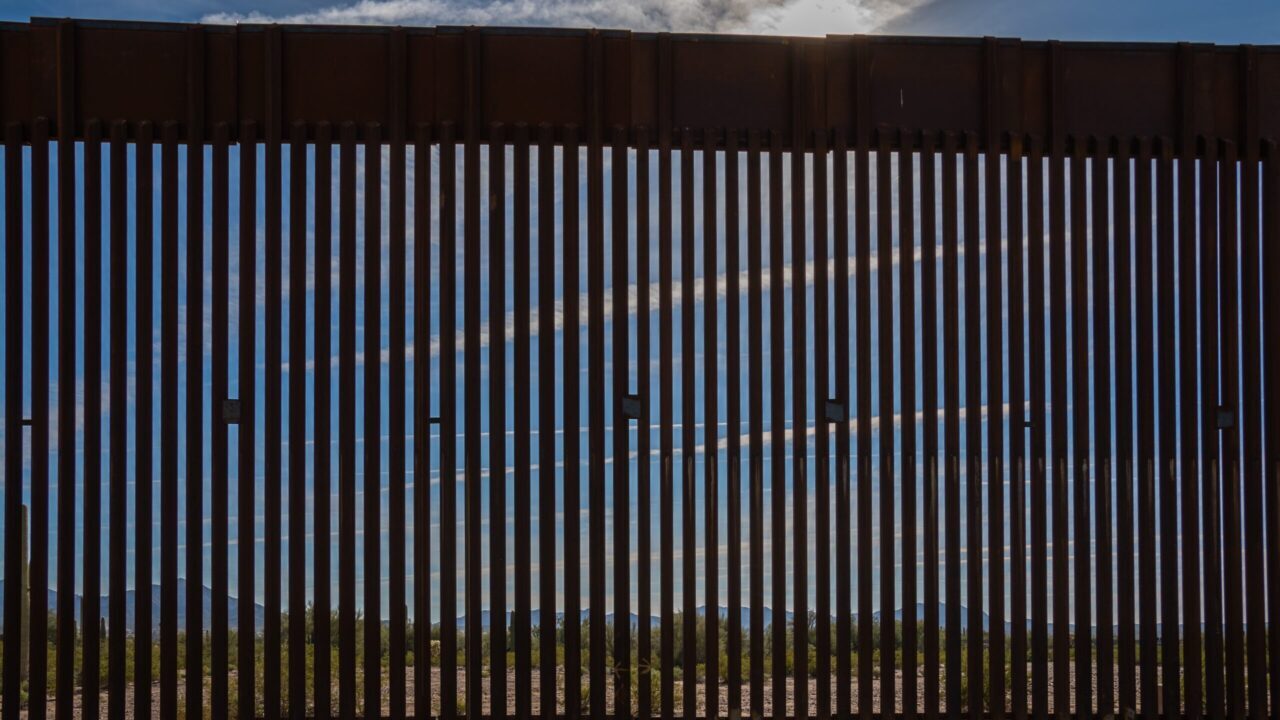
Where the Rio Grande cuts steep cliffs through the arid West Texas mountains, dozens of spring break visitors on a canoe tour learned that the barren landscape in and around Big Bend National Park could soon feature a towering steel border wall.
“There is no crisis on the border — only fun!” one river guide, Charlie Angell, told them. Another guide wore a hat reading “No al muro,” which translates to “No to the wall.” Nearby, a canoe inscribed with “No Wall” sat atop a pickup truck.
Upriver, Mario Peña, 62, checked on his alfalfa and fed a pen of goats where the border wall was slated to be built. “For us, it’s the farming,” said Peña, a retired oil field worker. “Our parents, our grandparents, we did all this — just to let it go?”

The national fight over immigration landed without warning last month in Texas’ Big Bend region, a remote stretch of inhospitable terrain that runs for hundreds of miles along the U.S.-Mexico border.
Despite President Donald Trump’s vow to complete a border wall along the southern frontier, the plan shocked West Texas. It also unnerved Republicans and Democrats across the state who wondered why the federal government would spend billions to build a wall through an area so remote.
Trump Plan Puts Republicans in a Pickle
But for the state’s Republican leaders, the border wall plan presented a political predicament. While none have spoken in favor of a physical wall, public opposition could risk inflaming the Trump administration and alienating voters who prize border security.
Instead, top Texas officials, and some wealthy Republican donors, conveyed their opposition to Trump administration officials behind the scenes, according to two people briefed on the effort who requested anonymity to describe the private talks. They argued for border crossing detection technology in place of a 30-foot-high steel barrier.
“Sensible people who look at what’s being proposed here think this is insane,” said JP Bryan, a conservative former oil executive who owns two ranches and a popular hotel in the Big Bend region. “Anyone who supports this ought to put their name on this wall, so it can go down in infamy forever.”
The combination of private lobbying and public pressure — including demonstrations, letter-writing campaigns and a giant steel replica of the wall erected in the tourist town of Terlingua — appeared to pay off this month.
Plans for the Steel Barrier Quietly Evaporate
Without a formal announcement, a Customs and Border Protection online map was changed to remove plans for a physical barrier in Big Bend National Park. Mike Banks, the Border Patrol chief, told Gov. Greg Abbott that there would be no wall in either the national park or the Big Bend Ranch State Park, according to a person briefed on the conversation who was not authorized to discuss it publicly.
“We are placing our construction efforts on hold adjacent to TPWD land and the Big Bend National Park,” Paul Enriquez, a Border Patrol official in charge of infrastructure, told officials from the Texas Parks and Wildlife Department, which runs state parks, in a March 6 email obtained through a public information request.
At the same time, in closed-door meetings with local officials this month, federal officials said a roughly 175-mile-long wall would still be built from the state park through Presidio and Hudspeth counties. A Customs and Border Protection spokesperson did not respond to questions about the plan.
“They’re going to do this,” said José Portillo Jr., the county judge in Presidio County, who attended the meeting. “The fight is not over.”
For generations, the Big Bend area has been a low priority for border agents who have relied on the remoteness of the landscape and the harshness of its desert weather — where temperatures can swing from the 90s during the day to the 30s at night — as a deterrent. More recently, agents have used cameras and sensors to detect unauthorized crossings.
Border Patrol Says It Averages Six Crossings Daily in Big Bend
Even as migration surged during the Biden administration, the roughly 510 miles of the Border Patrol’s Big Bend region was an afterthought. This year, the Border Patrol has recorded an average of six crossings a day in the entire region.
“It’s the least active sector along the U.S.-Mexico border,” said Thaddeus Cleveland, the Republican sheriff of Terrell County and a local Border Patrol veteran.
Then last month, landowners along the river received letters from the federal government offering $2,500 or $5,000 for access to begin construction on “border security infrastructure.” The Trump administration appeared eager to press forward, looking to start building as soon as possible.
There were no public announcements or community meetings. Many learned about the coming wall from The Big Bend Sentinel, the local newspaper. Others received calls from contractors looking for land that could be used to set up camps for workers, since much of the river sits far from any hotels.
“We don’t have a grocery store in the county, but we’re going to have a man camp,” said Joanna MacKenzie, the Republican county judge in Hudspeth County, which sits along the river west of the state park.
Residents Fine With Tech Surveilance of the Border
For most residents across the region, which includes working-class border towns like Presidio and the art tourism mecca of Marfa, the only official updates came from the CBP’s online map, where a colorful line tracks the path of the proposed “smart wall.” The colors indicate whether a physical wall will be built or a virtual barrier using “detection technology” will be installed.
A physical barrier would cut off river access, threaten crops and cattle, and disrupt migration routes, critics said. The prospect of its construction has brought together environmentalists, former national park officials, seasonal river guides, tourists and wealthy ranch owners, galvanizing support for surveillance as a preferred approach to this section of the border.
“Rugged, isolated areas like Big Bend are great opportunities to deploy technology to aid in securing the border,” a spokesperson for Abbott, Andrew Mahaleris, said.
Many parts of the border already have such technology, and local residents and landowners said they did not object to an expansion of that approach in the region.
“There’s a tower watching us now,” said Charlie Cecil, pointing from the edge of a steep hill overlooking the Rio Grande at a surveillance tower bristling with sensors.
This article originally appeared in The New York Times.
c.2026 The New York Times Company