
|
Getting your Trinity Audio player ready...
|
WASHINGTON — The Senate voted early Friday to fund the Department of Homeland Security except for its immigration enforcement and deportation operations, raising the prospect of an end to a weekslong partial shutdown that has strained federal workers and caused long waits at airports.
The measure does not include funding for Immigration and Customs Enforcement or Border Patrol, nor does it contain provisions that Democrats had demanded for weeks to rein in President Donald Trump’s immigration crackdown as a condition of funding the department.
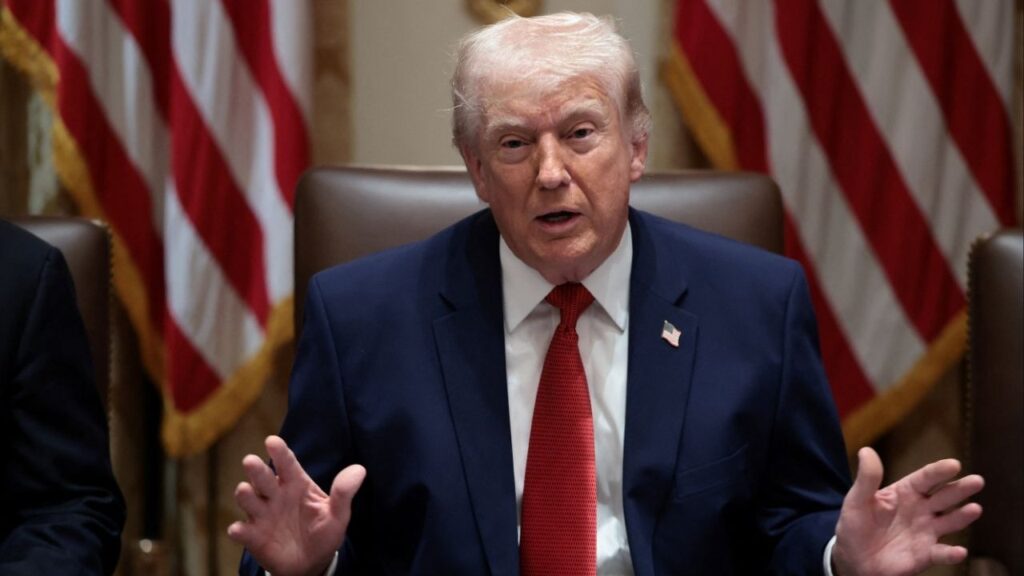
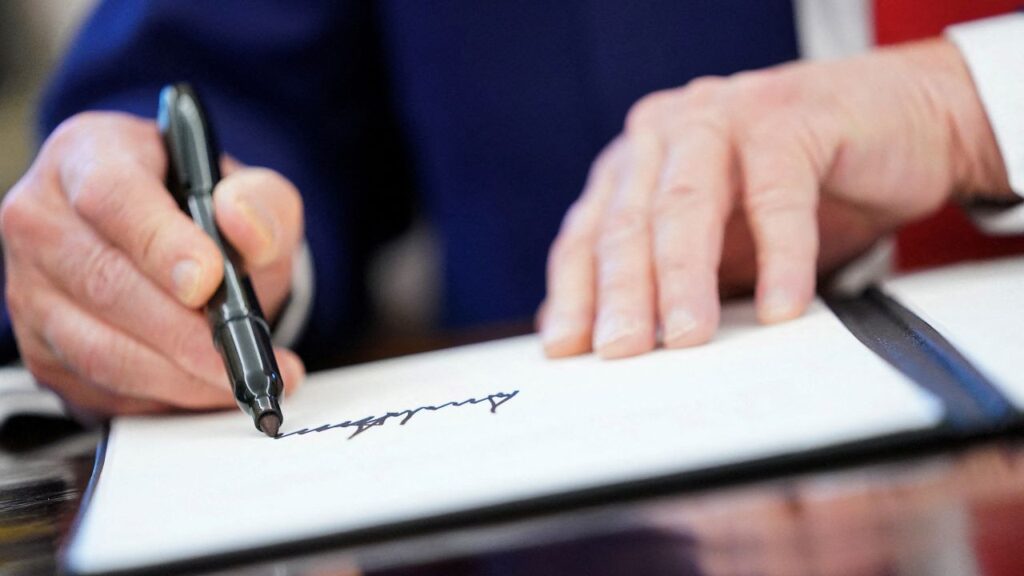
After weeks of haggling over such restrictions and failed efforts by lawmakers in both parties to pass legislation that would reopen the Homeland Security Department, the measure was quietly approved before dawn in Washington by a voice vote. It came hours after Trump said he would go around Congress to pay Transportation Security Administration agents, who have worked without pay since funding for the department lapsed Feb. 14.

The bill must still be considered by the House, which could vote on it as soon as Friday. It was unclear whether the measure would pass that chamber, where Speaker Mike Johnson holds a narrow Republican majority. A number of hard-right Republicans have criticized the Senate’s approach and oppose a funding bill that does not include new money for immigration enforcement, arguing that they should not give in to Democrats who have refused to provide any.
Should the House approve the measure and Trump sign it, the deal would end a negotiating standoff that has caused the longest partial government shutdown on record.
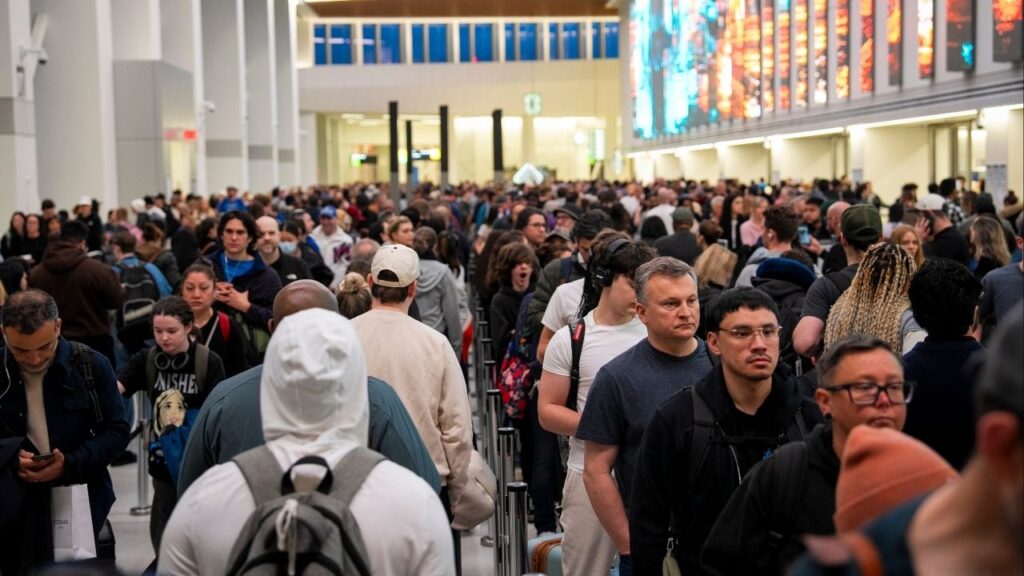
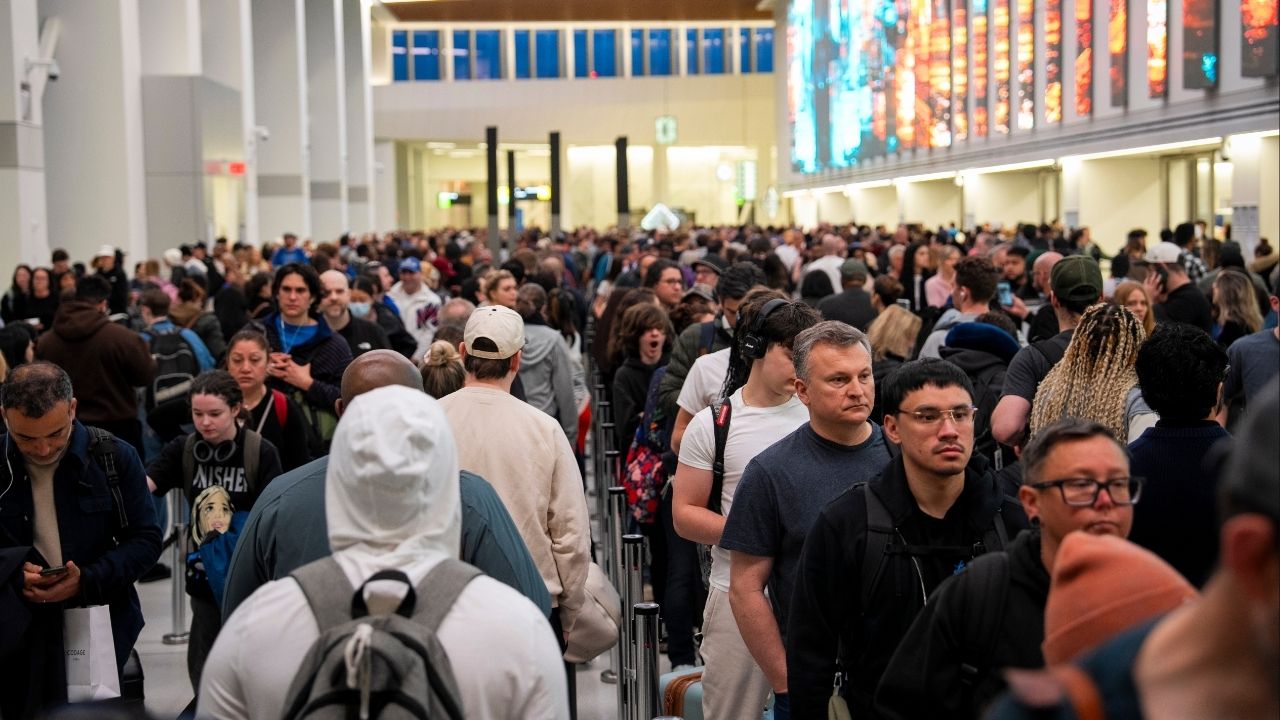
Though several agencies have gone without funding, the shutdown has most visibly affected airport security workers and passengers. Hundreds of TSA agents quit or called out of work, leading to staggeringly long lines at some of the busiest airports in the country. The growing crisis increased pressure on senators to try to find a deal, especially before a scheduled two-week recess.
Even after Trump’s announcement Thursday, senators had suggested that their negotiations were ongoing. But his intervention appeared to sap what little will there had been to find a deal that would fund the department while including new curbs on immigration agents that would be agreeable to both Senate Democrats and the White House.
The measure that the Senate approved around 2:20 a.m. contains modest provisions that lawmakers in both parties had already agreed to in January, including money for body cameras for immigration enforcement officers — but no requirement that they be worn.
It omits entirely the other restrictions that Democrats demanded after federal immigration officers killed two American citizens in Minneapolis in January, including barring ICE agents from wearing masks and requiring that they obtain judicial warrants to enter private homes.
And the deal does not reflect narrow concessions that the White House agreed to in talks with Democrats last week, including requirements that officers display visible identification and limits on immigration enforcement at “sensitive areas” like hospitals and schools.
Sen. Chuck Schumer, D-N.Y., the minority leader, said Democrats would continue to push for those changes. But it will be all but impossible to win them without broad GOP support, and Senate Republicans said this week that Democrats could not expect to impose restrictions on an agency that they were not funding.
Sen. John Thune, R-S.D.,the majority leader, on Friday criticized what he called a “piecemeal” approach to funding.
“We could be standing here right now passing a funding bill with a list of reforms if Democrats had made the smallest effort to actually reach an agreement,” he said. “But they didn’t.”
Still, Schumer contended that the resolution vindicated his party’s strategy during the weekslong fight.
“Senate Democrats were clear: no blank check for a lawless ICE and Border Patrol,” Schumer said after it passed.
Senate Republicans, who had presented the proposal that passed early Friday to Trump earlier in the week, have said that ICE and the Border Patrol can continue to operate using the billions of dollars that the GOP gave both agencies as part of their sweeping tax and domestic policy bill. (Trump had also been expected to use funds from that legislation to pay TSA agents, though it was unclear why he waited more than five weeks after the shutdown began to direct that the money be used to do so.)
Republicans also said that they planned to draft a separate bill that would address new funding for immigration enforcement and would include the president’s long-sought restrictions on voting. They are hoping to push that bill through Congress without Democratic support using a process called budget reconciliation.
But that effort would require near-unanimous support, and many Republican lawmakers are worried that the party would not be able to unite behind that legislation, particularly in an election year.
—
This article originally appeared in The New York Times.
By Michael Gold and John Yoon/Vincent Alban
c. 2026 The New York Times Company