
|
Getting your Trinity Audio player ready...
|
The International Olympic Committee has barred transgender athletes from competing in the women’s category of the Olympics and said that all participants in those events must undergo genetic testing.
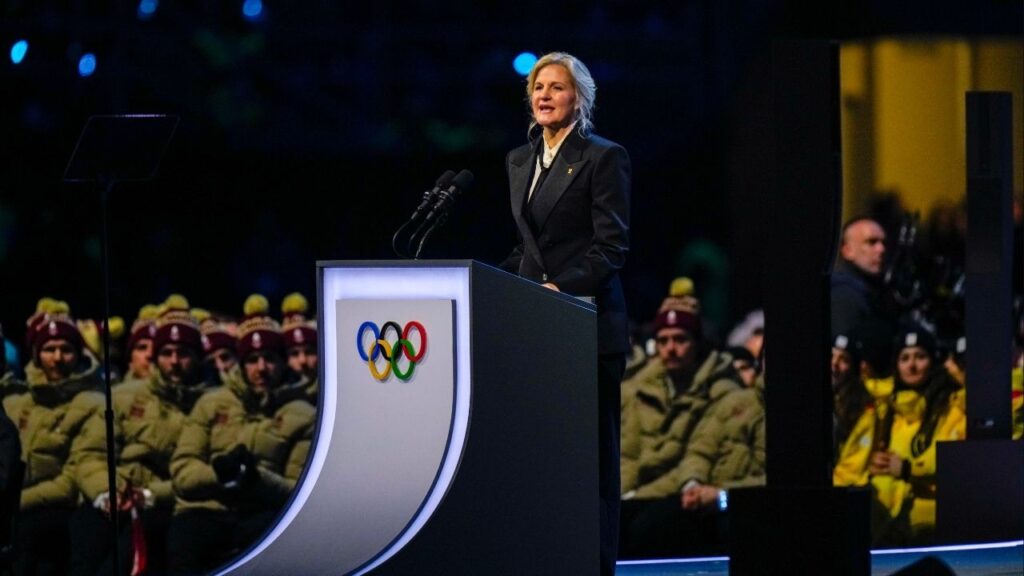
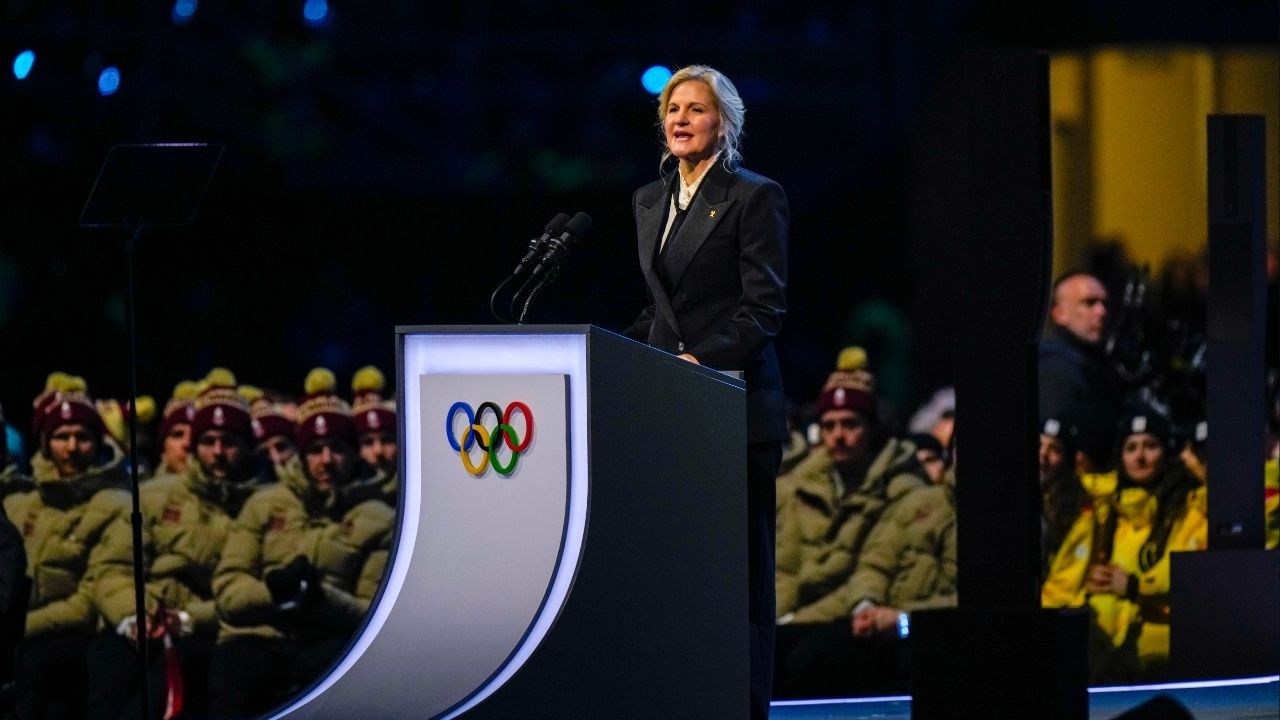
The decision, the most consequential since Kirsty Coventry was elected last year as the first woman to serve as president of the IOC, followed a board meeting and months of speculation over the organization’s policy on one of the most contentious issues facing global sports. The rules will be applicable starting at the next Olympics, in Los Angeles in 2028.
When Coventry, a former Olympic champion swimmer from Zimbabwe, campaigned to lead the organization, she frequently said how important it was to protect the women’s category amid broader — and often bitter — debates about the participation of transgender athletes in sporting competitions.

“At the Olympic Games, even the smallest margins can be the difference between victory and defeat,” Coventry said in a statement announcing the news. “So, it is absolutely clear that it would not be fair for biological males to compete in the female category. In addition, in some sports it would simply not be safe.”
She added the new policy “is based on science and has been led by medical experts.” Under the new policy, eligibility will be determined by a one-time gene test, according to the IOC. The test, which is already being used in track and field, requires screening via saliva, a cheek swab or a blood sample.
Payoshni Mitra, executive director at Humans of Sport, a group that has focused on the issue, was critical of the new Olympic policy. “This kind of brutal language doesn’t protect sports — it polices women’s bodies,” she said in a statement to The New York Times. “It fuels suspicion, invites public scrutiny and puts already vulnerable athletes at risk.”
The IOC consulted a number of experts as it grappled with how to handle an issue that was becoming a growing concern for sports leaders. Late last year, Dr. Jane Thornton, the IOC’s medical and scientific director and a former Olympic rower for Canada, presented the initial findings of a review of athletes who are transgender or have differences of sexual development, known as DSD, and are competing in women’s sports. That analysis, which has not been made public, stated that athletes born with male sexual markers retained physical advantages, including among those who had received treatment to reduce testosterone.
In 2021, Laurel Hubbard, a weight lifter from New Zealand, became the first transgender woman to compete at an Olympics after transitioning.
Until now, the IOC’s guidance had permitted transgender women to compete with reduced testosterone levels but left the final decision to individual sports federations. Track and field, swimming, boxing and rugby have introduced their own sweeping bans on transgender athletes from competing in women’s competitions.
Women’s sports have been a critical front in a polarizing and public debate over transgender issues, a topic that was further inflamed last year when President Donald Trump signed an executive order prohibiting transgender athletes from competing in women’s college sports.
Track and field became the first major sport to introduce mandatory DNA sex testing for athletes, starting with women’s competitions in March 2024. That came less than a year after the issue of eligibility erupted at the Paris Olympics in 2024, when the boxing competition was upended by ugly scenes inside and outside the ring over the participation of two women who went on to secure gold medals.
The IOC’s announcement comes just days after boxing officials cleared featherweight champion Lin Yu-ting to return to the sport after her status — along with that of Algerian boxer Imane Khelif, the other woman at center of the debate in Paris — had been put in doubt. Lin, 30, can now compete at the Asian Boxing Championships this weekend, her first international event since the Paris Olympics.
The screening rules, including those of the type announced by the IOC, have already run into problems with national laws. For example, female boxers in France were not able to be tested locally before international competitions because privacy laws there restrict genetic testing to determine gender.
The IOC ruling also — with the exception of the rarest cases — eliminates from women’s competition a minority of athletes who do not have the typical female XX sex chromosomes and have one of several conditions that together are known as differences in sex development. Some people do not know they have such differences. But their unusual genetics can result in high levels of testosterone and possibly greater muscular development, giving them some of the athletic advantage that men have.
—
This article originally appeared in The New York Times.
By Tariq Panja/Vincent Alban
c. 2026 The New York Times Company