
|
Getting your Trinity Audio player ready...
|
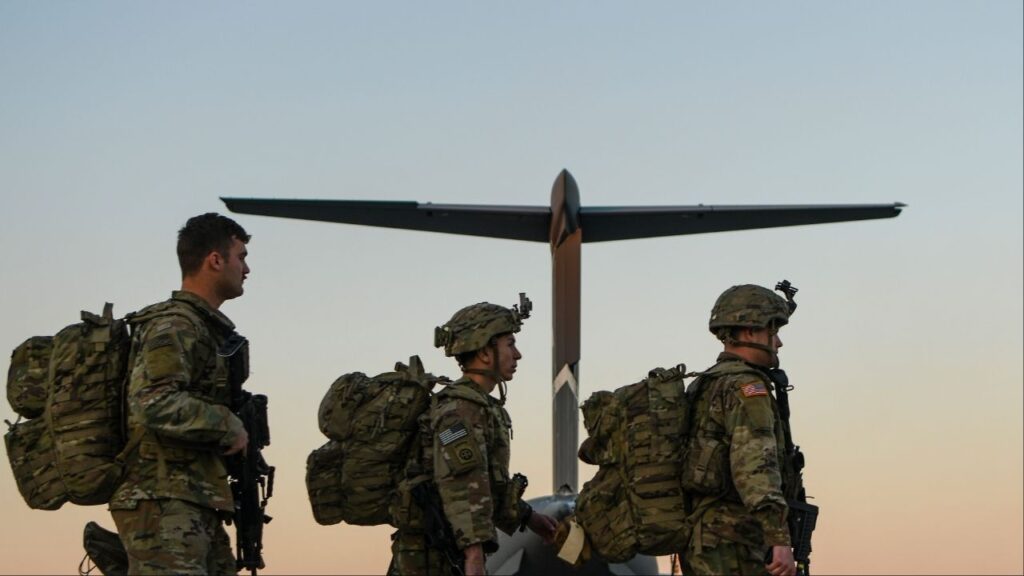
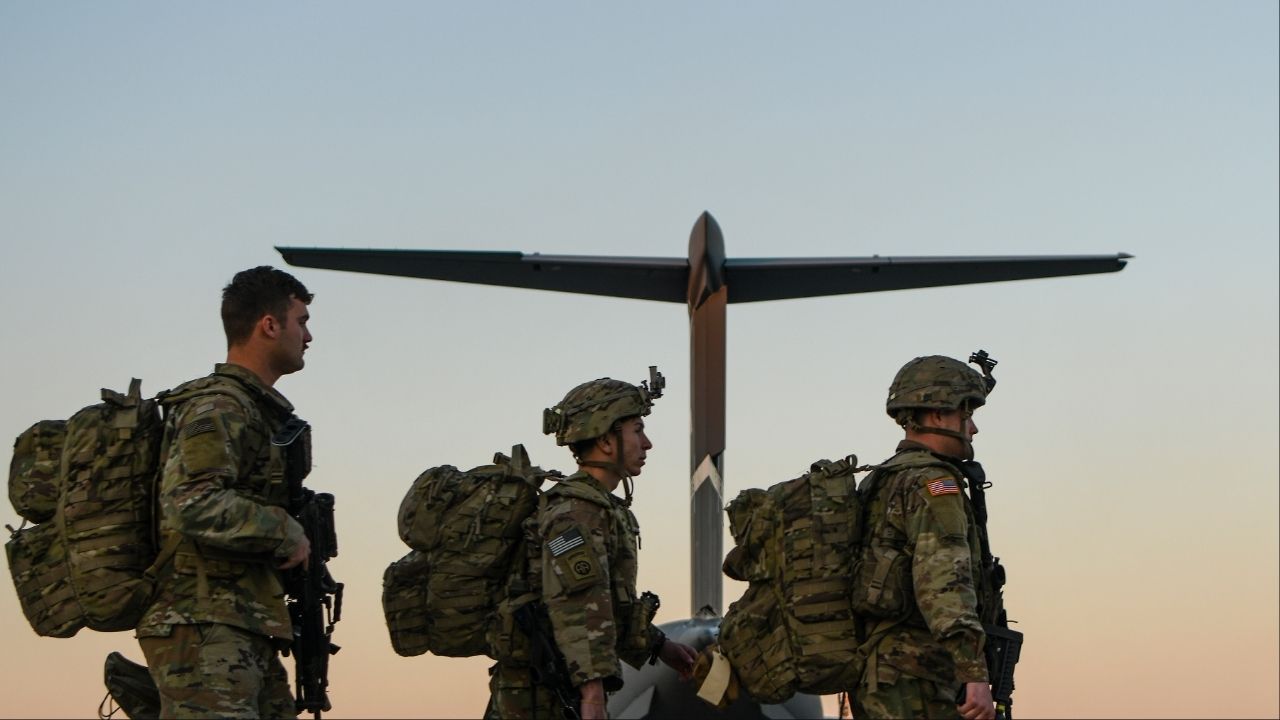
WASHINGTON — Senior military officials are weighing a possible deployment of a combat brigade from the Army’s 82nd Airborne Division and some elements of the division’s headquarters staff to support U.S. military operations in Iran, defense officials said.
The officials described the military’s actions as prudent planning, noting that nothing had been ordered by the Pentagon or U.S. Central Command, which declined to comment. The officials spoke on the condition of anonymity to discuss ongoing planning.
The combat forces would come from the 82nd Airborne’s Immediate Response Force, a brigade of about 3,000 soldiers capable of deploying anywhere in the world within 18 hours. These forces could be used to seize Kharg Island, Iran’s main oil export hub.

Another possibility being considered, should President Donald Trump authorize U.S. troops to seize the island, is an attack by about 2,500 troops from the 31st Marine Expeditionary Unit, which is on its way to the region.
The airfield on Kharg Island was damaged by the recent U.S. bombing raids so former U.S. commanders said it was more likely to first bring in Marines, whose combat engineers could quickly repair airfields and other airport infrastructure. Once the airfield is repaired, the Air Force could start flowing matériel and supplies, as well as troops, if necessary, by C-130s.
In that scenario, it is possible that troops from the 82nd Airborne would augment the Marines. The upside of going with paratroopers is they can arrive overnight. The downside is they do not bring any heavy equipment, such as heavily armored vehicles, that would offer protection if Iranian forces counterattacked, current and former officials said.
The Marines lack the sustainment and staying power of the forces from the 82nd Airborne, which could be used to relieve Marine forces after the initial attack on the island, current and former officials said.
The headquarters element from the 82nd Airborne would be used as a subordinate headquarters for mission planning and coordination in what is becoming an increasingly complex battle space. In early March, the Army abruptly canceled the 300-member headquarters’ participation in an exercise at the Joint Readiness Training Center in Fort Polk, Louisiana.
Army officials said they made the decision to keep the division’s command element at Fort Bragg, North Carolina, just in case the Pentagon ordered the ready brigade to the Middle East. The command did not want to have its headquarters caught out of place if the balloon went up for them. The cancellation was reported earlier by The Washington Post.
The 82nd Airborne Division’s Immediate Response Force has deployed on short notice several times in recent years, including to the Middle East in January 2020 after the U.S. Embassy in Baghdad was attacked, to Afghanistan in August 2021 for evacuations and to Eastern Europe in 2022 to support operations in Ukraine.
—
This article originally appeared in The New York Times.
By Greg Jaffe and Eric Schmitt/Kenny Holston
c. 2026 The New York Times Company