
|
Getting your Trinity Audio player ready...
|
Global stocks fell on Wednesday, holding declines after the Federal Reserve kept interest rates unchanged, while a rise in crude prices and an earlier reading on U.S. inflation kept equities under pressure.
The U.S. central bank’s summary of economic projections (SEP) showed the Fed’s benchmark overnight interest rate would fall by just a quarter of a percentage point by the end of this year, with no hint of the timing of such a move, while the inflation projection for the end of the year was 2.7%, up from the 2.4% view in December.
“They’re only guessing about what will happen with oil prices, but inflation is projected to run 0.3 percentage points hotter without a material drag on growth, that could be optimistic on their part,” said Brian Jacobsen, chief economist at Annex Wealth Management in Menomonee Falls, Wisconsin.

“It’s similar to how they overestimated the effect of tariffs on inflation and underestimated the growth drag.”
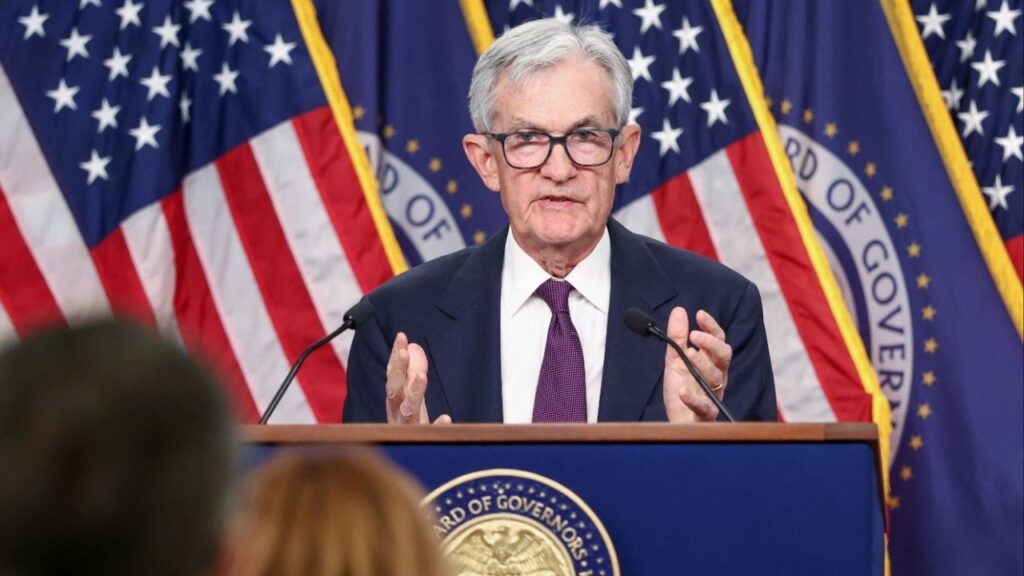
Investors will now look for comments from Fed Chair Jerome Powell for clues on the path of monetary policy.
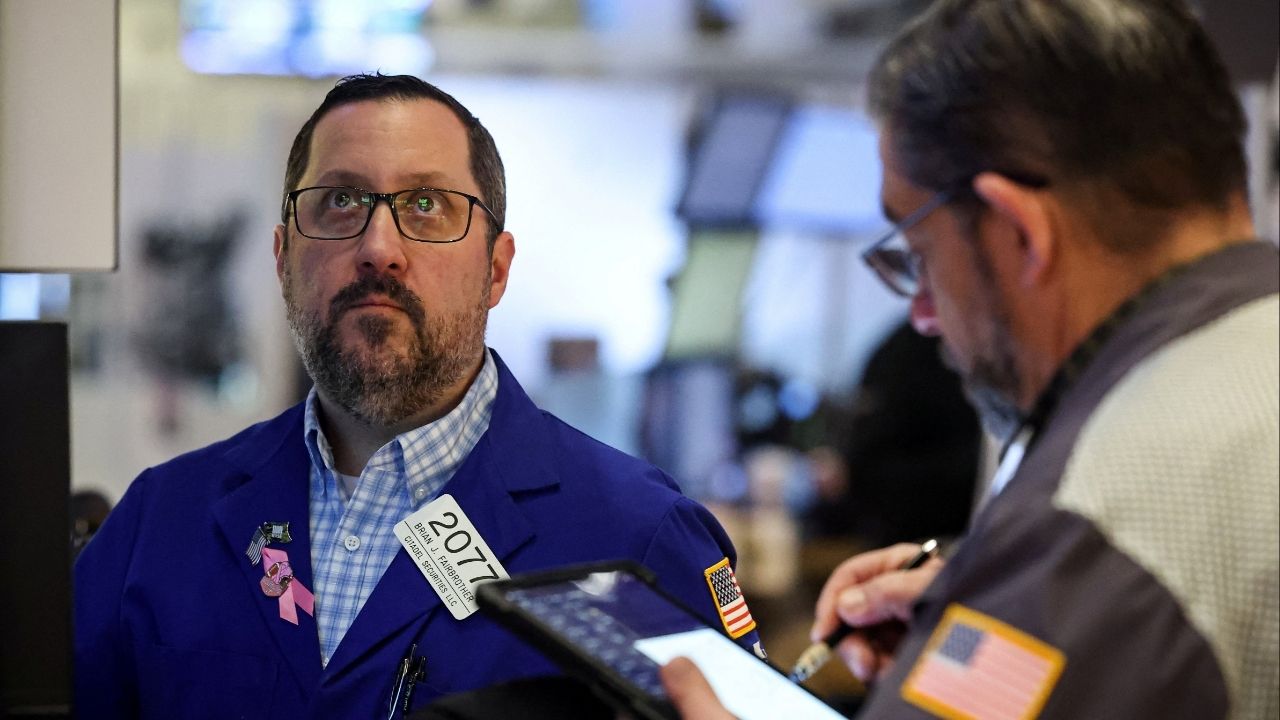
On Wall Street, U.S. stocks were lower in choppy trading, with the S&P 500 energy index the leading advancer among the 11 major S&P sectors while the S&P 500 consumer staples index fell about 2% as the worst-performing.
Major Markets Fall
The Dow Jones Industrial Average fell 477.97 points, or 1.01%, to 46,519.81, the S&P 500 fell 49.67 points, or 0.73%, to 6,666.96 and the Nasdaq Composite fell 160.43 points, or 0.71%, to 22,320.16.
U.S. crude rose 0.43% to $96.62 a barrel and Brent rose to $107.51 per barrel, up 3.95% after Iran’s huge Pars gas field was hit on Wednesday. It was the first reported strike on Iranian energy infrastructure in the Gulf during the U.S.-Israeli war on Iran, a major escalation that prompted Tehran to warn its neighbors to evacuate their energy installations.
Crude prices showed little reaction to the announcement by the Trump administration for a 60-day waiver of Jones Act shipping law in a bid to help ease deliveries of fuel and fertilizer to combat rising prices and supply disruptions.
Adding to inflationary concerns caused by spiking energy prices, the Labor Department said its Producer Price Index (PPI) for final demand surged 0.7% last month, the most since last July, and well above the 0.3% rise forecast by economists polled by Reuters.
In the 12 months through February, the PPI increased 3.4%. That was the largest gain in a year and followed a 2.9% advance in January.
Other data from the Commerce Department showed factory orders rose 0.1%, which matched expectations, after an upwardly revised 0.4% drop in December.
MSCI’s gauge of stocks across the globe shed 3.65 points, or 0.36%, to 1,009.40 and was on track to snap a two-day run of gains, while the pan-European STOXX 600 index closed down 0.75%.
Focus Turns to Fed and Powell
Investors are also awaiting more decisions from a host of other central banks including the European Central Bank, Bank of England and Swiss National Bank.
The Reserve Bank of Australia kicked things off on Tuesday by hiking interest rates for a second straight month, taking its benchmark rate to 4.1% and warning of a material inflation risk from the Iran war.
That was followed on Wednesday by the Bank of Canada, which kept its key policy rate on hold, as expected, but Governor Tiff Macklem warned it was ready to raise borrowing costs if higher energy prices risked turning into persistently elevated inflation.
The yield on benchmark U.S. 10-year notes rose 1.8 basis points to 4.22% while the 2-year note yield, which typically moves in step with interest rate expectations for the Fed, climbed 3.2 basis points to 3.703%.
The 10-year yield is up about 25 basis points in March while the 2-year has jumped about 32 basis points.
The dollar index, which measures the greenback against a basket of currencies including the yen and the euro advanced 0.29% to 99.84, with the euro down 0.29% at $1.1505.
Against the Japanese yen, the dollar strengthened 0.26% to 159.40, near the key 160 level that has previously prompted interventions by the Bank of Japan to prop up the currency.
—
(Reporting by Chuck Mikolajczak; additional reporting by Lucy Raitano in London and Stella Qiu in Sydney; Editing by Mark Potter, Alex Richardson, Emelia Sithole-Matarise and Deepa Babington)