
|
Getting your Trinity Audio player ready...
|
More than 400 people were killed in a Pakistan air force strike on a drug rehabilitation center in Kabul, the Afghan Taliban administration said on Tuesday, in the deadliest incident since the two neighbors began fighting late last year.
Pakistan rejected the statement as false and misleading, saying it had “precisely targeted military installations and terrorist support infrastructure” on Monday night.
The airstrike on Kabul happened hours after China said it was ready to continue mediating efforts to ease tensions and urged both states to return to negotiations.

Mediation efforts by Qatar, Turkey and Saudi Arabia had previously failed.
Amir Khan Muttaqi, the Taliban’s foreign minister, said Afghanistan had lost trust in Pakistan’s intentions regarding a diplomatic solution, according to a statement from his office.
The conflict is the worst between the South Asian Islamic neighbors, who share a 2,600-km (1,600-mile) border.
Drug Rehab Centre Used to Be NATO Training Base
Hamdullah Fitrat, the deputy spokesman for the Taliban, said in a post on X the airstrike took place at 9 p.m. (1630 GMT) on Monday and hit the state-run Omid Hospital, which he said was a 2,000-bed drug rehabilitation center.
The Pakistani information ministry said Omid Hospital was miles away from the target it had attacked, which it named as Camp Phoenix, a “military terrorist ammunition and equipment storage site”.
“The visible secondary detonations after the strikes clearly indicate the presence of large ammunition depots,” Pakistani Information Minister Attaullah Tarar said in a post on X.
Kabul residents, including a Reuters journalist, said Camp Phoenix, an abandoned NATO military base in the city, was turned into a drug treatment center about a decade ago, and locals referred to it as Omid Camp, or “camp of hope”, although its official name was “Ibn Sina Drug Addiction Treatment Hospital”.
It was this center that had been hit, they said, adding that Omid Hospital and Omid Camp were not related.
Fighting between the former close allies intensified last month with Pakistani airstrikes in Afghanistan that Islamabad said hit Afghanistan’s military and militant strongholds.
Islamabad says Kabul provides a safe haven to militants launching attacks on Pakistan. The Taliban deny the allegation, saying tackling militancy is Pakistan’s internal problem.
‘It Was Like Doomsday’, Says a Survivor
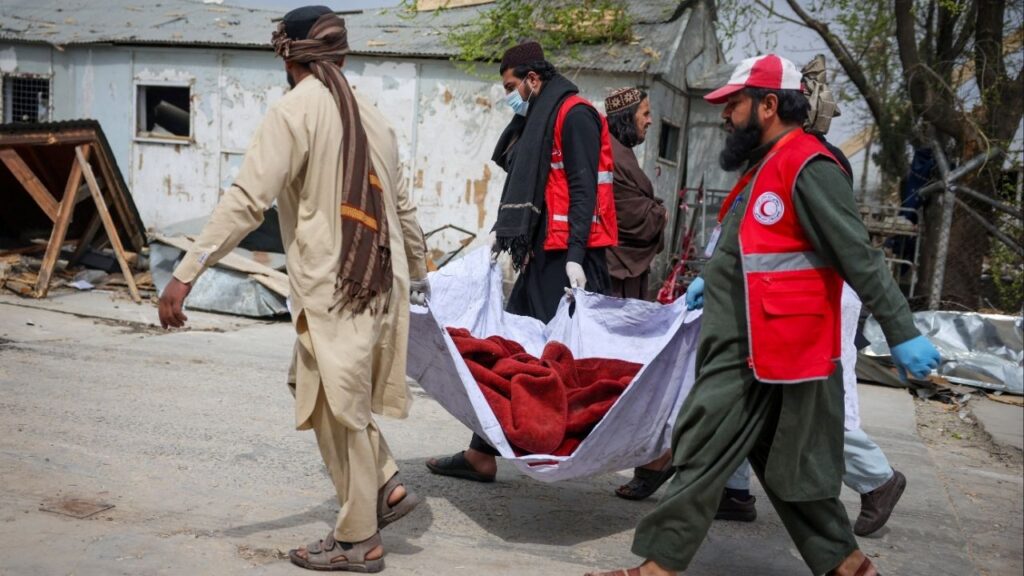
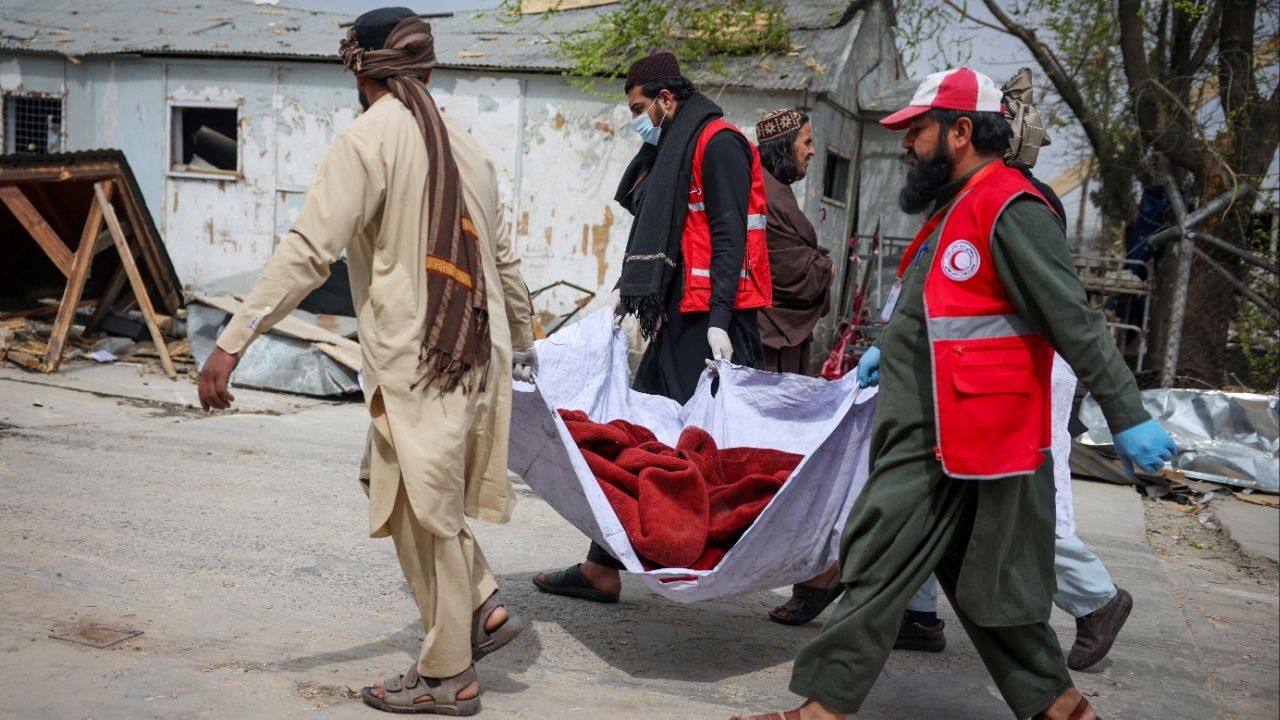
At the site of the airstrike at Omid Camp a blackened single-story structure bore the marks of flames. In other places, buildings were reduced to heaps of wood and metal, with only a few bunk beds still intact, while blankets, personal belongings and bedding were strewn about.
Afghan Interior Ministry spokesperson Abdul Mateen Qanie said 408 people were killed and 265 wounded. Afghan authorities said casualties were taken to hospitals around Kabul, but neither gave details of how they were counted nor showed the bodies to media.
Those killed were mostly civilians and addicts, added Taliban spokesperson Zabihullah Mujahid.
Reuters could not verify the casualty numbers. Both sides have claimed to have inflicted heavy damage on the other during the conflict but independent verification has not been possible.
The Norwegian Refugee Council, an independent aid group, said its staff had seen large numbers of casualties.
“We visited the hospital treating addicts in Kabul this morning and found hundreds of civilians dead and injured,” it said in a statement.
Susan Ferguson, the U.N. Women Special Representative in Afghanistan, told a U.N. briefing in New York by video link from Kabul that she drove past the site and the scene was “devastating”.
“There were many families there trying to find their loved ones,” she said.
An EU statement said civilian and medical facilities were protected under international law and called the strike “another deadly escalation in a conflict that needs to end as soon as possible.”
The U.N. Assistance Mission in Afghanistan (UNAMA) said in a statement that dozens were killed and injured at “Omid Addiction Treatment Hospital”. It called for immediate de-escalation.
Witnesses said they heard three bombs exploding just as people in the center were completing evening prayers, and that two of them struck rooms and patient areas.
“The whole place caught fire. It was like doomsday,” said Ahmad, 50, who said he was being treated at the facility. “My friends were burning in the fire, and we could not save them all.”
Mosharraf Zaidi, a spokesperson for Pakistan’s prime minister, said on X that the Afghan reference to drug users being targeted was “lies” and Pakistan’s “counterterrorism operations” would continue for as long as it took to eliminate “terrorists and their infrastructure”.
“All military operations will continue till such time as there is a change in the behavior and the ground reality in Afghan Taliban regime-controlled territory,” Zaidi told Reuters in an interview late on Tuesday.
Zaidi said Pakistan conducted a total of six strikes on Afghanistan on Monday night, including at Camp Phoenix, which he said was used by the Afghan Taliban to “train terrorists and store weapons”.
He declined to provide any estimate of casualties and said Pakistan would not engage with death toll figures reported by Afghan authorities or aid groups.
China Appeals for Calm, India Condemns Strike
China again appealed for restraint and called for the safety of Chinese personnel and interests in the region.
Pakistan’s arch-rival India, which has recently forged close ties with the Afghan Taliban, condemned the strike.
The conflict had ebbed amid efforts by friendly countries including China to mediate, but flared again just days before the Eid al-Fitr festival that marks the end of the holy month of Ramadan.
—
(Reporting by Mohammad Yunus Yawar in Kabul, Asif Shahzad in Islamabad and Ariba Shahid in Karachi; Additional reporting by Sayed Hassib in Kabul, Sakshi Dayal in New Delhi and Laurie Chen in Beijing; Writing by YP Rajesh and Shilpa Jamkhandikar, by David Brunnstrom in Washington; Editing by Christopher Cushing, Raju Gopalakrishnan, Alex Richardson, Alexandra Hudson)