
|
Getting your Trinity Audio player ready...
|
One morning last week, the staff of pop-up restaurant Noma Los Angeles gathered just before opening for a meeting with the chef, René Redzepi.
Redzepi was there, teary-eyed, to announce that after 20 years at the peak of the world’s culinary scene, he was stepping down from Noma — the Copenhagen, Denmark-based restaurant and innovation engine that has topped best-of lists for years.
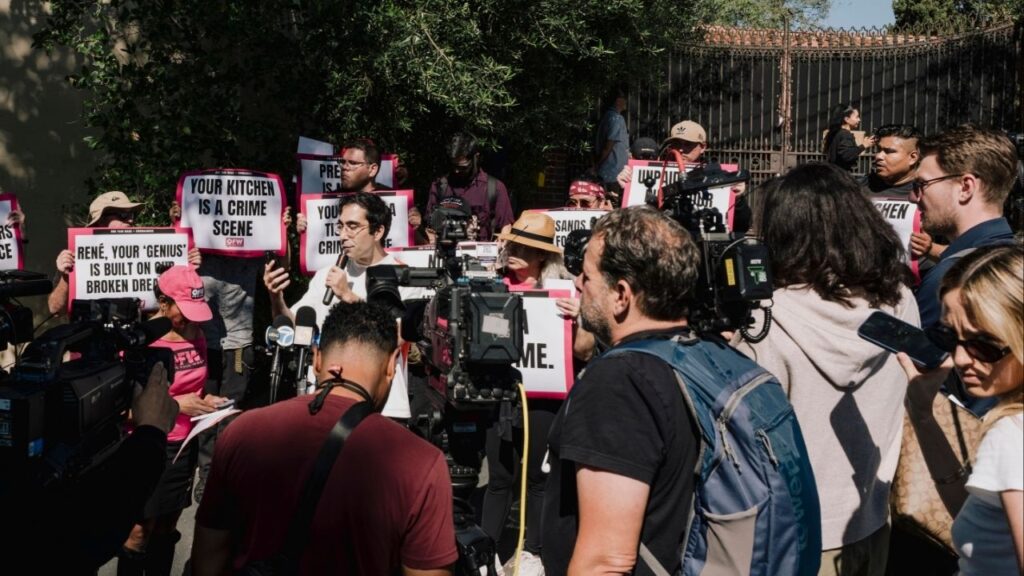
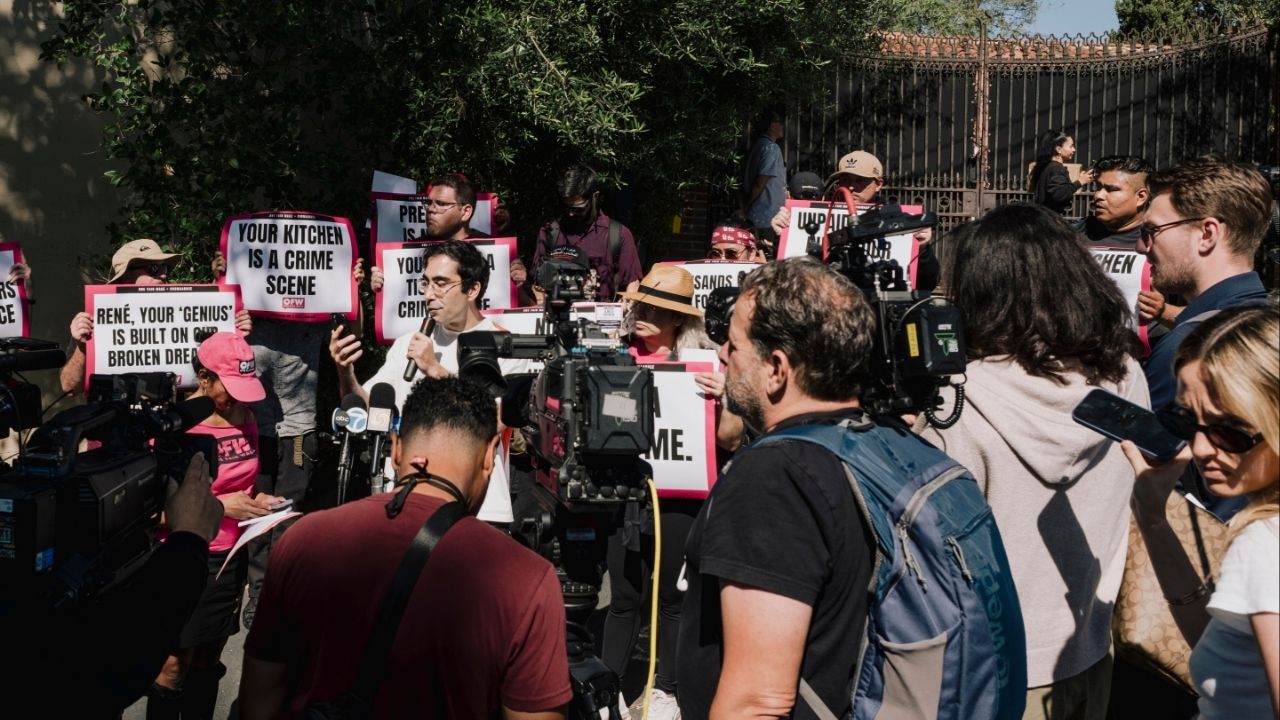
The remarkable meeting on Wednesday, captured in a video that Redzepi released that night, was the culmination of a month in which former employees went online to tell of past abuse they said they had suffered in his kitchen. Days earlier, The New York Times reported allegations that Redzepi had punched, slammed and inflicted other physical punishments on cooks from 2009 to 2017.

As dramatic as Redzepi’s announcement was, it left some unanswered questions: Will Redzepi play a role in Noma’s future? And even if the business has a future without him and the corporate sponsors that have withdrawn support, will the brand survive the blowback?
At least one thing is already clear: This month’s events have lent new urgency to a conversation in the global restaurant industry about how to fix professional kitchens once and for all. Although past scandals and the #MeToo movement have resulted in better conditions at many restaurants, chefs said bullying and abuse persist at too many others.
Dominique Crenn, the first woman in the United States to head a restaurant with three Michelin stars, said it was well past time to change the notion that performing at the highest level in the world’s top kitchens requires humiliation, intimidation or violence.
“We have been talking about this forever,” she said.
The uproar over Noma has also revealed just how much generational change, new technology and the legacy of the #MeToo and the social justice movements have transformed who feels empowered to speak up.
A growing cohort of chefs — people who are young, who are not men and who are very online — say they want to hold the industry to account for the abuse and discrimination that have persisted in restaurant kitchens.
“This has divided the entire industry into chefs that support the old ways and chefs that want change,” said Mehmet Cekirge, a 30-year-old chef in Turkey who was an intern at Noma in 2018.
On podcasts, in think pieces, in posts on Instagram and TikTok last week, chefs debated the quest for perfection in the kitchen — what it looks like, what it’s worth and what it should cost, in monetary and human terms.
The conversation has been especially fervent in Europe, where Danish radio shows were swamped with calls; French food critics opined; and, in Barcelona, Spain, chefs (coincidentally) gathered this month for Parabere Forum, the largest global convention of women in the industry.
Maria Canabal, president of the forum, said the attendees were abuzz about recent remarks by Ferran Adrià, the Spanish chef who led the celebrated restaurant El Bulli, where Redzepi was an unpaid intern in 1999. Interviewed on a podcast about the allegations against Redzepi by former employees, Adrià said they were “very sad,” then asked, “But if it was so bad, why didn’t they leave?”
His comment came under criticism online, and Canabal said it summed up the attitude of the oldest European chefs about power, abuse and consent. “These are the people who trained the Renés of the world,” she said. “And the platforms that reward them with stars and sponsors should take a hard look at who they are handing the mic to.”
Cekirge, the former Noma intern, agreed. “We should be talking about what Michelin stars really represent: what rich people want to eat. They wanted to eat plastic when El Bulli was No. 1 and cod sperm when Noma was No. 1.”
He and many other young chefs are questioning the entire premise of fine dining.
Gary Inman, an intern in Noma’s 2019 summer season, is loading planes for UPS in his hometown, Louisville, Kentucky, while reconsidering a future in restaurants.
“We can change so that food isn’t gate-kept and marketed for status,” he said. “The people that cook and handle the food should be acknowledged, and toil shouldn’t be glamorized” on glossy TV shows like “Knife Edge: Chasing Michelin Stars” or “The Bear.”
Both men said Redzepi should give financial reparations to all the interns who worked at Noma before 2022, when the restaurant — under fire for relying on unpaid labor — began paying for the work.
Kristen Hawley, who writes Expedite, a newsletter about restaurant technology, said that as big companies like American Express and Visa become involved with independent restaurants through new platforms like Resy and Open Table, chefs will have to be ever more careful to run their restaurants professionally. “The spotlight is only going to get brighter,” she said.
Tiffani Faison, a chef in Boston, said that public awareness of abuse in restaurants has risen since 2017, when celebrity chefs like Mario Batali were accused of sexual misconduct and dethroned, but the reckoning didn’t go far enough.
“We changed the curtains, but we didn’t remodel the house,” she said. “And we still haven’t cleaned out the basement where we hid the skeletons.”
Some chefs said that although abuse is unacceptable, conflict is inevitable, and learning to tolerate it is part of the job in a workplace that is full of heat, danger and pressure.
“Kitchens were never meant to be easy places,” Rafael Kazumyan, a former Noma chef in Portugal, wrote on Instagram.
Others expressed frustration that this stereotype, and Redzepi, were once again the subject of so much attention.
“I’m so disappointed that our industry is still talking about this false idol,” said Matt Jennings, a former fine-dining chef in Boston. “He’s a genius who created, arguably, the greatest restaurant of our time, but what is his legacy?”
—
This article originally appeared in The New York Times.
By Julia Moskin/Mark Abramson
c. 2026 The New York Times Company