
|
Getting your Trinity Audio player ready...
|
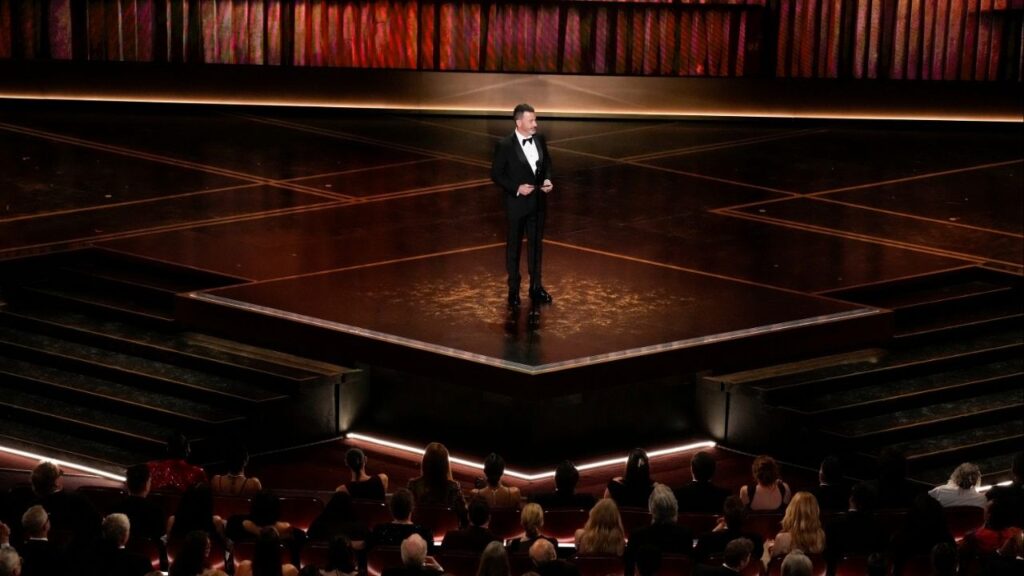
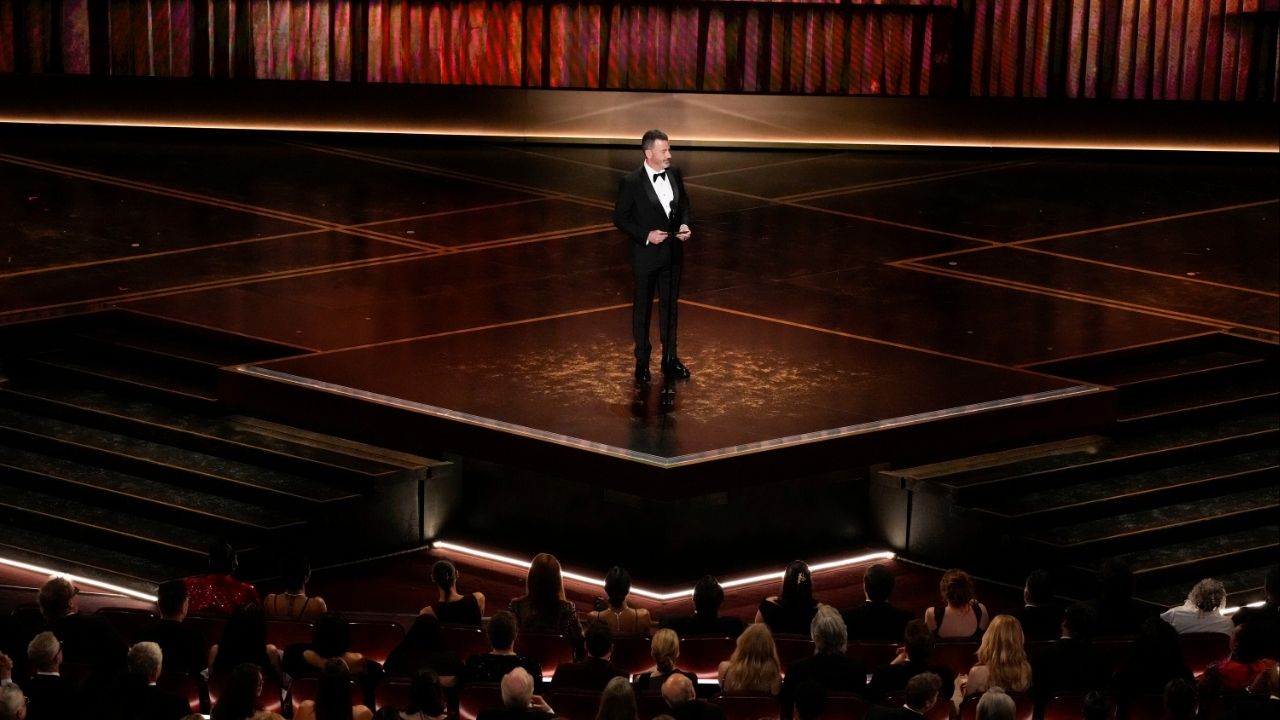
LOS ANGELES — One of the most pointed jokes of the Oscars came from Jimmy Kimmel. And he was not even hosting.
While introducing the films nominated in the documentary categories, Kimmel remarked: “We hear a lot about courage at shows like this, but telling a story that could get you killed for telling it is real courage.”
“As you know,” added Kimmel, who was abruptly pulled off the air in the fall after he made a comment about the assassination of right-wing activist Charlie Kirk, “there are some countries whose leaders don’t support free speech. I’m not at liberty to say which.”

“Let’s just leave it at North Korea and CBS,” he said.
(CBS, whose owner is Paramount, is part of a ground shaking merger with Warner Bros., at a time when its late-night host, Stephen Colbert, and a veteran “60 Minutes” correspondent have complained about political meddling. “Jimmy Kimmel Live!” airs on ABC.)
Kimmel’s joke was in line with the approach for the evening from the professional comedian class. Conan O’Brien — who was, in fact, the ceremony’s host — also took some thinly veiled shots at President Donald Trump without mentioning him by name.
But in his opening monologue, O’Brien also offered a solemn note about how everyone watching was “all too aware that these are very chaotic, frightening times.”
A few of the winners who followed spoke about those events.
“‘Mr. Nobody Against Putin’ is about how you lose your country,” one of the documentary’s directors, David Borenstein, said while accepting an Oscar. “And what we saw when working with this footage — it’s that you lose it through countless small little acts of complicity.”
“When we act complicit,” Borenstein continued, “when a government murders people on the streets of our major cities, when we don’t say anything, when oligarchs take over the media and control how we could produce it and consume it, we all face a moral choice.”
Pavel Talankin, the primary schoolteacher featured in the documentary and its co-director, put it even more bluntly: “In the name of our future, in the name of all of our children, stop all of these wars now,” he said through an interpreter.
Later in the evening, Javier Bardem, who was onstage to present the award for best international film, was perhaps the most direct of all. He came to the mic and began his remarks with a statement: “No to war — and free Palestine.”
—
This article originally appeared in The New York Times.
By Matt Stevens/Philip Cheung
c. 2026 The New York Times Company