
|
Getting your Trinity Audio player ready...
|
NEW YORK — It is 8:04 a.m. on a Monday. Alysa Liu stands in a crowded green room inside Rockefeller Center, low-key freaking out.
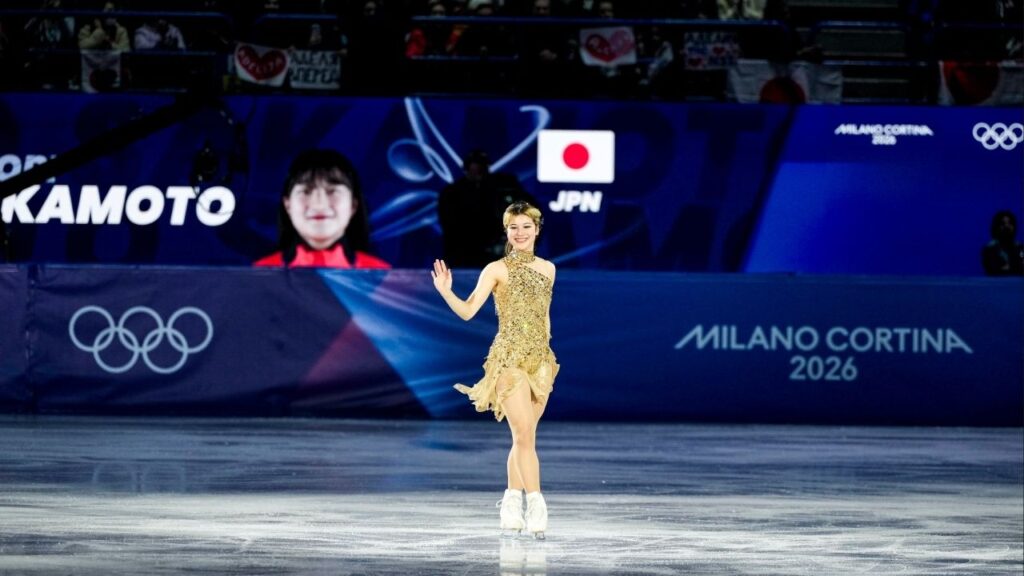
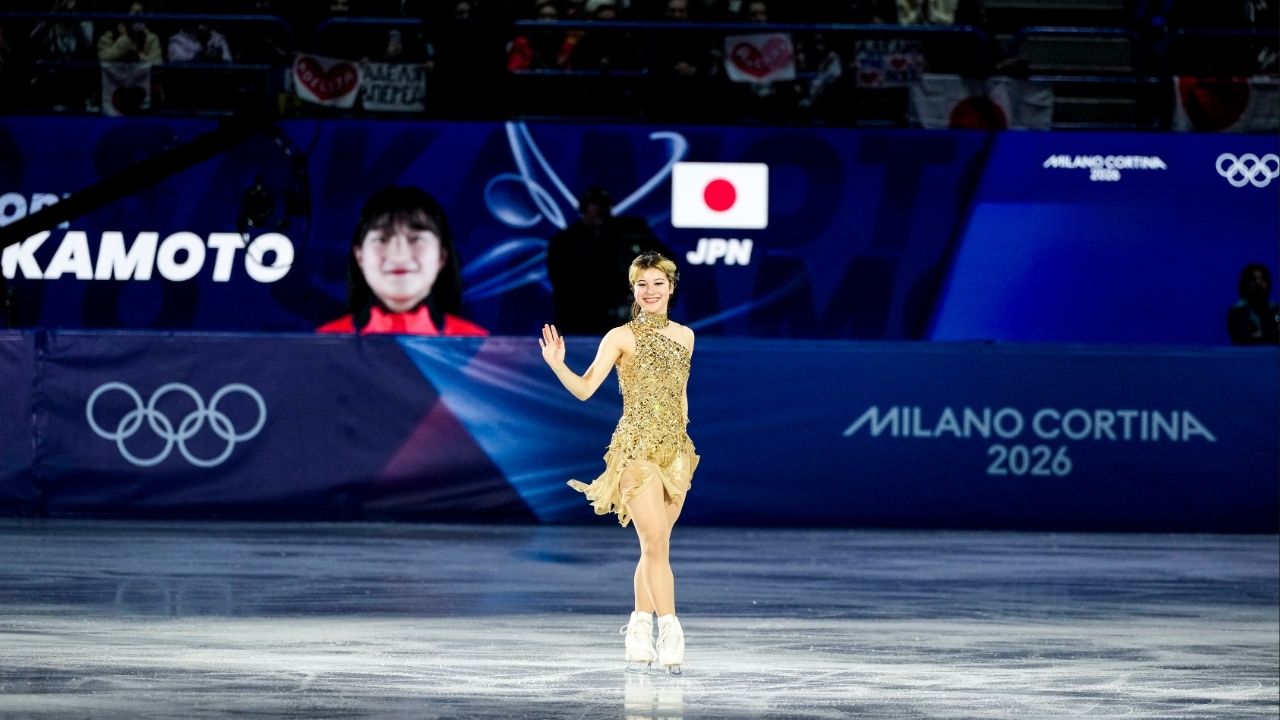
Yes, Liu, the 20-year-old figure skater who snatched America’s heart by owning the biggest stage of her life. At last month’s Milan Cortina Olympics, with the gold on the line, she proved cooler than the ice on which she danced to Donna Summer’s “MacArthur Park.” Liu displayed no angst. The tension compelled viewers to sway with her, panic with her every jump, sigh in relief after each flawless landing. She, however, ignored the pressure, deeming it unworthy of accompanying her glee.
That same newly minted superstar now has awe in her eyes at a pending connection. The gold medalist, finally, looks rattled.

“I just saw him,” she says, eyes widened, smile stretched by nerves.
Daniel Radcliffe, 36, the actor famous for playing Harry Potter, was sitting in hair and makeup, preparing for his appearance on the “Today” show. Radcliffe, a Tony Award-winning actor, came to promote his newest Broadway play, “Every Brilliant Thing.”
She bounced through the first tasks. She did two on-camera teases and an interview with the “Today” crew, delivering her trademark ease in the process — even about her name.
She confirmed that her last name is pronounced LEE-oo, but, she said, “I’m good with whatever.”
“It’s actually Ah-LEE-sa LEE-oo,” she said. “But if people can’t get Ah-LEE-sa, they’re not going to get LEE-oo.”
Hearing “Ah-LISS-a Lou” does not seem to bother her. Not much does on this morning.
She beamed about her outfit, curated by Oscar-nominated costume designer and stylist Miyako Bellizzi, a fellow native of the Bay Area. She wore blue camouflage denim shorts that sagged slightly despite a thick black belt lined with silver studs. A navy blue Nike shirt under a navy blue blazer created a dark canvas for her two gold medals. Punctuating the fit was a pair of blue Nike Moon Shoes from a collaboration with French designer Simon Porte Jacquemus.
Look good, feel good, right? But Liu loses a bit of her cool when she gets wind that Harry Potter is in the building.
Radcliffe scurries out of his chair and into the green room to meet Liu. They high-five as Liu jumps with excitement. Radcliffe brags about how jealous his girlfriend would be that he got to meet America’s newest darling. He asks Liu if she really did her own smiley piercing.
“If you want, I can pierce you,” Liu offers, after confirming that it was her handiwork. “I’ve pierced three people.”
Liu has arrived in the American consciousness at an ideal moment in a nation starved for lightness. No one receives universal approval in this divided country. But few garner approval ratings as high as Liu currently does.
Liu’s spirit resonates in part because of the context it contradicts. Public life hums with perennial grievance and anxiety. But Liu’s performance, her personality, cut through it.
“I am a very joyful person,” she says. “My whole thing is I want to share what I feel with other people. I want people to feel the way I feel, or feel something they’ve never felt before. I think that’s, like, the whole point of storytelling is to make people feel something. Art, figure skating, movies — all that is to make people feel something they aren’t feeling. And I’m really grateful that I’m able to do that. It’s literally my dream.”
It Is 9:29 a.m.
Liu, back in the puffy coat, hops out of a black SUV onto Fifth Avenue in midtown Manhattan. The next stop on her tour is a photo shoot and interview with Rolling Stone at a private social club. Construction work hides the entrance, giving Liu time to have her first full experience with paparazzi.
One photographer comes out of nowhere, rapidly snapping images of Liu, who stands giggling while her team finds the entrance. Liu lives in front of a camera. She takes pictures with just about anyone who asks. But this is a different ballgame.
“This is crazy,” she says. “Paparazzi?”
Liu crossed 7 million Instagram followers while in New York, from a few hundred thousand before the Olympics. Fake accounts have cropped up. Unauthorized merchandise flies off digital shelves. Established celebrities fawn over her. Stephen Curry invited her family to a Golden State Warriors game. Representatives for the immensely popular K-pop boy band BTS reached out.
Liu’s agent, Yuki Saegusa, a senior vice president at WME, warns about autograph seekers selling her signature on eBay. She instructs Liu to ask whom to make the autograph out to, because putting down an actual name can weed out the collectors.
This new life is coming fast. Liu is quickly learning about the magnetic properties of a gold medal and the special place reserved in America for women’s figure skating champions. But as inviting as her aura may seem, Liu diligently protects her peace.
She quit figure skating in 2022, at 16, to reclaim that peace. She returned in 2024, promising never to relinquish it again. She has no problem saying no. Before she became a household name at the Olympics, she declined an invitation to a San Francisco 49ers game. After the Olympics, she said no to a parade the city of Oakland wanted to throw for her, but she compromised with Mayor Barbara Lee for a celebration rally at City Hall that was held Thursday.
The frenzy excites her now. It is still stunning, the relentless love she receives. At each stop, people cannot wait to tell her what she means to them. But she is concerned about overexposure, about managing the demands of her stardom.
Liu has been unbeatable on the biggest stages after coming out of retirement, winning the 2025 world championships, the 2025 Grand Prix final and the 2026 Olympics. Her approach is not void of discipline, just filled with trust in herself. She does not do triple axels anymore, or the quadruple jumps she did as a dainty teen. But she won, anyway, proving that her competitive streak and appreciation for the sport can properly regulate her process. It is expertise over obsession.
While Liu munches on a medal made of Lucky Charms, her favorite cereal, constructed for her by “Today” chef, Isabelle McLemore, the vice president for communications for U.S. Figure Skating, organizes the next costume from the stack of clear garment bags: a black Nike hoodie with red interior and matching black Nike shorts, with a red-and-white plaid Pendleton jacket, a pair of shiny black Nike Shox and white socks. Eventually, her medals will serve as priceless jewelry. The gold discs, heavier than they appear, make a distinct ping as they bounce off each other when she walks.
“They have a lot of scratches from clinging together,” she says. “I like them with the scratches.”
It Is 12:41 p.m.
The camp arrives at Embassy Row in the SoHo district. This stop includes two appearances. The first: “Reading Rainbow.”
She sits in red leather chairs and reads two books: “Sarah and the Big Wave,” followed by “Kat and Juju.” The former tells the story of the first woman to surf the Mavericks, a notorious break in California. The reading stops for a few minutes while the producers find the accurate pronunciation of the name of the main character, Sarah Gerhardt. They do the same for Kat and Juju’s author and illustrator, Kataneh Vahdani.
“That would be bad,” Liu says at the thought of messing up the names.
The music thumps louder as she approaches the next appearance. She is told that it includes a live audience. That excites Liu.
“Watch What Happens Live! With Andy Cohen” is not Liu’s demographic. Bravo skews toward affluent women older than Liu and heavy into pop culture, gossip and drama — matters that do not seem to hold her attention.
But somehow, she fits right in. She stands behind a bar while two other Bravo stars chat with Cohen. Liu smiles easily, laughs freely and speaks candidly. She sings along when the music matches her playlist.
It is this spirit people recognized on the ice, the one that finds comfort internally and does not seem to mind the possibility of flopping on her face. Liu has learned how losses produce lessons. And once she gets it down, she is free to have fun.
“I think I only have this confidence because I was given the chance to explore myself,” Liu says. “So for two years, the two years I was away, I was able to try out different things, do a ton of different hobby stuff I never ever did before. And so I was also able to find out what I like and what I don’t like through trial and error.”
It Is 2:48 p.m.
Liu wraps her scarf around her head like a hijab. She hopes that covering her hair, with its renowned blonde layers, will make her less recognizable. It will not matter this time because the paparazzi await outside. She can see the flashes popping before she exits the building onto Vandam Street in Manhattan’s Hudson Square.
Liu, so amazed, emerges with her phone out.
“There’s people following us?” she asks while recording the photographers. “That’s so funny.”
It is not always funny. People will follow Liu. Her location and other private information are now in demand. Life as America’s princess has a dark side.
Forced to process the inevitability of all of this attention becoming problematic, Liu wonders what to do about her hair. She does not want to change it. She adds a halo ring every year and plans to keep doing so.
But it works against her need for liberation. To go where she wants.
The magic ingredient for Liu is freedom. The feeling that she is skating, and living, above the weight of expectations instead of under it. That is why people love her. Why America rushed to wrap its arms around her.
But how does she share her joy without losing it? That is the delicate line she skates. Because belonging to America risks losing what makes her so appealing: that she belongs to herself.
It’s 9:28 a.m. on Tuesday.
The green room in Disney’s new headquarters in Hudson Square features Liu’s name on a digital display outside the room. She fidgets with her outfit in a tall mirror, preparing to appear on “Live With Kelly and Mark.” The long blue-and-white plaid skirt sways while she changes poses. Her gold medals clink atop a green shirt with navy stripes. She covers them with a zip of the jacket. Then unzips. And zips again. Eventually, she settles on unzipped.
It is another show outside Liu’s wheelhouse. But she no longer needs to sell herself or the sport. The audience hangs on her every word, warmed by the anecdotes she has become comfortable telling.
She walks out of the Disney studio looking energized. But before she can leave the building and head back to Rockefeller Center for the next stop, she has to wait out of sight. Her representatives go to make sure the car is out front and ready so Liu can depart quickly. Paparazzi await, enough of them for security to rope them off.
Liu leans against a marble wall in the lobby. She sighs. Already, it is getting old.
The photographers complain as she whisks by, covered in black, and gets into the S.UV without giving them a clear shot.
“What kind of PR is that?” one of them screams.
“Go back to LA!” another yells.
Liu cannot help but laugh as she gets in the car, even while making it clear that it is not funny.
“First of all, I’m from Oakland,” she says, correcting the photographer now a few blocks away in the rearview mirror. She is still wrapping her mind around the idea of people finding out her location and showing up to take her photograph, and then having the audacity to chide her for not playing along.
Liu stares out the car window, tinted so no one can see her.
It is clear that her new position in sports royalty has lost some of its luster since she won Olympic gold. Coupled with adoration is an entitlement people feel to her. The role of America’s sweetheart requires managing that.
Liu broke away from the entrapment she felt as a teenager, became her own woman and reached the pinnacle of her sport as a result. And the reward risks becoming a hug so tight it suffocates. America is clingy right now.
Liu must manage this relationship and our insatiable appetite for access. She must tell her story and inspire the people while protecting her peace. Because if Liu’s crown becomes too much like a cage, it will no longer be worthy of her halos.
And one thing we know already: She can walk away from it all.
—
This article originally appeared in The New York Times.
By Marcus Thompson Ii / The Athletic / Vincent Alban
c.. 2026 The New York Times Company