
|
Getting your Trinity Audio player ready...
|
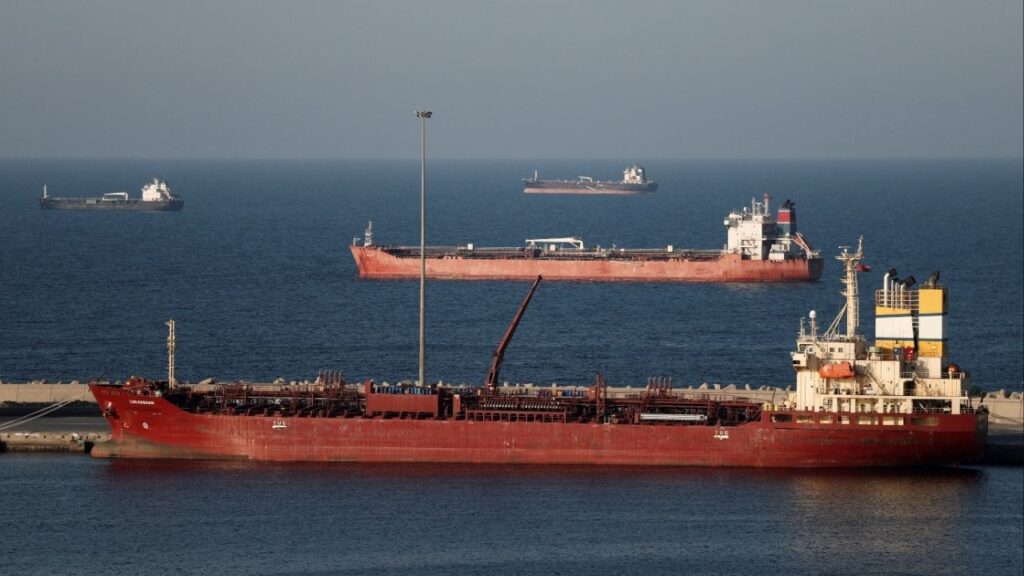
U.S. officials on Friday vowed to thwart Iran’s attempts to block the Strait of Hormuz, as oil markets appeared largely unmoved by the Trump administration’s efforts to avert an energy crisis stemming from the Middle East war.
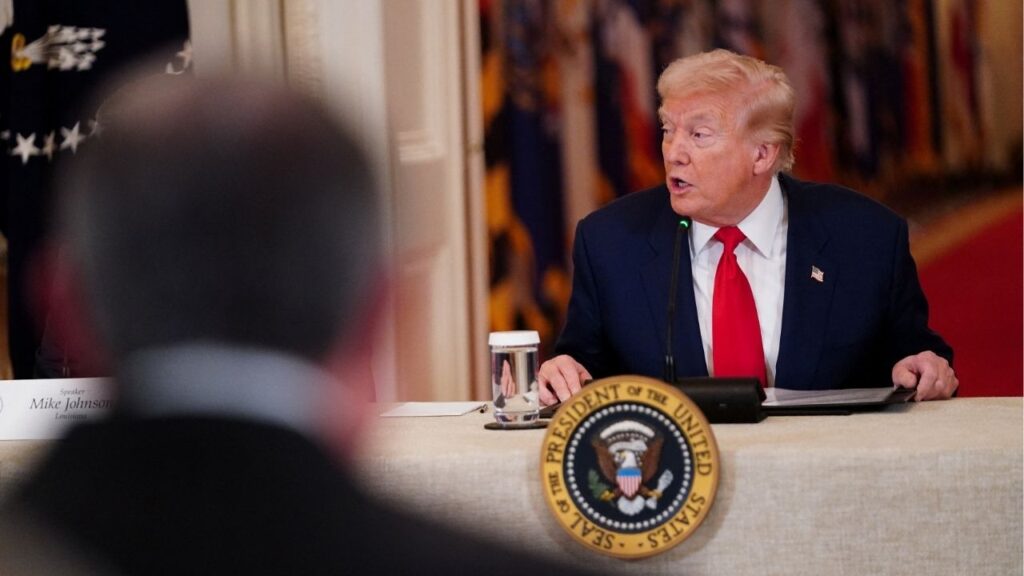
Defense Secretary Pete Hegseth said at a news conference that the disruptions in the strait were “something we are dealing with,” adding: “Don’t need to worry about it.” Gen. Dan Caine, the chair of the Joint Chiefs of Staff, said the U.S. military was targeting Iran’s ability to lay mines in the strait, through which 20% of the world’s oil normally travels.
“There’s a reason why we chose as one of our primary objectives to destroy their navy,” Hegseth said. “We have a plan for every option here,” he added. “That’s not a strait we’re going to allow to remain contested.”

The war in the Middle East has killed more than 2,000 people over the past two weeks, mostly in Iran and Lebanon, and displaced millions of others. Iran’s new supreme leader, Mojtaba Khamenei, has vowed to keep blocking the Strait of Hormuz, a move that has disrupted global energy supplies and rattled financial markets.
Exchanges of fire by Israel; the United States; Iran; and its Lebanese ally, Hezbollah; showed little sign of slowing Friday. Hegseth said at the news conference that Israeli and U.S. air forces had struck over 15,000 targets since the war started on Feb. 28.
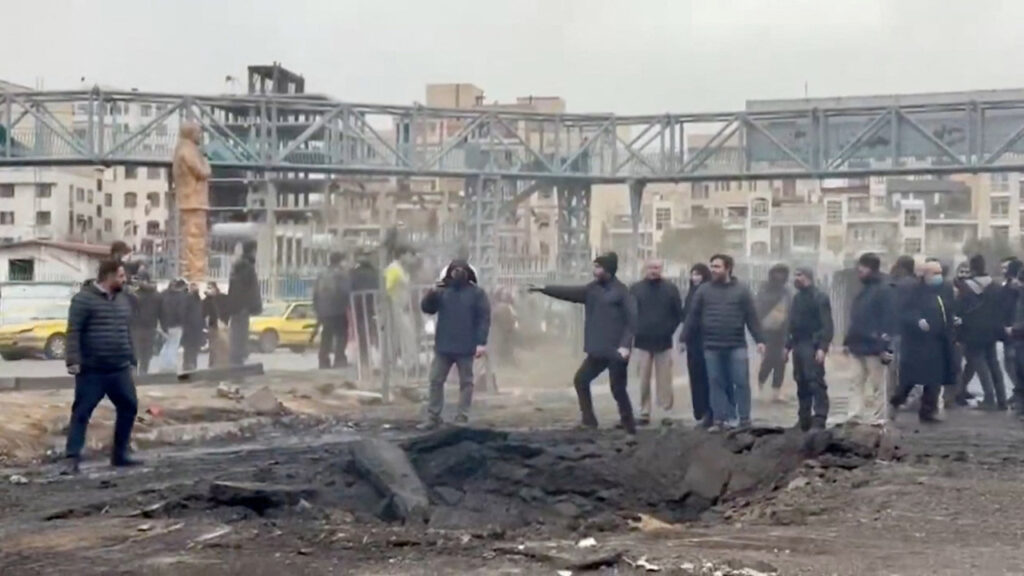
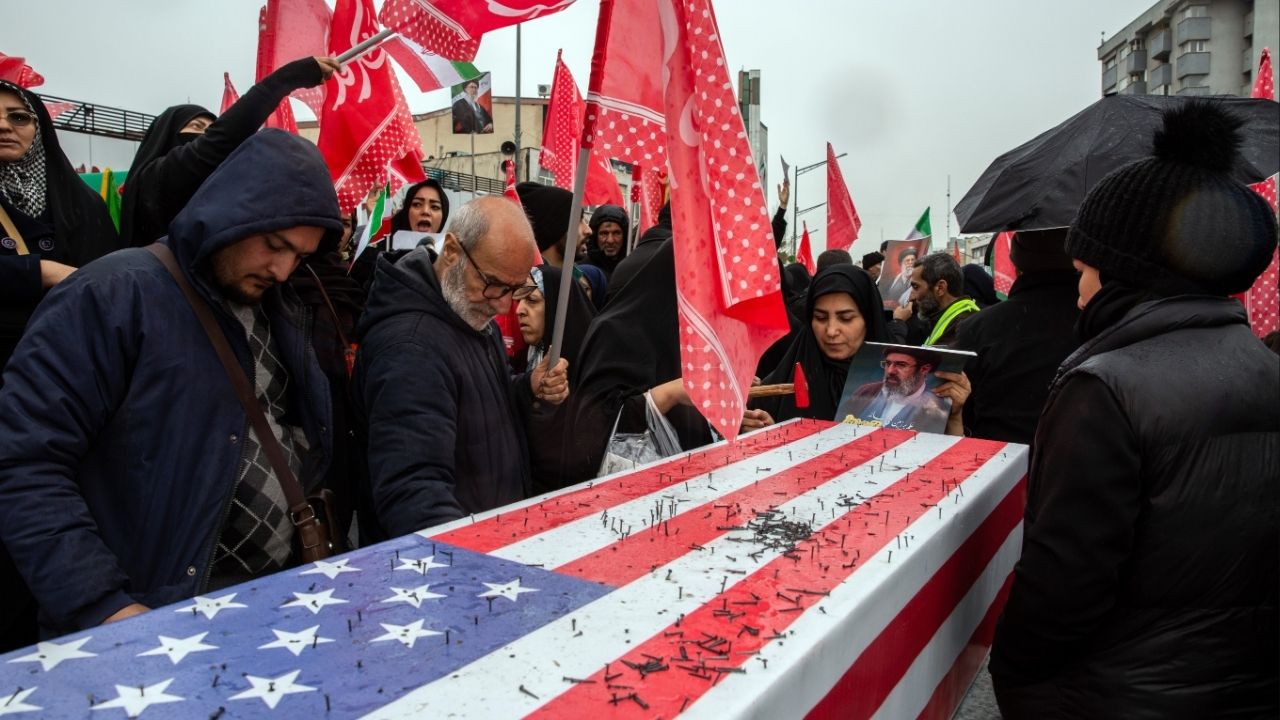
In Tehran, Iran’s capital, Iranians thronged the streets for an annual anti-Israel rally. An explosion was seen close to where crowds had gathered, according to videos shared by Iranian state television. It was not immediately clear what had caused the blast, but earlier in the day Israel had warned of more strikes in Tehran.
In Turkey, NATO air defenses intercepted a missile fired from Iran and entering Turkey’s airspace Friday, the Turkish Defense Ministry said. It was the third such interception of an Iranian missile over Turkey in 10 days.
In Lebanon, the Israeli military escalated its attacks against Hezbollah, carrying out strikes beyond the group’s traditional strongholds, including in parts of Beirut once considered comparatively safe.
More than 800,000 people have fled their homes in Lebanon, fearing the war’s possible expansion.
Across the border, a missile attack in northern Israel on Friday damaged homes and injured dozens of people, Israel’s emergency medical service said. Hezbollah said it had launched missiles toward northern Israel, near the border with Lebanon.
Here’s What Else We Are Covering:
— U.S. jet crash: All six crew members died in the crash of a U.S. aerial refueling tanker, the military said, raising the number of U.S. service members killed in the war to at least 13. U.S. Central Command said the crash of the KC-135 jet in Iraq was under investigation, but that it was not caused by either hostile or friendly fire.
— School strike: Hegseth said Central Command, the branch of the U.S. military responsible for the Middle East, had appointed an officer from outside its ranks to investigate a deadly strike on an Iranian elementary school on Feb. 28. But he declined to comment on reports that a preliminary investigation had determined that the United States was responsible.
— Khamenei wounded: Khamenei, who succeeded his father as supreme leader, was “wounded and likely disfigured,” Hegseth said. The New York Times reported Wednesday that Iranian and Israeli officials believed Khamenei had been injured on the first day of the Israeli-U.S. attack against Iran.
— Russian oil: Oil continued to trade at around $100 a barrel even after the Trump administration on Thursday temporarily removed sanctions on Russian oil currently at sea.
— Quds Day rally: Thousands of people were out in Tehran on Friday for a rally marking Quds Day, held annually by the Iranian government against Israel. People chanted “Death to Israel” and “Death to America,” and burned the Israeli flag. The rally was seen in part as an effort by loyalists of Iran’s clerical leadership to demonstrate their continued support.
— Death toll: More than 1,348 civilians in Iran have been killed since the start of the war, Iran’s representative to the United Nations told the Security Council on Wednesday, the latest figure the country has provided. In Lebanon, officials said more than 700 people had been killed and over 1,500 others injured.
—
This article originally appeared in The New York Times.
By Eric Schmitt, Helene Cooper and Adam Rasgon/Arash Khamooshi
c. 2026 The New York Times Company