
|
Getting your Trinity Audio player ready...
|
The machinery of death is humming in Florida. Officials there executed 19 inmates last year, the most of any state and the most by far in Florida’s modern history.
Only Texas has executed more people in a single year since the Supreme Court reinstated the death penalty in 1976. (Decades ago, it was not unusual for Texas to execute more than 30 inmates in a year. But it has been 16 years since that state, known for its steadfast commitment to the death penalty, put more people to death than Florida did last year.)
Florida has already executed three prisoners this year, and the next execution is scheduled for Tuesday. Another is set for March 30. At this rate, Florida may execute 20 people in 2026 — more than were put to death nationally in 2020, 2021 or 2022.

Patricia Mazzei of The New York Times has been following these developments, which deserve sustained attention.
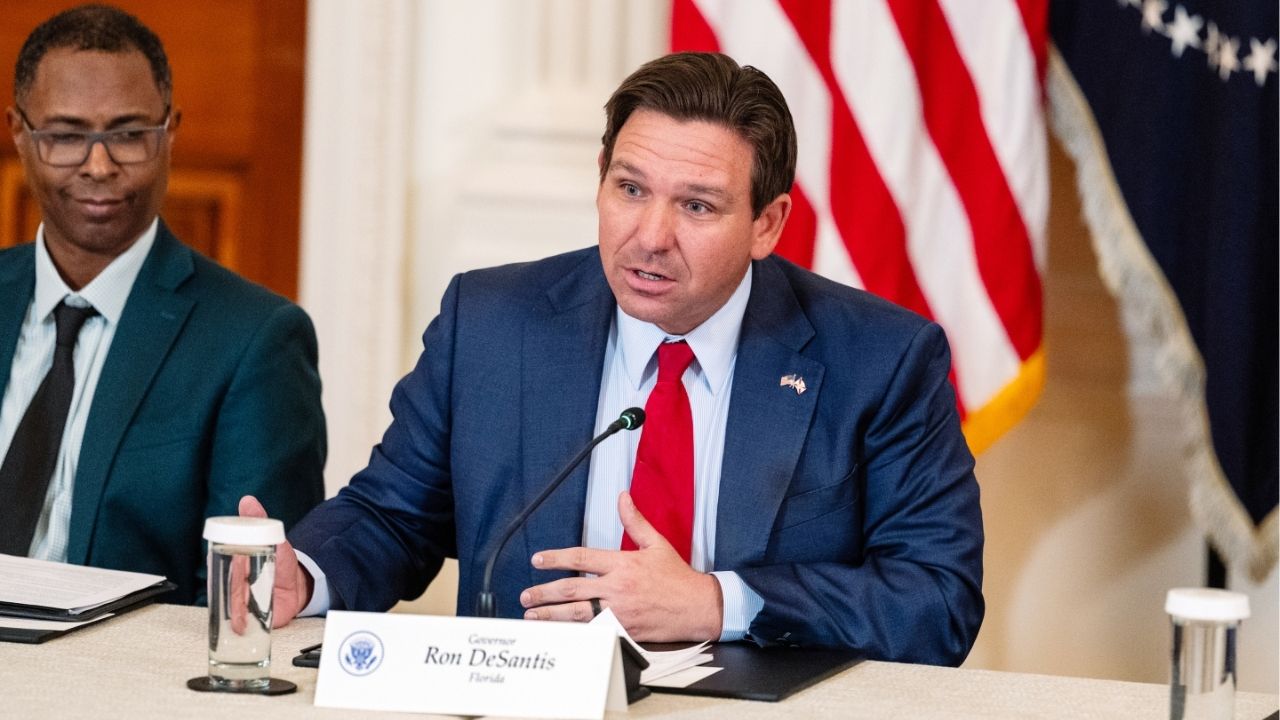
The driving force behind the spike in executions is the state’s governor, Ron DeSantis. Unlike most other states, Florida gives its governor the sole power to sign death warrants for prisoners who have exhausted their appeals, without the involvement of a court or any other body. Pennsylvania also confers that power to its governor, but that state has not executed anyone since 1999.
DeSantis, a Republican, has been in office since 2019, and for years he used his power sparingly, overseeing no more than two executions in any year but 2023, when he was running for president. That year, the state executed six people.
Following Trump’s Lead?
The reason for the recent spike is unclear. But Melanie Verdecia, a lawyer who writes the “Tracking Florida’s Death Penalty” newsletter, has a theory. “The best indication,” she wrote last year, “seems to be the direction from the Trump administration in early 2025 to aggressively pursue the death penalty at all costs,” though she acknowledged that DeSantis had not made that link.
In the final months of the first Trump administration, after a de facto moratorium of 17 years, the federal government executed 13 inmates, more than three times as many as it had put to death in the previous six decades.
On his first day back in office last year, President Donald Trump issued an executive order “restoring the death penalty.” It told the attorney general “to seek the overruling of Supreme Court precedents that limit the authority of state and federal governments to impose capital punishment.” And it decried President Joe Biden’s commutation of the death sentences of almost every federal inmate, telling the attorney general to imprison them “in conditions consistent with the monstrosity of their crimes.”
Lacking federal prisoners to execute, Trump encouraged states to get busy. Over the next 11 months, DeSantis signed more than twice as many death warrants as he had in the previous six years.
Advice: Don’t Murder People
I asked Molly Best, the governor’s press secretary, for comment. She pointed me to remarks DeSantis delivered at a news conference in November in response to a question about the increase in executions.
He said his slow start was partly a product of setting up a review process and partly a result of the pandemic. He added that he owed it to the families of victims to make sure that executions “ran very smoothly and promptly,” adding: “I do think the death penalty could be a very strong deterrent if you had the stuff happen quicker.”
Best also passed along a statement from Alex Lanfranconi, the governor’s communications director. “My advice to those who are seeking to avoid the death penalty in Florida,” he said, “would be to not murder people.”
DeSantis Leads Charge
DeSantis has led the charge, but the other two branches of Florida’s government are doing their part. The state Legislature, for instance, has enacted a series of laws of doubtful constitutionality that expanded capital punishment.
One extended the death penalty to crimes involving the sexual abuse of children. That would seem to be at odds with a 2008 Supreme Court decision, Kennedy v. Louisiana, that said crimes against people that do not involve killing, including the rape of a child, could not be punished by death.
Another new Florida law called for the automatic imposition of the death penalty to unauthorized immigrants who commit capital crimes. That is in tension with Woodson v. North Carolina, a 1976 Supreme Court decision that said mandatory death sentences were unconstitutional.
A third law lets juries recommend death sentences by votes as narrow as 8-4, instead of requiring a vote on the sentence to be unanimous.
It was prompted by a Florida jury’s decision in 2022 to sentence to life in prison without parole the gunman who murdered 17 people in the 2018 mass shooting at Marjory Stoneman Douglas High School in Parkland. The jury had voted 9-3 in favor of the death penalty.
In 2020, the Supreme Court ruled in Ramos v. Louisiana that the Constitution requires unanimous jury verdicts in cases involving serious crimes. But the Florida Supreme Court upheld the state law in December, saying that the Ramos decision applied to convictions, not sentencing.
The American Civil Liberties Union, which represents the inmate in that case, has filed a request for a rehearing in the state court. If that fails, as is likely, the group said that it will ask the U.S. Supreme Court to hear an appeal.
Challenges to the other two laws are inevitable, too. Indeed, the law on the sexual abuse of children seemed calculated to let the U.S. Supreme Court reconsider its earlier ruling.
In a reluctant concurring opinion in the December decision on non-unanimous juries, Justice Jorge Labarga wrote that the law “renders Florida the absolute outlier among states that impose the death penalty.”
Alabama is the only other state that does not require unanimity, though it sets the floor at 10 votes.
Labarga wrote that the state has another distinction, one that justifies requiring a unanimous jury. Florida, he wrote, “still leads the nation in exonerations from death row.”
—
This article originally appeared in The New York Times.
By Adam Liptak/Eric Lee
c. 2026 The New York Times Company