

|
Getting your Trinity Audio player ready...
|
Three days after Mojtaba Khamenei was proclaimed to have succeeded his slain father as Iran’s supreme leader, he has not appeared on video or in public nor issued any written statements.
One reason is concern that any communication could reveal his location and put him in danger, according to three Iranian officials speaking on condition of anonymity to discuss a sensitive subject in Iran.
But another factor is that Khamenei, 56, was injured on the opening day of the attack by Israel and the United States, they said.

The three Iranian officials said they were told by more senior figures in the government over the past two days that Khamenei had suffered injuries, including to his legs, but that he was alert and sheltering at a highly secure location with limited communication.
Two Israeli military officials said information gathered by Israel had also led the defense establishment to believe that Khamenei suffered leg injuries on Feb. 28, a conclusion they reached even before he was selected as the new supreme leader Sunday. The Israeli officials spoke on condition of anonymity.
Extent of Injuries Unclear
The full circumstances and extent of Khamenei’s injuries were unclear.
His father, Ayatollah Ali Khamenei, was killed in Israeli airstrikes on a leadership compound in the heart of Tehran, also on Feb. 28. The new supreme leader’s mother, wife and a son as well as several top Iranian defense officials were also killed in that daytime attack.
One hint of Mojtaba Khamenei’s condition has been references on state television and the state news agency IRNA, which called him the “wounded war veteran” supreme leader. Also, a statement from Komiteh Emdad, a powerful government religious charity, congratulating Khamenei calls him a “janbaz jang,” the Persian term for a veteran wounded in war.
On Tuesday, local media in Iran asked Esmail Baghaei, the spokesperson of Iran’s Foreign Ministry, if Khamenei had taken charge and assumed his new role as the country’s top religious and political figure and the commander in chief of armed forces.
Baghaei would not answer the question directly and said, “those who have to receive the message have received the message.”
Khamenei has remained a mysterious figure. He has seldom, if ever, delivered public speeches or attended public events. Iranian media began circulating a half-minute-long video with just still photographs of him and a short biography.
Israel Bombs Supreme Leader’s Compound Again on Friday
On Friday, when it emerged that Khamenei was the front-runner in the succession selection, Israeli fighter jets dropped bunker-busting bombs on the remaining structure of the supreme leader’s office and living compound, shattering it into rubble, satellite photographs showed.
Iranian officials said they believed that the target of the strikes was Khamenei but that he was not there. Israel’s defense minister, Israel Katz, had said in a social media post that any successor to Ayatollah Ali Khamenei would be a target. President Donald Trump said he was not happy with Mojtaba Khamenei’s ascent but would not address whether or not the U.S. planned to try to kill him.
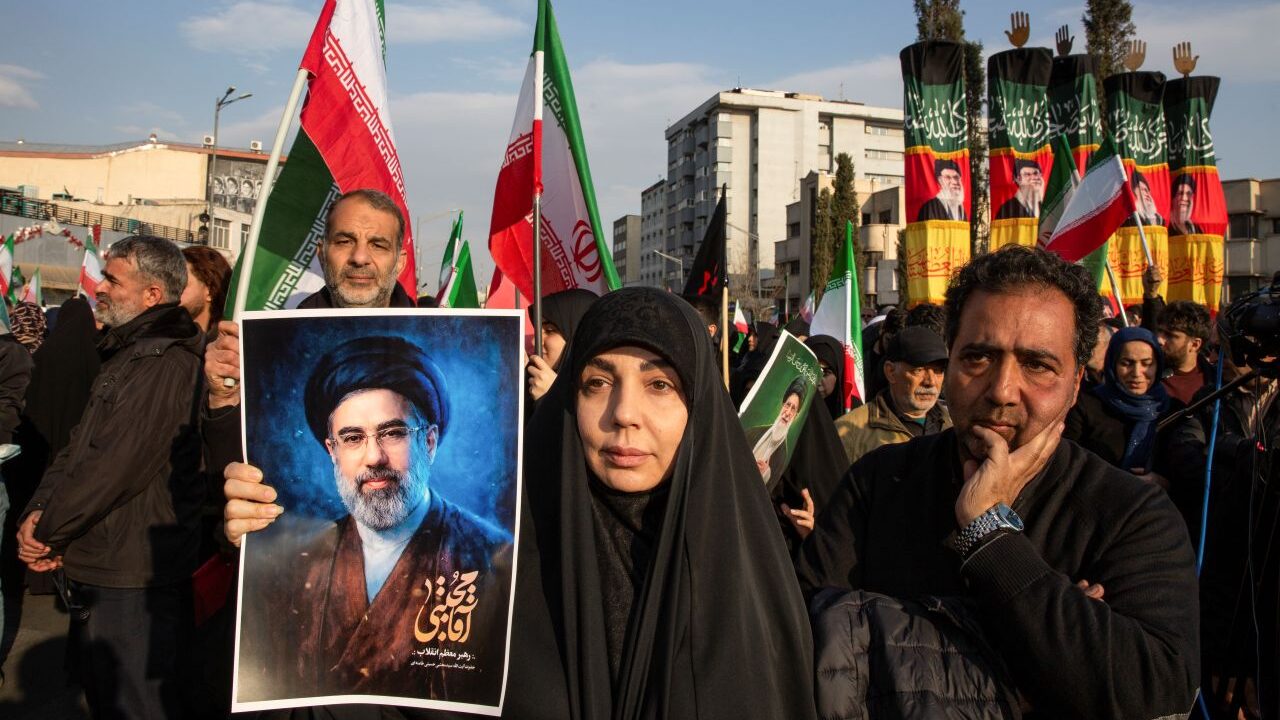
In Iran, Khamenei may be physically out of public view, but his face is already on large banners installed around Tehran and on a gigantic mural showing his late father handing him the flag of Iran.
Khamenei, who has deep ties to Iran’s Revolutionary Guard, was a power player in the shadows for years. He coordinated security and military affairs for his father’s office. But little is known about his personality or plans for ruling Iran other than his deep ties to the Guard and the hard-line faction.
Government supporters have been holding ceremonies of “pledging alliance” to Khamenei in town squares across the country, waving flags and holding his photographs.
This article originally appeared in The New York Times.
By Farnaz Fassihi and Ronen Bergman/Arash Khamooshi
c.2026 The New York Times Company