
|
Getting your Trinity Audio player ready...
|
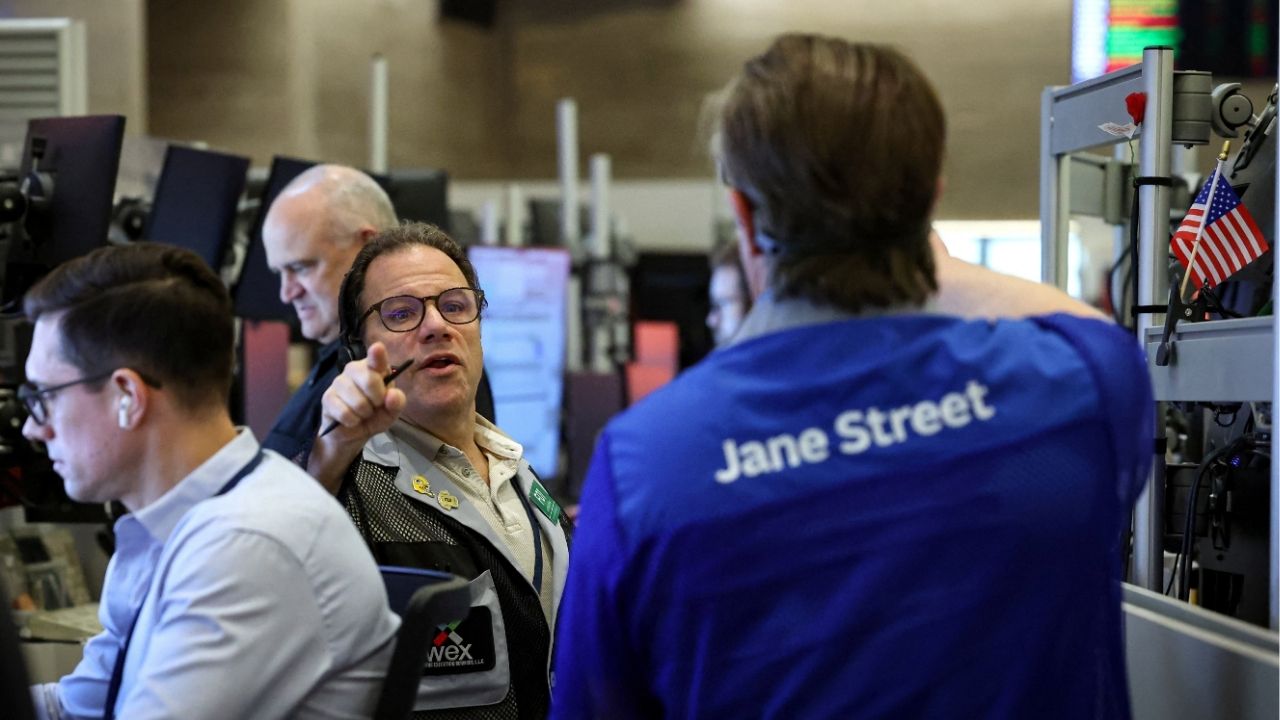
Wall Street’s main stock indexes slipped on Tuesday as investors exercised caution after comments from U.S. officials suggested escalation in the Middle East war that has spiked energy costs and fuelled inflationary concerns.
U.S. Defense Secretary Pete Hegseth and top U.S. general Dan Caine suggested that strikes against Iran were intensifying, a day after President Donald Trump said he saw an earlier end to the conflict than his previous timeline of four-to-five-weeks.
Crude and natural gas prices extended declines on Trump’s comments, easing further from the worrying $120-per-barrel mark, even as Iran said it would continue its oil blockade through the region.

Energy producers in the Middle East are yet to resume full-scale production, and shipping costs are likely to be elevated for a while.
“Yesterday, there was a more optimistic tone that this was going to be a faster military event and today the Defense Secretary alluded to the fact that at least for today, it’s intensifying. So therefore markets are taking a pause on that sort of optimistic rally they had in the wake of President Trump’s commentary yesterday,” said Art Hogan, chief market strategist at B Riley Wealth.
Travel stocks, which have borne the brunt of the selloff since the war started, slipped on Tuesday, with an index tracking passenger airlines down over 2%, while cruise companies Carnival and Royal Caribbean fell 1.8% each.
Surging crude prices since the start of the conflict have revived concerns that the U.S. economy could slip into stagflation and complicate the Federal Reserve’s work, as data also suggested the labor market was weakening.
Traders have priced in a potential 25 basis point rate cut around September, according to LSEG-compiled data.
Major Markets Dip
At 09:58 a.m. ET, the Dow Jones Industrial Average fell 249.15 points, or 0.52%, to 47,491.65, the S&P 500 lost 26.28 points, or 0.39%, to 6,769.71 and the Nasdaq Composite lost 33.24 points, or 0.15%, to 22,662.71.
The CBOE’s volatility index, Wall Street’s fear gauge, was last down 0.68 points to 24.82.
Nine of the 11 S&P 500 sectors were in the red, with energy and financials down over 1% each.
Overall losses on Wall Street, since the start of the war, have been contained, as technology stocks rebounded, making them the best performing sector on the S&P 500 this month with a 1.3% gain.
Chipmakers were higher on Tuesday, with SanDisk and Western Digital up around 3% and 5% each and helped limit losses on the Nasdaq.
Two inflation reports due later this week will be scrutinized for how inflation fared before the Middle East conflict, though unlikely to reflect the recent surge in energy and shipping costs.
Bunge gained 1.6% after the agribusiness firm said it expects earnings to increase to at least $15 per share by 2030 and announced a new $3 billion share repurchase program.
Health insurer Centene fell more than 10% after it reaffirmed its 2026 profit forecast.
Investors are keenly awaiting results from enterprise software maker Oracle, expected later in the day, and will scrutinize any signs of debt-fueled AI-spending. Shares of the company were down 1%.
Declining issues outnumbered advancers by a 1.36-to-1 ratio on the NYSE, and by a 1.03-to-1 ratio on the Nasdaq.
The S&P 500 posted one new 52-week high and four new lows, while the Nasdaq Composite recorded 32 new highs and 47 new lows.
—
(Reporting by Johann M Cherian and Utkarsh Tushar Hathi in Bengaluru; Editing by Shinjini Ganguli)