
|
Getting your Trinity Audio player ready...
|
As Defense Secretary Pete Hegseth vowed that Tuesday would be the “most intense day” of U.S. strikes against Iran since the start of the war, the Trump administration has started to loosen restrictions on Russian oil exports in a bid to temper rising gas prices.
It was the latest signal that the consequences of the U.S.-Israeli war in Iran were cascading into other crises. The easing of Russian oil sanctions, which were intended to help force an end to the war in Ukraine, includes a 30-day waiver for India to buy Russian oil already at sea without retaliation from Washington. Treasury Secretary Scott Bessent has said the United States was considering lifting more sanctions on Russian oil.
On Tuesday, Hegseth said at a news conference at the Pentagon that “the most fighters, the most bombers” would be deployed Tuesday and that the U.S. military was giving President Donald Trump “maximum options” to conduct the war. Hegseth, who said last week that the conflict could last three to eight weeks, argued that it was up to Trump to assess whether “it’s the beginning, the middle or the end.”

“He gets to control the throttle,” he said of Trump, who on Monday said the war could end “very soon” before warning of even more aggressive action if Iranian leaders continued to choke off oil tanker traffic in the Strait of Hormuz.
There was no talk of diplomatic efforts to end a conflict that has killed more than 1,800 people and that has seriously disrupted global energy markets.
After the president said on social media that the United States would hit Iran “twenty times harder” if it tried to stop the flow of oil, Ali Larijani, Iran’s top national security official, warned Trump to “take care of yourself, so that you are not eliminated.”
Israel’s military announced a new wave of strikes in Tehran, the Iranian capital, on Tuesday after Prime Minister Benjamin Netanyahu said he hoped the Iranian people would oust the Islamic Republic and that “ultimately, it is up to them” on when the war would end.
The strikes Monday night on Tehran and the city of Karaj, west of the capital, were among the worst in the war so far, some residents said. They described a barrage of bombs coming from nearly every direction for more than two hours overnight. “It seems they are striking everywhere: homes, schools, mosques, hospitals,” said one resident, Javad, who asked to withhold his full name out of concern for retaliation.
Retaliatory strikes from Iran continued to batter countries in the Persian Gulf as the conflict raged into its 11th day.
Here’s What Else We’re Covering:
— Strait of Hormuz: Fighting has slowed ship traffic in the Strait of Hormuz, the conduit for about one-fifth of the world’s oil. Warships from Pakistan, which relies heavily on energy imports from the Gulf, were escorting merchant vessels Tuesday to ensure access to energy supplies.
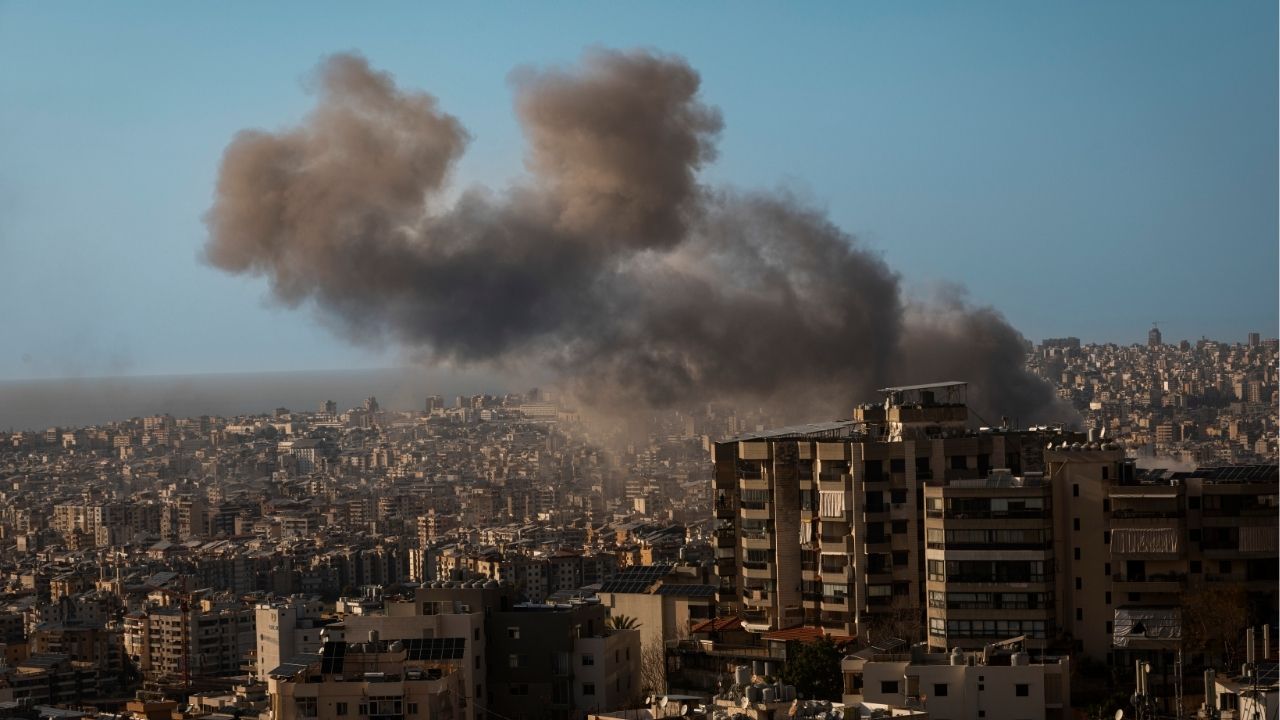
— Lebanon: Militants for Hezbollah, the Iranian-backed militia group, appeared to step up their attacks on Israeli forces Tuesday. The Israeli military responded with a new wave of airstrikes against Hezbollah in southern Lebanon and urged residents to flee. Almost 700,000 people have been displaced in Lebanon over the past week, according to the U.N. refugee agency.
— Death toll: U.S. and Israeli strikes in Iran have killed about 1,300 people, according to Iranian officials, while Iranian attacks across the Middle East have killed at least 30. Israeli strikes have killed almost 500 people in Lebanon, state media reported.
— Health fears: Strikes on Iranian fuel depots led to dark plumes of smoke, black rain and sanitary concerns for local residents. “The war has entered our throats,” one said.
— School strike: A newly released video added to the evidence that it was most likely a U.S. missile that hit an Iranian elementary school where 175 people, many of them children, were reported killed. The evidence contradicts Trump’s claim that Iran was responsible for the strike.
—
This article originally appeared in The New York Times.
By Aurelien Breeden, Eric Schmitt, Farnaz Fassihi and Paul Sonne/Diego Ibarra Sánchez
c. 2026 The New York Times Company