

|
Getting your Trinity Audio player ready...
|
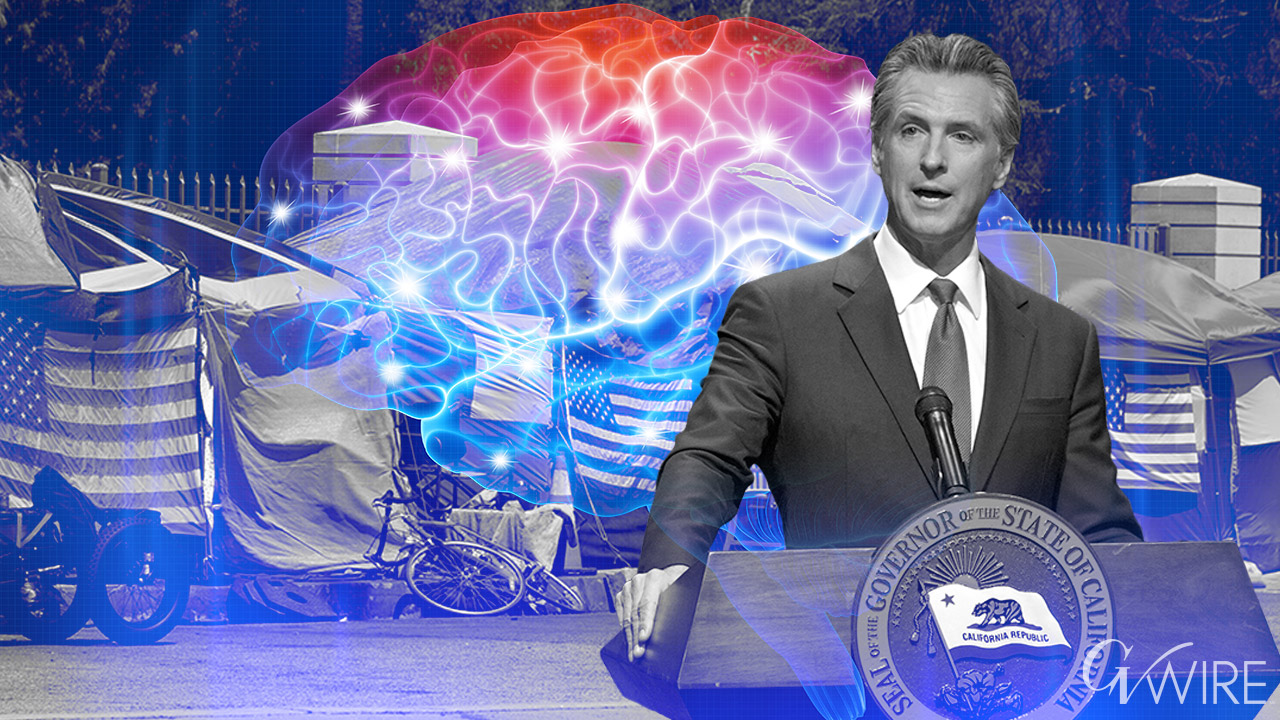
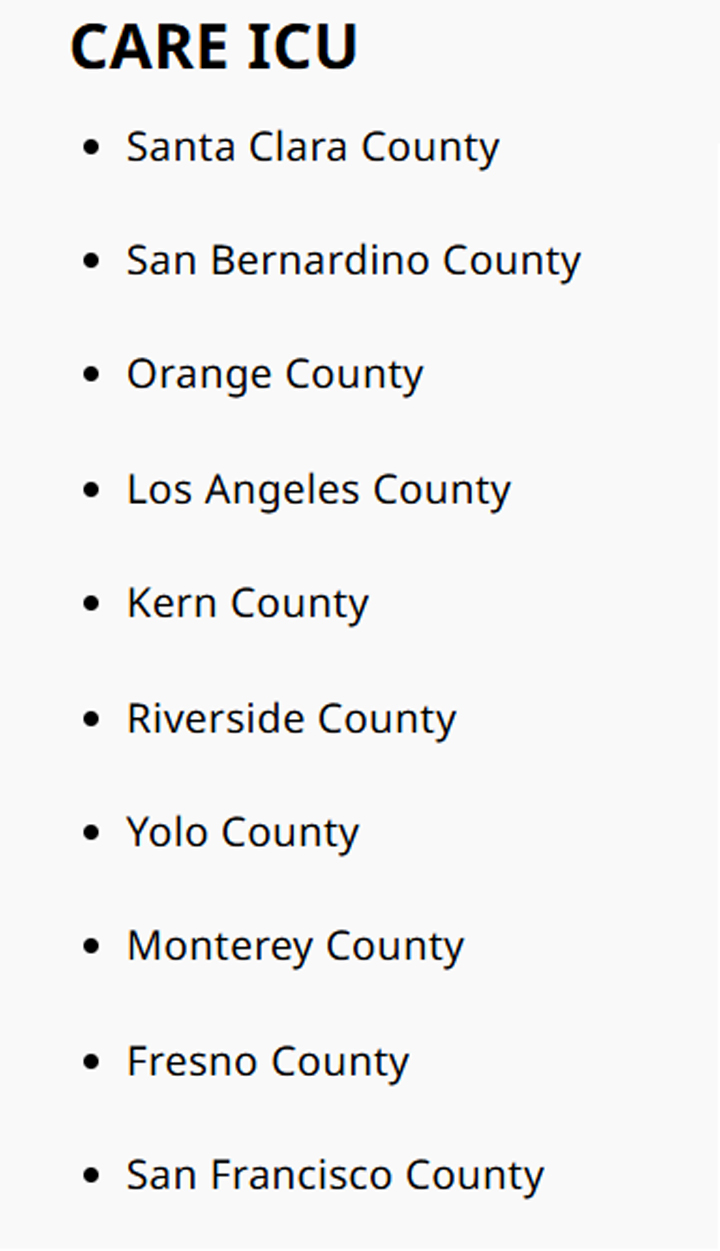
Following media reports about the struggles of what was supposed to be California’s landmark response to severe mental health issues, called CARE Courts, Gov. Gavin Newsom released a list of 10 counties falling behind on the program, including Fresno County.
“Through CARE Court, we have seen inspirational stories of recovery and resilience, but many counties continue to lag behind their peers,” Newsom said in a statement. “Local leaders have a moral and legal obligation to deliver this transformational tool for those who need it most. We will not accept failure and excuses when lives are on the line.”
But, as Newsom’s administration prepares to bring changes to those counties’ programs, many on the ground say mental health successes shouldn’t be measured by arbitrary benchmarks.


“Progress will only be accelerated by working together to close those funding gaps and expand proven local solutions, not by reducing a complex system to a single scorecard.” — James Williams, Santa Clara County executive officer
Santa Clara County Executive Officer James Williams said assessing a county’s mental health response goes beyond how many CARE Court petitions a county receives.
In an email to GV Wire, he said Santa Clara uses several programs, including CARE Court, to address the mental health crisis. He said the county has added hundreds of beds and has been “rapidly connecting individuals with severe behavioral health conditions to treatment and housing.”
He said counties need state partnership and sustained funding. The governor in his announcement said $291 million would be made available for both housing and behavioral health services.
“Counties across California are confronting multi-billion dollar shortfalls driven by federal actions, even as demand for behavioral health services continues to rise,” Williams said. “Progress will only be accelerated by working together to close those funding gaps and expand proven local solutions, not by reducing a complex system to a single scorecard.”
State Will Offer Technical Assistance
The state uses CARE Court as a way for first responders and family members of those with severe mental illness to mandate up to a year of behavioral health treatment. The state billed the program as one key to solving the homelessness crisis.
Since the first eight counties began CARE Courts in 2023, the state has received 3,800 petitions, with 1,851 people statewide going through the process, according to the governor’s office. Another 4,000 got recommendations to other programs.
That compares to initial estimates from Newsom’s administration of between 7,000 and 12,000 Californians qualifying for the plan.
The governor’s solution will bring two agencies — California Department of Health and Human Services and the Department of Health Care Services —to help with data collection, reporting, new rules and forms, and training for judges, according to CalHHS.
Assistants will look at workflows and recommend training.
System-Wide Changes Needed: Bender
Jennifer Bender, supervising deputy public defender in Riverside County told GV Wire in an email she was surprised Riverside made the underperforming list given that a month before the announcement, the state had highlighted the county’s program.
Riverside was among the first to roll out the program, and Bender said that county has seen great successes from individual who have completed the program.
For the program to meet the governor’s goals, however, CARE Courts will need more than technical assistance, she said.
She said law enforcement still uses “the old models of arrest and book or transport to the nearest ER and leave.”
Thus, if the governor’s new directives don’t bring in law enforcement, the problems will remain.
“We know those methods haven’t worked in the past. We see the results of it on our streets every day,” Bender said. “Families are devastated by the results of this inaction. CARE Court offers change and we welcome the opportunity to be part of the solution providing that change.”
Fresno County’s CARE Courts Results
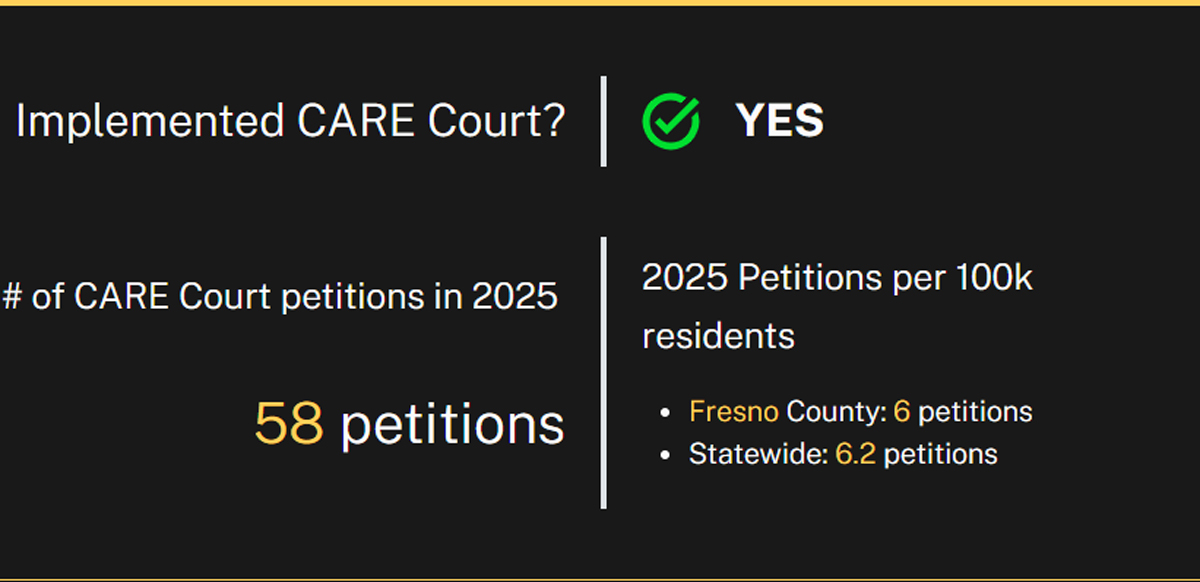
Since beginning the program in December 2024, Fresno County has issued 58 petitions, equaling about 6 petitions per 100,000 residents. That is slightly below the statewide average of 6.2 petitions per 100,000.
Tulare, Placer, and Solano counties, which all have the same rate as Fresno, did not make it onto Newsom’s list, according to the state’s accountability website.
State experts in January visited Fresno County about CARE Court implementation. In a statement to GV Wire, Amina Flores-Becker, Fresno County deputy county administrative officer, said the county worked closely with the state on implementation.
She said the county has emphasized transparency and flexibility in the program despite “narrow diagnostic criteria.”
“Throughout this process, the County has consistently prioritized transparency and flexibility as we roll out CARE Act services,” Flores-Becker said. “We continue to encourage the State to maintain and deepen its partnership with us, as we work together to support the most vulnerable individuals in our community.”
Counties Warned About Limitations in 2024
Long before Newsom’s recent criticism, counties warned of CARE Courts’ limitations.
For example, prosecutors could threaten criminal cases and offer treatment as an alternative, but that was largely the extent to which care could be compelled, Bender told GV Wire in 2024.
In addition, the state did not fund the program, save for $93 million disbursed for startup costs throughout California. That created challenges reaching the largely troubled populations, said Devin Fathi, supervising attorney for San Francisco County’s Homeless Advocacy Project.
Half of San Francisco’s CARE Courts enrollees in 2024 were homeless and contacting them meant outreach to local shelters and kitchens.
Despite the limitations, Bender on Tuesday told GV Wire that the program has been transformative for those who went through CARE Court.
“I would certainly welcome more petitions filed for individuals over criminal complaints but that would require first responders to take advantage of the opportunity that CARE Court provides in serving this population,” Bender said.
“Unfortunately, it is a lot easier for someone to be arrested and jailed, than to go through the process of filing a CARE petition and seeing it through.”