
|
Getting your Trinity Audio player ready...
|
Oil prices were steady despite volatile trading on Wednesday as further U.S., Israeli strikes against Iran escalated the conflict and paralyzed shipping through the Strait of Hormuz for a fifth day to impact vital Middle East oil and gas production.
Brent crude was down 24 cents, or 0.3%, to $81.13 per barrel at 11:18 a.m. ET (1618 GMT). On Tuesday, Brent closed at its highest since January 2025.
U.S. West Texas Intermediate crude was down 27 cents, or 0.4%, to $74.30, a day after settling at its highest since June.

“While flows through the Strait of Hormuz remain disrupted, market participants seem to expect a de-escalation of the conflict and a resumption of oil flows,” UBS analyst Giovanni Staunovo said.
“The market should, however, also focus on the risk of further production shut-ins if flows through the Strait remain disrupted, in my view.”
The Brent benchmark had gained more than $3 to touch $84.48 in morning trading, within sight of multi-year highs, but traded down after the New York Times reported operatives from Iran’s Ministry of Intelligence signaled openness to the U.S. Central Intelligence Agency to talks on ending the war, citing officials briefed on the matter.
U.S. Defense Secretary Pete Hegseth said on Wednesday the U.S. was winning the war against Iran and that the U.S. military could fight as long as needed.
Israeli and U.S. forces have struck targets across Iran, prompting Iranian retaliatory strikes against energy infrastructure in a region that accounts for just under a third of global oil production.
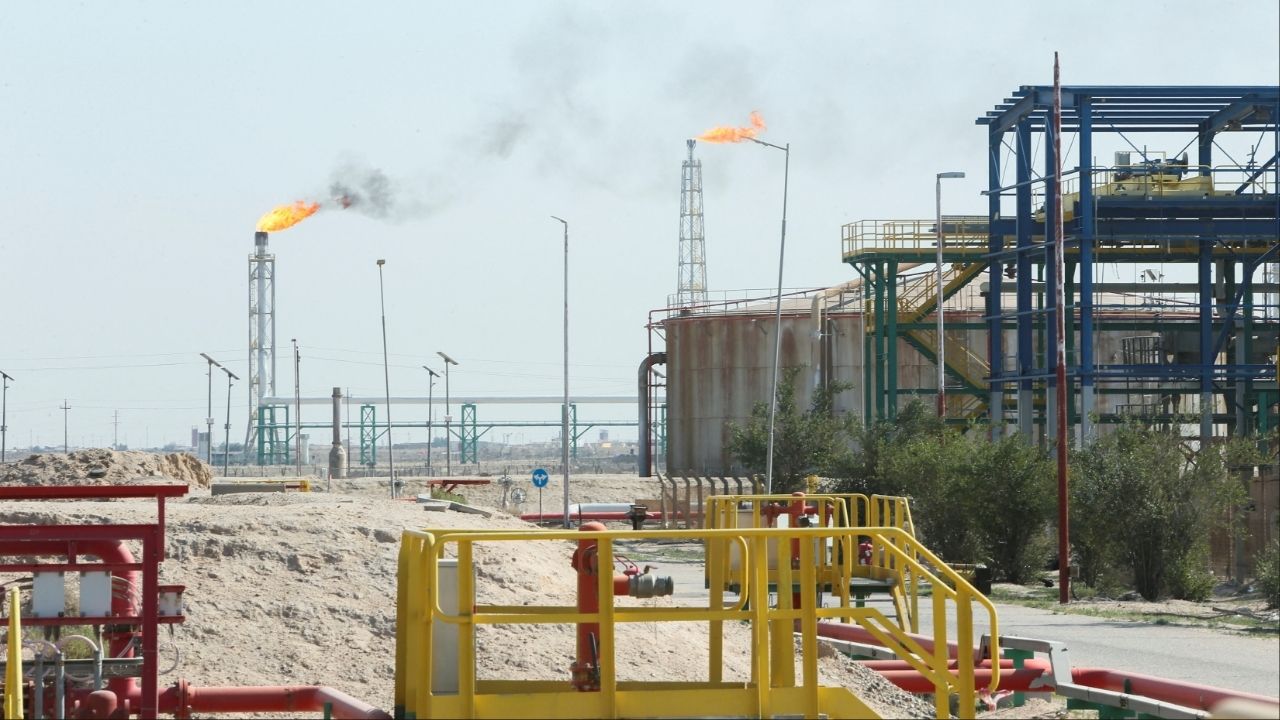
Iraq, the second-largest crude producer in the Organization of the Petroleum Exporting Countries, has cut output by nearly 1.5 million barrels a day due to storage limits and the lack of an export route, officials told Reuters.
They said the country may have to shut nearly 3 million bpd of output within days if exports do not resume. Traffic through the Strait also remains effectively closed.
U.S. President Donald Trump said the U.S. Navy could begin escorting oil tankers through the Strait if necessary, adding that he had ordered the U.S. International Development Finance Corporation to provide political risk insurance and financial guarantees for maritime trade in the Gulf.
Countries and companies have begun seeking alternative routes and supplies of crude. India and Indonesia said they were looking for other supplies, while some Chinese refineries were shutting or moving up maintenance plans.
In the U.S., crude stocks rose by 3.5 million barrels in the last week to their highest in three and a half years, the Energy Information Administration said, compared with analysts’ expectations in a Reuters poll for a 2.3 million-barrel rise. U.S. gasoline stocks fell by 1.7 million barrels, while distillate stockpiles, which include diesel and heating oil, rose by 429,000 barrels in the week.
“Global supplies remain ample with near record levels of “on the water” tanker storage. Still, until that oil can find a safe home, look for price volatility to continue,” said Dennis Kissler, senior vice president of trading at BOK Financial.
—
(Additional reporting by Trixie Yapp in Singapore and Alex Lawler. Editing by Jason Neely, Mark Potter, Elaine Hardcastle)