

|
Getting your Trinity Audio player ready...
|
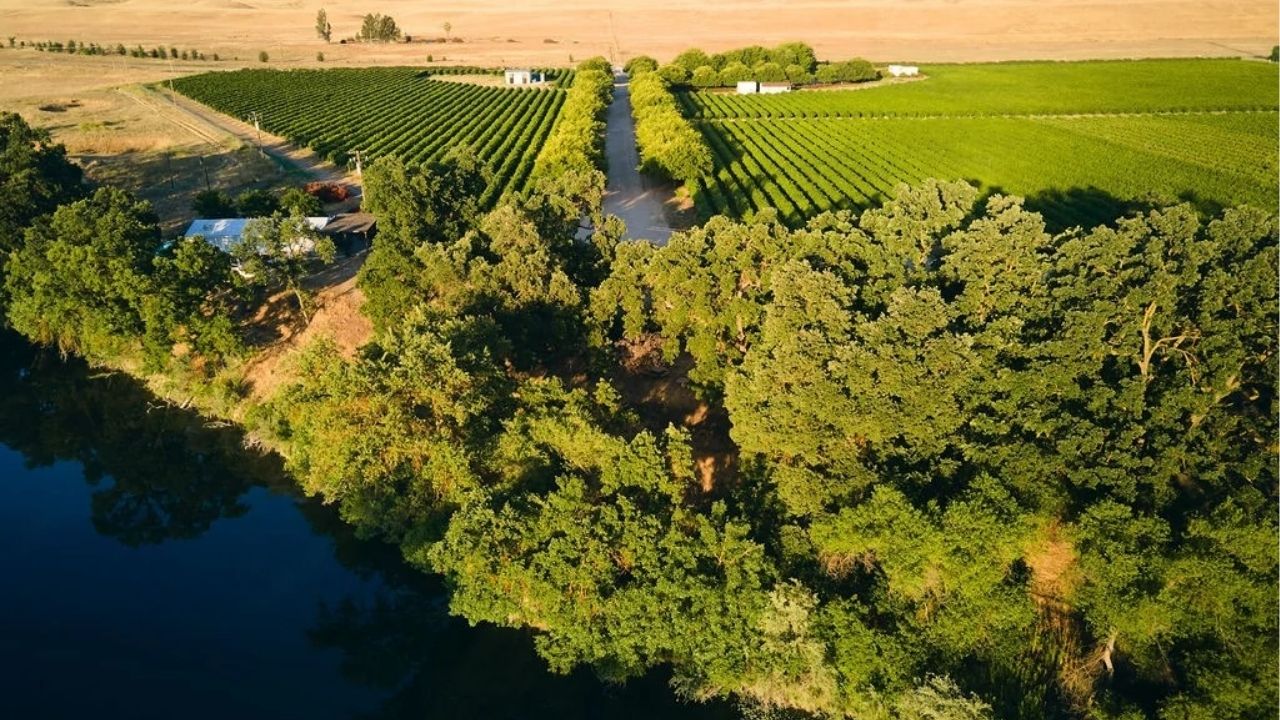
The use of human remains as compost is at the center of a fight between a state agency and a conservation group tasked with overseeing Sumner Peck Ranch along the San Joaquin River.
On Wednesday afternoon, the San Joaquin River Parkway & Conservation Trust — the “trust” on future reference — received a cease-and-desist letter from Fresno County for using human compost at the ranch, which the county says violates state law.
The letter comes after one from the state agency San Joaquin River Conservancy — the conservancy on future reference — to the trust after the conservancy’s executive director saw the compost on the property. The letter states that beyond the use of human composting, the trust has not created a management plan and should not be using compost regardless of the type.

County Supervisor Garry Bredefeld, who is also a conservancy board member, said in an email to GV Wire that he was “shocked” to find out that human compost was being used.
“The stupidity is breathtaking. This public land is culturally significant and environmentally sensitive,” Bredefeld said. “I personally will not allow this insanity to be hidden from the public; they have every right to know this is how their tax dollars are being wasted.”
Update: 4:45 p.m., Thursday, March 5: San Joaquin River Trust Suspends Use of Composted Humans on Ranch
Trust Assured Human Compost Not Regulated by State Law: Weaver
Sharon Weaver, executive director of the trust, says the product is safe and that misperceptions about human composting come from “fear and confusion about death and dying.”
She was surprised by the county’s involvement in the issue. She added that she was assured that using human compost does not violate state law.
“We were assured by our partner that the application of this compost is not regulated by the state of California. There is no regulation that applies to it as far as we know, and that is what we understood when we went into this partnership,” Weaver said.
She said the compost is not only free, but highly regulated and will help as the nonprofit restores the 76-acre property along the river. She added the conservancy’s objections are its way of trying to control the property after granting the trust money to purchase the property in 2020.
Weaver said the compost was only used in an open field where they planted wildflowers, not on cropland.
“There is no threat to public health. This is just like any other compost that you might apply in your yard, in your landscape, or some people would apply it to farms,” Weaver said.
Composting an Alternative to Burial or Cremation
The environmental benefits of using human compost align with the trust’s mission of restoring the soil at the property along the river, Weaver said.
Washington-based Earth Funerals say human composting has positive environmental impacts compared to traditional burial methods. Rather than opting for a burial or cremation when a person dies, they can go to any one of several different companies that will use bodies in compost.
Weaver said the company reached out to the trust about using the material, which the company often gives to nature preserves.
“We often have to buy compost for our restoration projects, and in this case, they are giving us the compost, so we thought it was a win-win,” Weaver said.
Late last year, families of the deceased visited Sumner Peck to see their loved ones’ final resting places.
“People were just so excited to know that the compost that was created from their loved one is being used to create something new,” Weaver said.
Compost Not the First Objection by the Conservancy
The letter from the conservancy demands that the compost at the site be removed. It states that without having a management plan in place, no compost should be applied.

“The stupidity is breathtaking. This public land is culturally significant and environmentally sensitive. I personally will not allow this insanity to be hidden from the public; they have every right to know this is how their tax dollars are being wasted.” — Fresno County Supervisor Garry Bredefeld
However, the trust says that was never part of the agreement. A letter from the trust to the conservancy in response states that the agreement says the trust would “coordinate and collaborate,” but that board approval is not a prerequisite to operations.
Weaver said that the complaint is part of a broader tactic by the conservancy to control the property. One of the conditions of the grant to the trust was that the farming operation would end by Dec. 30, 2025.
Though the orchards will be pulled at the end of this season, Weaver said the conservancy has been heavily involved in the grant process to make meeting those deadlines possible. The conservancy has not provided money for operations and getting funding takes time, Weaver said.
Last summer, ahead of the deadline, the conservancy sent a different letter saying the restoration process wasn’t happening fast enough.
They’ve now received more funding for restoration, after a lengthy application process that she says the conservancy was a part of.
“That was really alarming to us and confusing because we have been applying for grants to do the restoration work for over a year and they knew that. They have been part of the planning process,” Weaver said.
Read the letters below: