
|
Getting your Trinity Audio player ready...
|
Markets appeared to stabilize Wednesday, with stocks rising and oil prices and bond markets holding steady, as investors continued to assess the effects of energy supply disruptions stemming from the war in Iran.
Oil prices remained choppy but have not added to their sharp rise since the war began after President Donald Trump suggested that the U.S. Navy may escort ships through the Strait of Hormuz, the waterway on Iran’s southern coast through which a large share of the world’s oil and gas is transported.
Stocks in the United States and Europe were higher at the start of the trading day for the first time this week. The S&P 500 rose 0.4% in early trading Wednesday. The Stoxx Europe 600, a Pan-European index, posted a gain of more than 1%, after falling almost 5% over the prior two days.

Markets in much of Asia, a region highly dependent on imported oil and gas, were hit particularly hard during the region’s own trading day. In South Korea, the KOSPI index, which had been up almost 50% this year, plunged 12%. Trading was temporarily suspended to help stem the rout.
Futures across Asian markets, which allow investors to keep betting on the market even when local stock exchanges are closed, appeared to bounce Wednesday morning in New York, in line with the broader global recovery. Futures on the KOSPI rose over 6%.
In addition, President Emmanuel Macron of France has said that he wanted an international coalition to help secure commercial shipping routes, because they are “essential to the global economy.”
Analysts at Goldman Sachs estimated that oil shipped via the strait was running at about 15% of normal traffic flows. The effects have already begun to feed through to downstream products like gasoline, with consumers facing sharply higher prices at the pump.
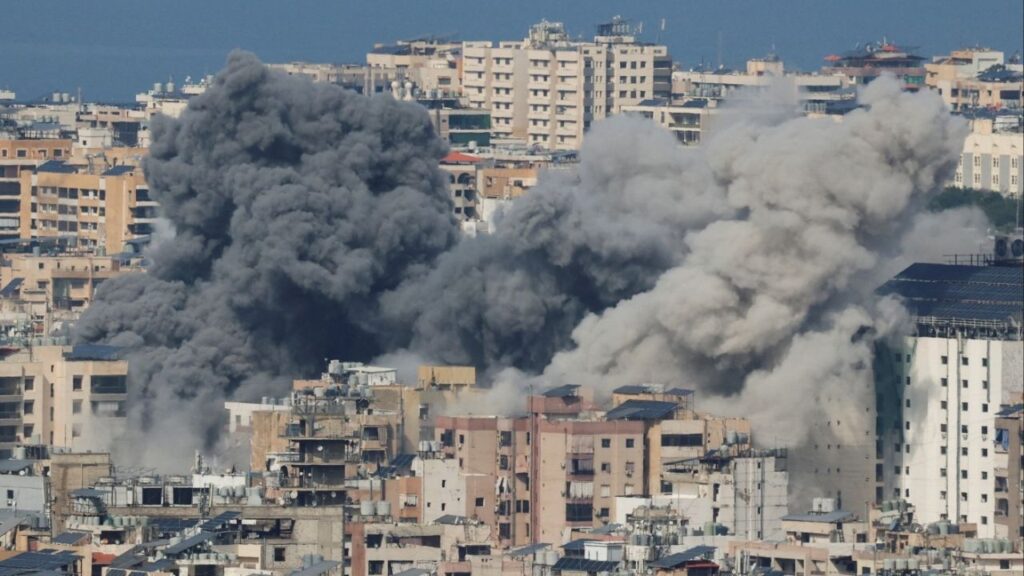
Trump said this week that he planned to do “whatever it takes” in his military campaign against Iran, and that “wars can be fought forever.” These statements were widely interpreted as suggesting that the conflict could exceed his earlier four- to five-week estimate. Defense Secretary Pete Hegseth said that the U.S. offensive was “accelerating,” with more bombers and fighters arriving Wednesday.
Energy Prices
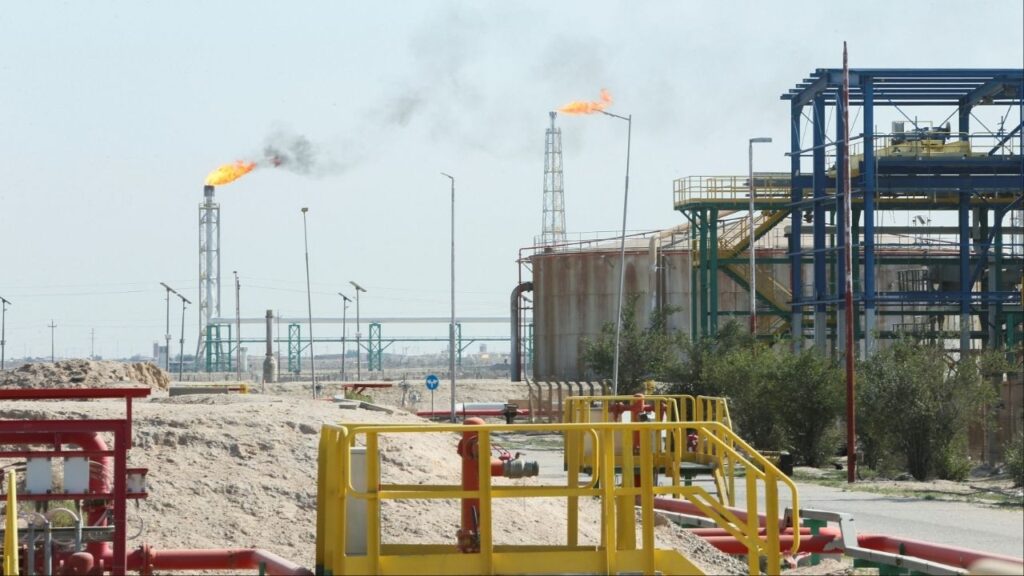
International crude oil prices fell slightly, to less than $81 a barrel, a small respite after large increases over the previous two days. Goldman Sachs analysts said that if shipping volumes via the Strait of Hormuz were to remain restricted for five more weeks, oil prices would likely reach $100 a barrel, “a level associated with more significant oil demand destruction.” Spot rates for natural gas in Asia rose sharply, but prices in Europe abated somewhat, although they remained at multiyear highs. Qatar’s state-owned energy company, a major exporter of liquefied natural gas, has halted production and acknowledged Wednesday that it would not be able to fulfill contracts with some LNG buyers.
Gasoline Spikes
U.S. gasoline prices rose about 9 cents a gallon, according to the AAA motor club. The average price of fuel was $3.20 per gallon Wednesday, a sharp increase from the start of the week, when it was just under $3 a gallon. If the spike in pump prices continues, it could become a political headache for the Trump administration as consumers fret about inflation and the state of the economy.
Inflation Fears
The energy price surge has caused investors to begin raising inflation expectations, while dialing down expectations for central bank interest rate cuts. Anxiety about inflation is especially acute in Asia and Europe because of their dependencies on energy imports. The risks look like a “textbook supply‑side shock,” which could bring higher inflation, tighter financial conditions, weaker real incomes and lower growth, according to a note by Daleep Singh, the chief global economist at PGIM Fixed Income. The 10-year U.S. Treasury yield continued to climb, approaching 4.1%.
—
This article originally appeared in The New York Times.
By Joe Rennison, River Akira Davis, Meaghan Tobin and Jason Karaian/Arash Khamooshi
c. 2026 The New York Times Company