

|
Getting your Trinity Audio player ready...
|
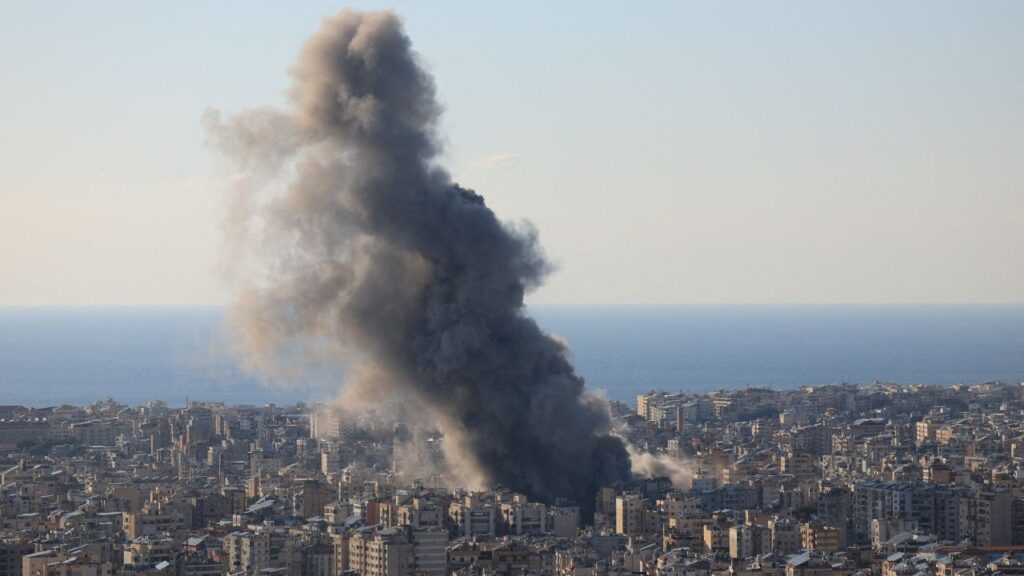
WASHINGTON — Gen. Dan Caine, the chair of the Joint Chiefs of Staff, said Monday that the U.S. military was bolstering its forces in the Middle East, sending more troops and fighter jets to the region as America’s war in Iran expands.
“This work is just beginning and will continue,” Caine said, adding that when additional fighter jets arrive in the coming days, the United States will be “just about where we want to be in terms of total combat capacity and total combat power.” He declined to say exactly how big that overall force would be.
But even as Caine’s words suggested an extended military campaign, Defense Secretary Pete Hegseth, standing beside him at a Pentagon news conference, insisted that this conflict would not spiral into one of the lengthy engagements that have characterized some of the United States’ past ventures in the region.

“This is not Iraq,” Hegseth said. “This is not endless.”
The dueling messages presented at the Pentagon news conference Monday, the Trump administration’s first since the United States and Israel struck Iran on Saturday, highlighted the quandary facing America as it embarked on another war in the Middle East.
Trump: War Could Last ‘Four to Five Weeks’
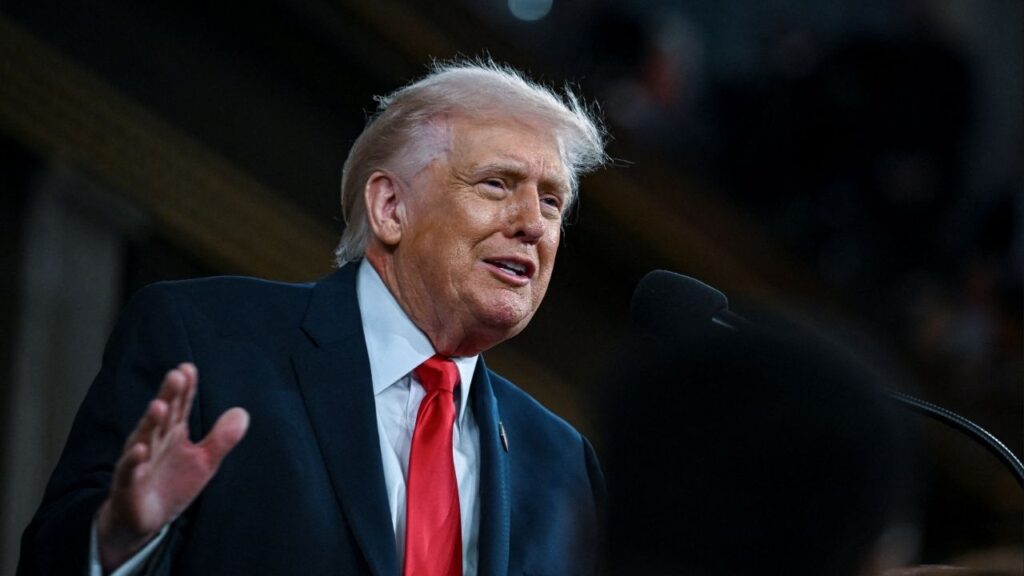
President Donald Trump has said the conflict could last “four to five weeks” if necessary and made his opposition to protracted military conflict part of his political identity. But with no explicit objective in this war other than forcing Tehran to abandon its nuclear program, Trump administration officials are struggling to explain their reasoning for striking Iran to the American public.
For the first Trump officials sent out to make that case, it was a difficult task, especially since they announced a fourth American death.
Caine said he expected the United States to “take additional losses.”
Officials have also struggled to articulate the “imminent” threat from Iran that the president claimed the United States was facing in his announcement of the attack, and Hegseth did not mention one at the news conference.
Hegseth said no U.S. ground troops are in Iran, but he did not rule out the possibility. Caine, a former F-16 fighter pilot, said the U.S. could “sustain the fight” against Iran.
Military officials privately have already expressed concern about running low on munitions, raising the possibility that the Pentagon may have to dip into stockpiles reserved for other potential conflicts around the world.
This article originally appeared in The New York Times.
By Helene Cooper and Eric Schmitt/Kenny Holston
c.2026 The New York Times Company