
|
Getting your Trinity Audio player ready...
|
With a $5,000 check from a longtime friend, an ambitious young lawyer set out to topple San Francisco’s district attorney in 1943. He woke up early to shake hands with workers in slaughterhouses and flower markets, and he traipsed around the city to deliver speeches at night.
The lawyer, Edmund G. Brown, known as Pat, won the race, and then went on to become California’s attorney general and one of the state’s most storied governors during a postwar period of enormous population growth and social upheaval.
He also established a San Francisco network that would send ripples through California politics for the next 80 years. His son, Jerry Brown, would serve a record four terms as governor. And the friend whose $5,000 donation helped start it all, William Newsom II, had a son who would become a politically connected judge — and a grandson named Gavin, who is governor today.

But the dominance of the San Francisco machine in California is coming to an end.
Newsom, who got his start in San Francisco government, will leave office in January. So will Rep. Nancy Pelosi, the former House speaker, who is also from the city and has wielded power behind the scenes for decades. John Burton, a former Democratic U.S. representative from San Francisco and state party chair with an iron grip, died last year.
It is now a different era, in which the collective influence of social media has diminished the might of political machines. To some, the change is a boon for democracy, elevating candidates from across the political spectrum and different walks of life. But the end of the dynastic dominance has also left California Democrats without a clear favorite to lead the state, the nation’s most populous.
“When you had the blessing of a big, powerful machine, you had an automatic advantage; there’s no question about it,” said former Sen. Barbara Boxer, a Democrat who got her start in politics with the help of the same San Francisco-based machine that elevated Newsom. “Now it’s wide-open city, as you can see in the gubernatorial race.”
At least nine Democrats are running, with no one seizing a substantial lead. And it is unusually close to the June 2 primary for the governor’s race to be this unsettled.
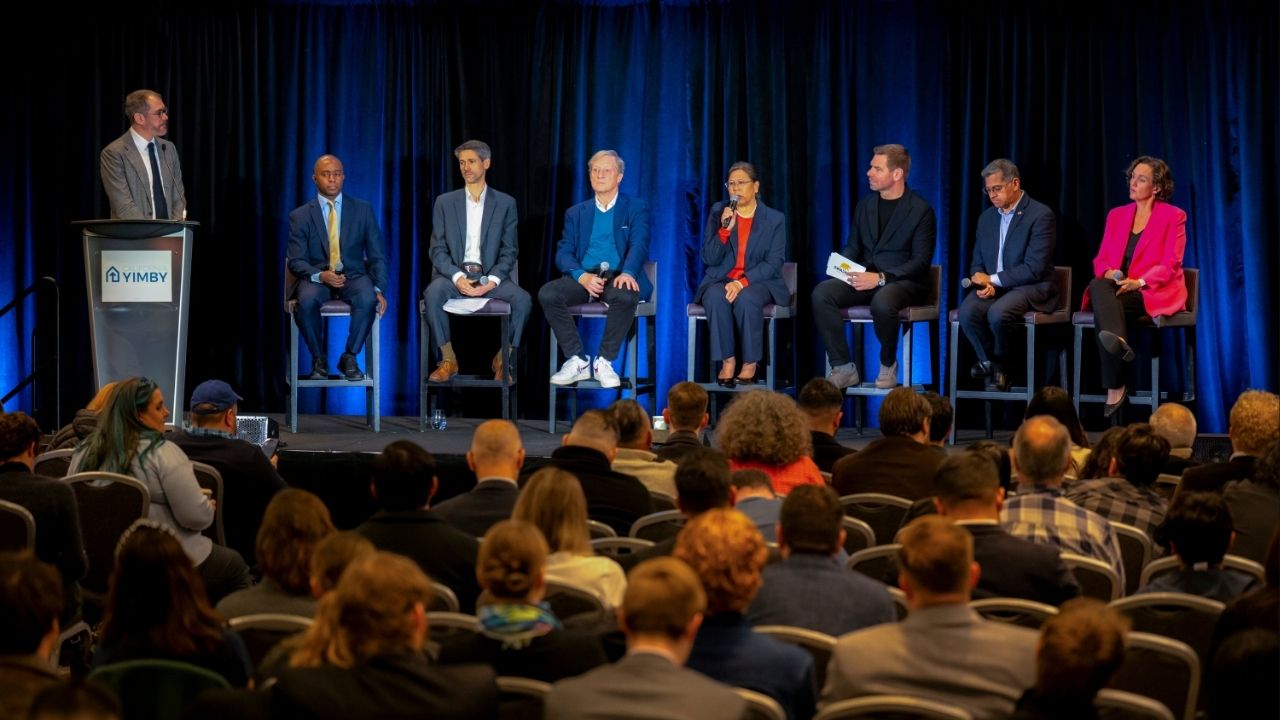
None of the Democrats running for governor come from the Brown dynasty or the Newsom network. One leading candidate, former Rep. Katie Porter, grew up on a farm in Iowa. Another, Rep. Eric Swalwell, comes from a family of Republicans.
The Democratic field includes sons of Mexican immigrants, a daughter of Chinese immigrants and a billionaire who grew up in New York City. There’s also a school superintendent, a surfer who served in the state Legislature and a Silicon Valley mayor raised in a coastal farm town.
Delegates at the state Democratic Party convention last weekend in San Francisco suggested that there might be too much democracy in California at the moment.
Under California’s nonpartisan primary system, the two candidates who receive the most votes in June will advance to the general election, regardless of their party affiliation.
With the Democratic vote being split nine ways, some polls show two Republicans — Chad Bianco, the Riverside County sheriff, and Steve Hilton, a former Fox News host — taking the top two spots. The most recent poll, released Wednesday by the Public Policy Institute of California, showed five candidates in a virtual tie, including those two Republicans.
California has not elected a Republican to statewide office in 20 years, and registered Democrats outnumber registered Republicans almost 2-to-1. So the possibility of a Republican primary sweep has Democrats in a mild panic.
The latest parlor game for California’s political elite is an interactive tracker that allows users to calculate the odds of a Democratic shutout. (They stood at 12% on Wednesday, based on a formula that considers the most recent polls and fundraising data.)
“It’s frightening,” said Sylvia Russell, a delegate from Marin County. “We need to have maybe two or three people at the top, and that’s it.”
In an earlier era, a strong party boss might have hashed things out behind closed doors. But many of the candidates still see reasons to remain hopeful.
Recent polls show Swalwell and Porter taking turns as the leading Democrat, both capitalizing on their familiarity to voters through social media and news show appearances. Tom Steyer, a former hedge fund manager who has poured $38 million into his own campaign, has become a progressive contender with commercials that have dominated California airwaves. Porter, Swalwell and Steyer are the three Democrats in the dead heat in the PPIC poll.
Matt Mahan, the mayor of San Jose and a moderate Democrat, entered the race in late January and has quickly attracted millions of dollars from tech titans.
Betty Yee, a former state controller, and Xavier Becerra, a health secretary under President Joe Biden, have polled in the single digits for months. Yet they received strong support last weekend from party delegates, coming in second and third place, respectively, behind Swalwell.
Becerra said he saw no reason to back down. He contrasted the wide-open race in California with old-school Mexican politics in which a leader would pick his chosen successor, known as el dedazo.
“There’s no such party big shot,” Becerra said. “There won’t be any dedazos here.”
California’s labor unions have historically been influential in determining Democratic front-runners, but even they are having a hard time this year.
So far, the unions have not coalesced around one candidate. And the state’s two most powerful unions, the Service Employees International Union and the California Teachers Association, have delayed their endorsements because of indecision.
At the convention over the weekend, California Democrats celebrated Pelosi as she neared retirement. But she made it clear that she still held sway as she tamped down concerns about the race for governor.
“We will have a Democratic governor for our state,” Pelosi said in an interview. “And some reporters have said, ‘Well, what about two Republicans?’ That won’t happen.”
She said she had spoken to nearly all of the candidates for governor. While she has not endorsed anyone, she also did not tell any of them to drop out. But she firmly believed the field would sort itself out.
“I’m very confident,” she said. “I’ve done this a long time.”
—
This article originally appeared in The New York Times.
By Laurel Rosenhall/Mike Kai Chen
c. 2026 The New York Times Company