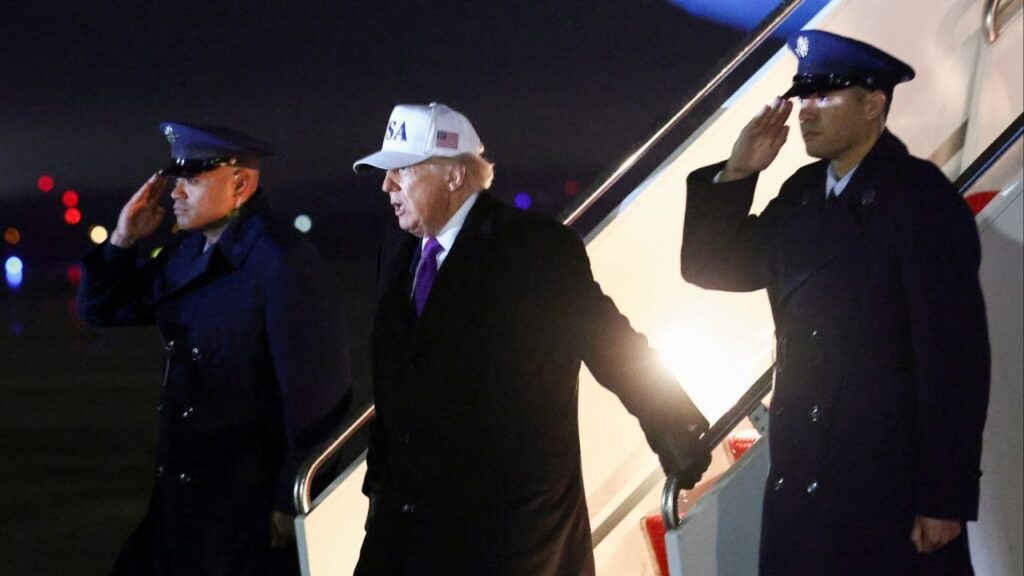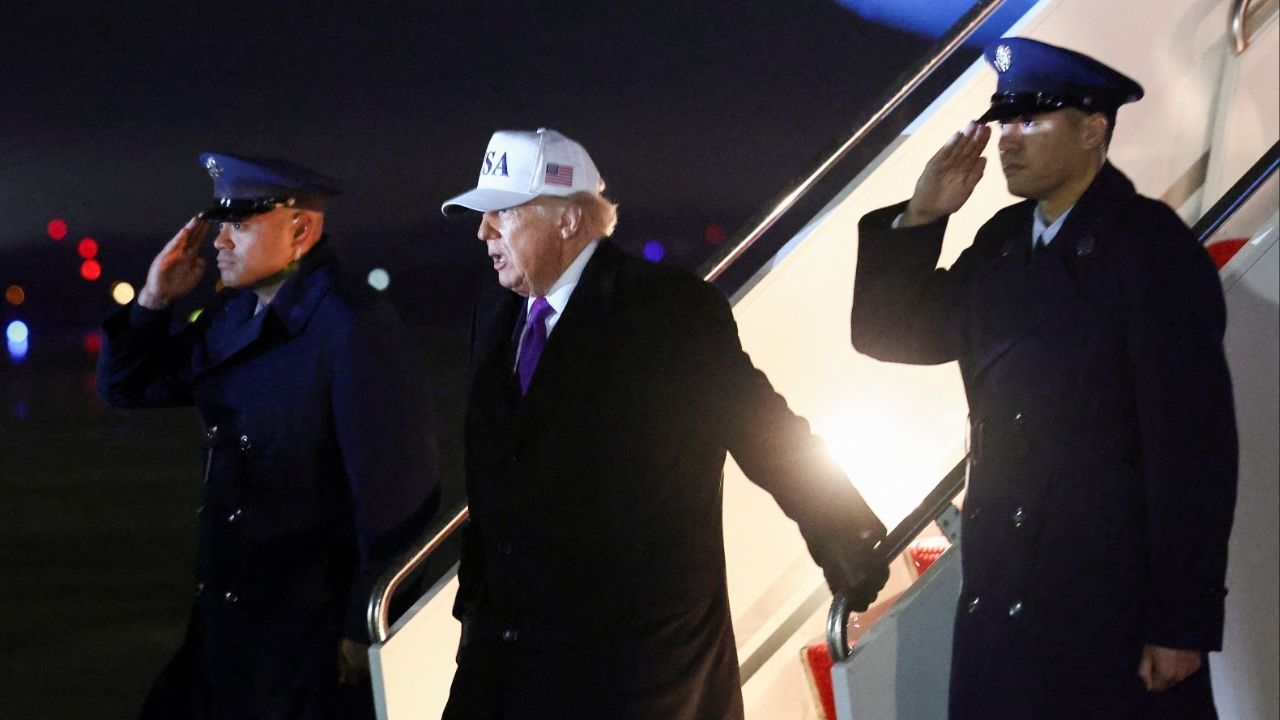
President Donald Trump arrives at Joint Base Andrews in Maryland, U.S., February 19, 2026. (Reuters/Kevin Lamarque)

Share
|
Getting your Trinity Audio player ready...
|
President Donald Trump will travel to China from March 31 to April 2, a White House official said on Friday, setting dates for a highly anticipated encounter amid tension between the world’s biggest economies.
Trump is expected to meet Chinese President Xi Jinping as part of the extended visit, as the two sides weigh whether to extend a trade truce that paused a tariffs escalation, said the official, who declined to be named while discussing details that have not been publicly announced.
“That’s going to be a wild one,” Trump told foreign leaders on Thursday about the China trip. “We have to put on the biggest display you’ve ever had in the history of China.”
The visit would be the leaders’ first talks since February and their first in-person visit since an October meeting in South Korea, where Trump agreed to trim tariffs on China in exchange for Beijing cracking down on the illicit fentanyl trade, resuming U.S. soybean purchases and keeping rare earths exports flowing.
While the October meeting largely sidestepped the sensitive issue of Taiwan, in February Xi raised U.S. arms sales to the island.
Washington announced its largest-ever arms sales deal with Taiwan in December, including $11.1 billion in weapons that could ostensibly be used to defend against a Chinese attack. Taiwan expects more such sales.
China views Taiwan as its own territory, a position Taipei rejects. The United States has formal diplomatic ties with China, but maintains unofficial ties with Taiwan and is the island’s most important arms supplier. The United States is bound by law to provide Taiwan with the means to defend itself.
According to Trump, Xi also said during the February call that he would consider further increasing soybean purchases. Soybeans are key because struggling U.S. farmers are a major domestic political constituency for Trump, and China is the top consumer.
Although Trump has tagged China as the reason for several hawkish policy steps from Canada to Greenland and Venezuela, he has eased policy toward Beijing in the past several months in key areas, from tariffs to advanced computer chips and drones.
—
(Reporting by Trevor Hunnicutt, additional reporting by Katharine Jackson; Editing by David Ljunggren and Andrei Khalip)
RELATED TOPICS:
Categories



Stocks Jump After US Supreme Court Rejects Trump’s Tariffs



Madera Police to Hold DUI Checkpoint Friday Night