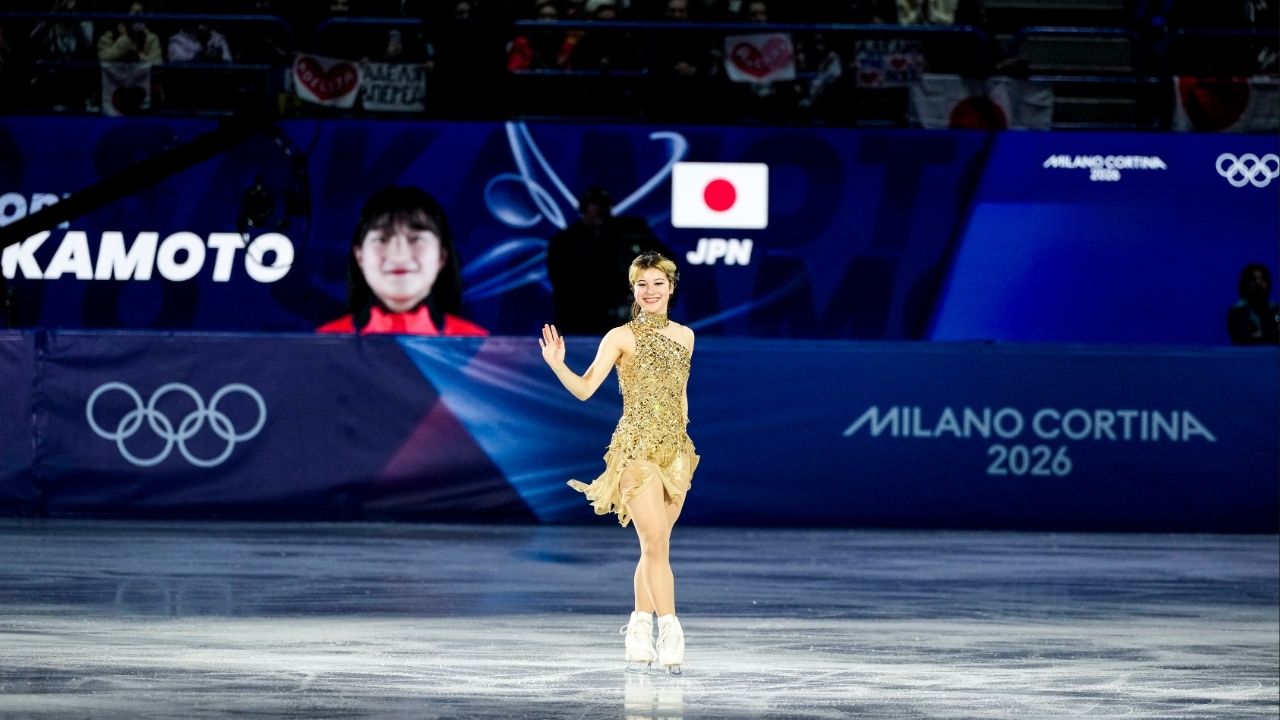
Alysa Liu of the United States on her way to winning the gold in the free skating program of the women’s single skating event at the 2026 Milan Cortina Winter Olympics in Milan, Italy, on Thursday, Feb. 19, 2026. Competition can wreck a figure skater, but Liu and other Olympians shed the pressure and delivered transcendent performances focused on artistry. (Vincent Alban/The New York Times)

Share
|
Getting your Trinity Audio player ready...
|
In one of the most improbable comebacks in the history of figure skating, Alysa Liu of the United States, who quit the sport after the 2022 Beijing Olympics, reclaimed her career on her own joyous terms and won the gold medal in the women’s competition Thursday at the Milan Cortina Games.
After finishing third in the short program, Liu rose to the top of the medal podium while skating freely, ebulliently and inured to any pressure, performing with technical precision and bright artistry. Her winning score of 226.79 points was her personal best in the most important competition of her young life.
Liu, 20, of Oakland, California, became the first American woman to win a gold medal in the singles competition since Sarah Hughes won at the 2002 Salt Lake City Olympics, and the first to win any medal since Sasha Cohen took silver at the 2006 Winter Games in Turin, Italy. Liu will leave these Olympics with two gold medals, her first coming in the team event.
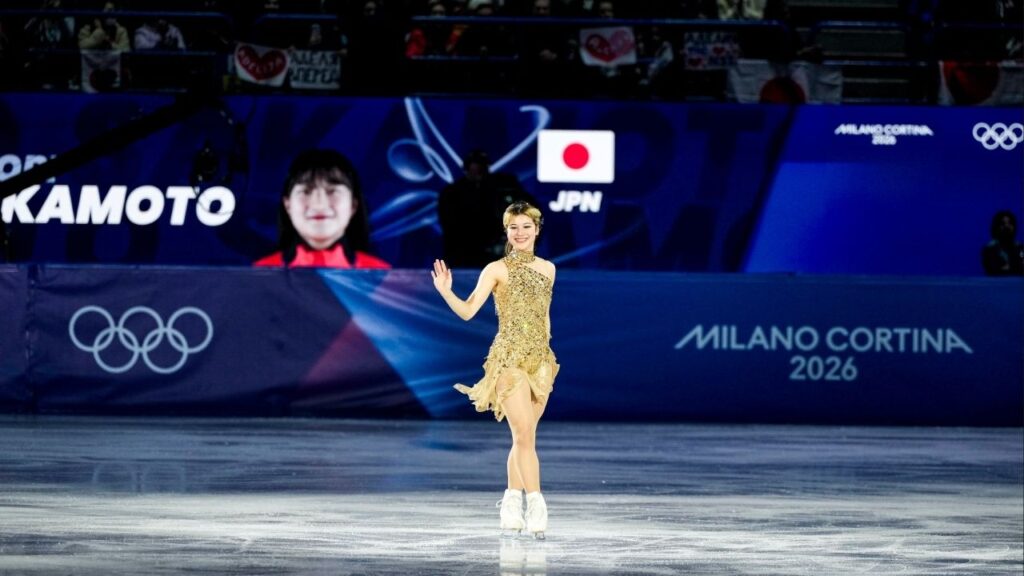
Japan won the silver and bronze medals Thursday. Kaori Sakamoto, 25, the 2022 bronze medalist and a three-time world champion, took silver with 224.90 points in her final competition before retiring. Ami Nakai, appearing in her first Olympics at 17, was the youngest female skater; she took the bronze with 219.16 points, slipping from first in the short program.
Liu did not attempt a triple axel in her long program, as Nakai and Liu’s U.S. teammate Amber Glenn did. Nor did Liu attempt a quadruple toe loop as did Russian Adeliia Petrosian.
But, skating to “MacArthur Park” as sung by Donna Summer, Liu performed the most relaxed, complete and liberated performance of the evening. She landed seven triple jumps and received career-high scores for artistic marks like choreography, musicality and skating skills.
Liu was not flawless. Her two triple flips showed small imperfections, but, crucially, she landed a triple-lutz, triple-toe-loop combination jump, the only triple-triple among the medalists. Sakamoto, meanwhile, lost more than 8 potential points after landing off balance on a triple flip, leaving her unable to attempt a planned triple toe loop in combination. Nakai, too, squandered roughly 6 points for downgrading a planned triple lutz-triple toe loop combination.
Liu also received 10% bonus marks for landing three jumping passes in the second half of her routine, boosting her technical score — a triple lutz-double axel-double toe loop sequence, a triple flip-double toe loop combination and a solo double axel.
Glenn, 26, the three-time and reigning United States champion, skated a redemptive performance, pulling herself to fifth overall, from 13th place, after what she called a “soul crushing” short program.
Glenn attempted eight triple jumps in her long program, the first seven assuredly before putting her hand down on an awkward landing of a triple loop, the same jump she had struggled with in the short program.
“So close,” Glenn said to herself on the ice. In the kiss-and-cry area, she added with relief that at least “I didn’t fall at the Olympics.”
For the first time in four Winter Olympics, a Russian woman did not win gold in the singles competition. Petrosian, 18, skating as a neutral athlete because Russia remains banned for its invasion of Ukraine, was competing in only her second international competition outside her home country.
With her technical ability, she was considered a potential medal contender, but she did not attempt a triple axel in her short or long programs. She fell on her quad toe loop attempt in the long program and did not complete a triple-triple combination, finishing sixth.
Liu finished sixth at the 2022 Beijing Olympics but soured on the sport, feeling she had spent too much of her life inside a skating rink, and quit. She enrolled at UCLA to study psychology, hiked to the base camp of Mount Everest and took a ski trip that reinvigorated her interest in winter sports.
She returned to skating after about two years with a different outlook, becoming the 2025 world champion. Her aim was to display her artistry, not to depend on the outcome of competitions to validate her career. She even wears her hair differently, with horizontal stripes that she compared to rings on a tree to mark the passage of time.
“What I like to share about myself is my story, my art, my creative process,” Liu told NBC after winning the gold medal. “I guess messing up doesn’t take away from that. A bad story is still a story. I think that’s beautiful, so there’s no way to lose.”
She was so relaxed while warming up on Thursday that she smiled and waved to the crowd. Then she skated the performance of her life and bounded off the ice, jumping into the arms of her coach and her choreographer.
“Being able to do it my way on the big stage like this has been my dream,” Liu told NBC. “I’m just over the moon. I’m the luckiest girl ever, and I’m really grateful.”
—
This article originally appeared in The New York Times.
By Ashley Cai, Weiyi Cai, Bora Erden, Malika Khurana, Jeré Longman, Raj Saha, Joe Ward and Jeremy White/Vincent Alban
c. 2026 The New York Times Company
RELATED TOPICS:

How a Relaxed and Joyous Alysa Liu Won the Gold