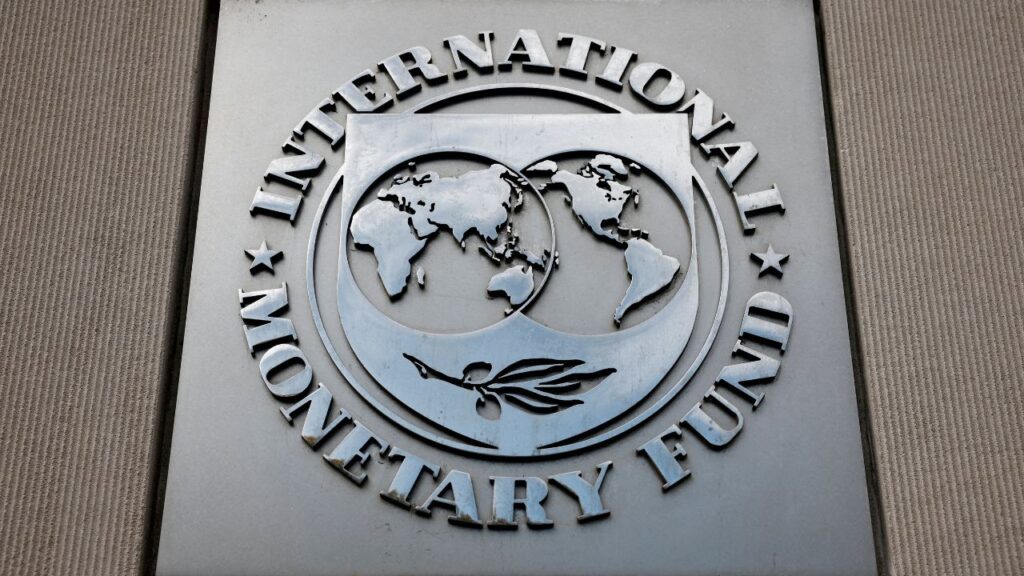
A view of the International Monetary Fund (IMF) logo at its headquarters in Washington, D.C., U.S., November 24, 2024. (Reuters/Benoit Tessier/File Photo)


- The International Monetary Fund said Venezuela’s economic and humanitarian situation remains “quite fragile,” with inflation estimated in the triple digits and rapid currency depreciation.
- The IMF has paused formal relations with Venezuela since 2019 but is monitoring developments and will consider re-engagement based on global and member guidance.
- Venezuela’s public debt is estimated at around 180% of GDP, and the country has seen millions of people leave since 2014 amid continued socioeconomic hardship.
Share
|
Getting your Trinity Audio player ready...
|
WASHINGTON, Feb 19 – Venezuela’s economic and humanitarian situation is “quite fragile,” the International Monetary Fund said on Thursday, adding that it was seeing inflation estimated to be in the triple digits and a rapid depreciation of the currency.
IMF spokeswoman Julie Kozack told reporters that the global lender was continuing to monitor developments in the South American country despite having paused its relations with the Venezuelan government since 2019.
She said the IMF would be guided by its members and the international community on whether to re-engage with the country, which has seen about a quarter of its population – some 8 million people – leave since 2014.
“Venezuela is undergoing a severe and prolonged economic and humanitarian crisis,” Kozack said during an IMF briefing. “Socioeconomic conditions remain very difficult; poverty is high, inequality is high and there’s widespread shortages of basic services. The situation overall is quite fragile.”
The IMF estimated that Venezuela’s public debt amounted to 180% of the country’s gross domestic product, before any judgments or arbitration linked to previous defaults.
Kozack said IMF Managing Director Kristalina Georgieva discussed Venezuela with U.S. Treasury Secretary Scott Bessent as part of their regular engagement on policy and country matters.
She said the global lender was still gathering information and facts on the best way to proceed with Venezuela.
U.S. President Donald Trump last week said he would visit Venezuela. Last month, U.S. forces attacked Venezuela and captured its leader, Nicolas Maduro, who had been in power for more than 12 years.
Trump said he would recognize interim President Delcy Rodriguez, who served as Maduro’s vice president, as the head of the legitimate government of Venezuela, which would represent a change in his position. Trump administration officials in recent weeks had made it clear that such a recognition was not Washington’s position.
The IMF has not engaged with Venezuela for more than two decades, completing the last formal IMF assessment of its economy in 2004. Venezuela paid off its last World Bank loan in 2007, when Maduro’s predecessor, the late Hugo Chavez, declared that Venezuela “will no longer have to go to Washington” for funding.
Georgieva told Reuters last month that the IMF was ready to support Venezuela, but needed its major shareholders – including the U.S. – to recognize the country’s leadership, and Venezuelan authorities to seek assistance from the global lender.
If the IMF restores ties with Venezuela, the South American oil exporter would have access to about $4.9 billion worth of IMF Special Drawing Rights reserve assets frozen when the IMF suspended dealings with Venezuela seven years ago over the lack of recognition of Maduro’s government.
Bessent said last month that the Trump administration would be willing to convert Venezuela’s SDRs to dollars for use in helping rebuild the country’s economy as more sanctions on it are lifted. SDRs are comprised of dollars, euros, yen, sterling and yuan.
—
(Reporting by Andrea Shalal and David Lawder; Editing by Paul Simao)