

|
Getting your Trinity Audio player ready...
|
In mid-January, federal prosecutors contacted the lawyers representing six Democratic lawmakers who President Donald Trump said should be charged with sedition for issuing a video this fall reminding military and intelligence personnel that they did not have to obey illegal orders.
Despite Trump’s claim that the lawmakers’ behavior was “punishable by death,” the tone of the calls was genial. The prosecutors, from the U.S. attorney’s office in Washington, said the inquiry into the video was only in its early stages and did not identify a specific law that had been broken, according to six people familiar with the matter.
They said they wanted to speak with the lawmakers themselves but gave no sense of urgency, even using a baseball analogy to one of the lawyers, suggesting that the investigation was not in the first inning yet.

From Inquiry to Indictment Push
Less than two weeks later, everything changed.
For reasons that remain unclear, Jeanine Pirro, a longtime ally of Trump, abruptly instructed her team to seek an indictment of the lawmakers, all of whom had served in the armed forces or the intelligence community. Her prosecutors then faced a decision that many in the department under Trump have confronted: Comply or resist. They chose the first.
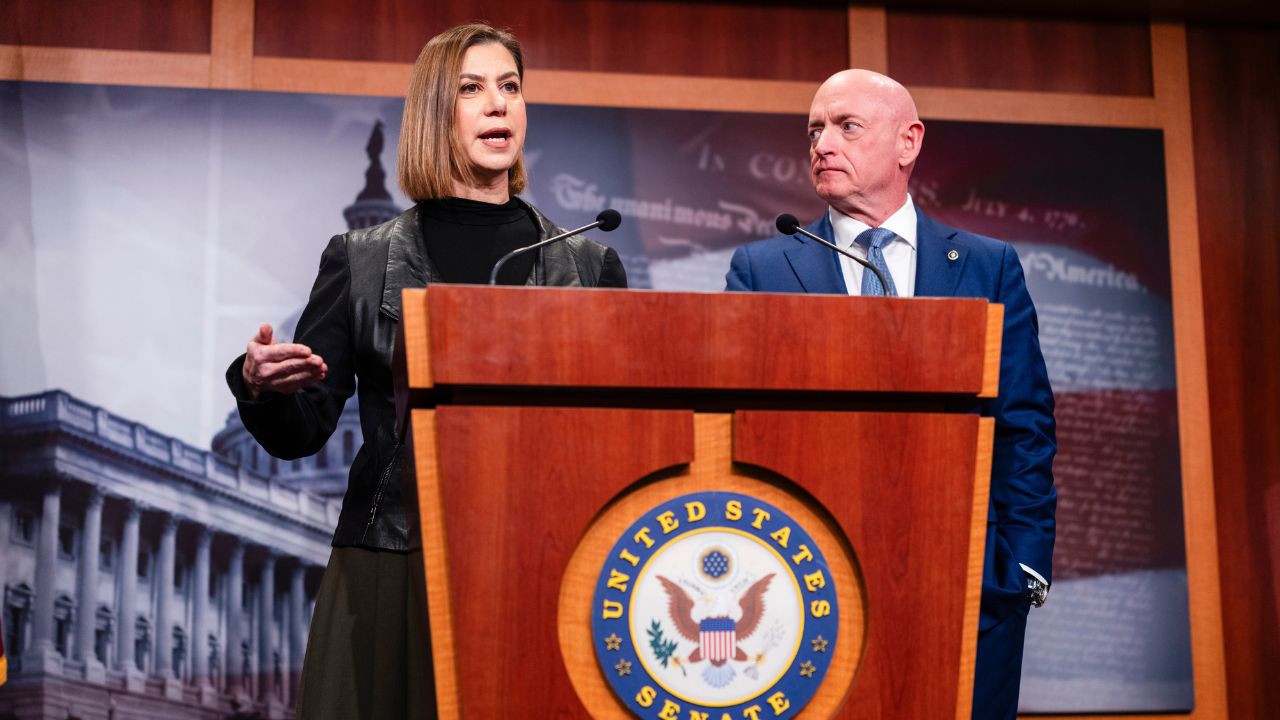
Their efforts failed last week in spectacular fashion as the grand jury roundly rejected the request for an indictment against Sens. Elissa Slotkin of Michigan and Mark Kelly of Arizona and four of their colleagues in the House, a remarkable denunciation of a federal prosecution. The ordinary citizens on the panel sent a signal that the video, while critical of Trump, was not a criminal act warranting prosecution.
A Grand Jury Rebuke
In the days that followed, Pirro backed away from the case, which had ignited a firestorm of criticism not just from congressional Democrats but also from some of Trump’s Republican allies. For now, her office has shelved the inquiry, people with knowledge of her thinking said, although that decision might not stop the Justice Department from seeking to reopen it somewhere else or pressuring her office to try again.
The botched attempt to prosecute the lawmakers for what was essentially an act of political dissent, critics say, was an egregious misuse of the grand jury system even for a Justice Department that has repeatedly trampled over prosecutorial norms in its efforts to satisfy Trump’s pursuit of vengeance against his adversaries.
A Justice Department Under Strain
But it also stood as an example of the chaos that has roiled the department as it has grappled with the president’s increasingly erratic demands, even in the face of little evidence. Time and again, prosecutors have been caught between the president’s insistence that they undertake weak or baseless cases and the necessity of having to go to court to push those cases past the justice system’s institutional guardrails.
On several occasions, prosecutors have quit or been fired in the face of the demands of the president and his political appointees. The prosecutors’ decision to seek the indictment of the six lawmakers suggests they were either willingly following what had been asked of them or trying to keep their jobs while shifting the blame to the grand jury.
A spokesperson for the Justice Department did not respond to an email seeking comment.
The failure to bring an indictment against the lawmakers comes as the Justice Department under Trump has involved itself in a mounting array of questionable cases, testing the president’s ability to mobilize the vast arsenal of federal law enforcement to pursue his political agenda and personal grievances.
The department recently opened investigations into Democratic officials in Minnesota who opposed his immigration crackdown, prompting an effort to fight subpoenas issued in the case that is now unfolding behind closed doors. The FBI also searched an elections office in the Atlanta area last month based on debunked claims that the 2020 presidential election was stolen.
In November, Pirro approved an investigation into another target of Trump’s ire, Jerome Powell, the Fed chair, drawing significant pushback from Republicans in Congress.
But the unsuccessful effort to prosecute Kelly, Slotkin and their colleagues in the House — Reps. Jason Crow of Colorado, Maggie Goodlander of New Hampshire, Chrissy Houlahan of Pennsylvania and Chris Deluzio of Pennsylvania — has rattled some people in Pirro’s office, who have come to the conclusion that it reflects a broader problem with Washington grand jurors, according to three people familiar with the matter.
After several other failures over the summer to secure indictments arising from Trump’s law enforcement surge, these people worry that the U.S. attorney’s office might not be able to successfully prosecute many, if not most, of the cases that Trump has demanded be brought in Washington.
Other administrations might never have opened an investigation into the lawmakers to begin with, given that the 90-second video at the heart of the case seemed to be a textbook example of political speech protected by the Constitution.
The video did little more than remind military and intelligence personnel of their obligations under the law and offer a general warning that “threats to our Constitution aren’t just coming from abroad, but from right here at home.”
“Our laws are clear,” Kelly said in the video. “You can refuse illegal orders.”
But Trump erupted in anger when he saw it, demanding that the six lawmakers be punished for “seditious behavior” and even suggesting that they should be put to death. Days after his outburst, the lawmakers disclosed that the FBI had contacted the House and Senate sergeants-at-arms requesting interviews with them, indicating that a criminal investigation was underway.
Typically, an inquiry of such gravity, one that could potentially result in charges being filed against six sitting members of Congress, would have taken months of painstaking work and received intense scrutiny from every level of the Justice Department, including the solicitor general and the attorney general.
But the case against the Democratic lawmakers did not appear to receive that sort of close examination, according to the people familiar with it. They said that as recently as last month, the prosecutors working on the case had not determined what statutes had been broken and left the impression with defense lawyers that the effort fell short of a formal investigation.
Ultimately, the prosecutors asked the grand jury to approve an indictment on charges that the lawmakers had violated a law that forbids interfering with the loyalty, morale or discipline of the U.S. armed forces. But the grand jurors refused to go along.
—
This article originally appeared in The New York Times.
By Alan Feuer, Glenn Thrush and Michael S. Schmidt/Eric Lee
c.2026 The New York Times Company