
|
Getting your Trinity Audio player ready...
|
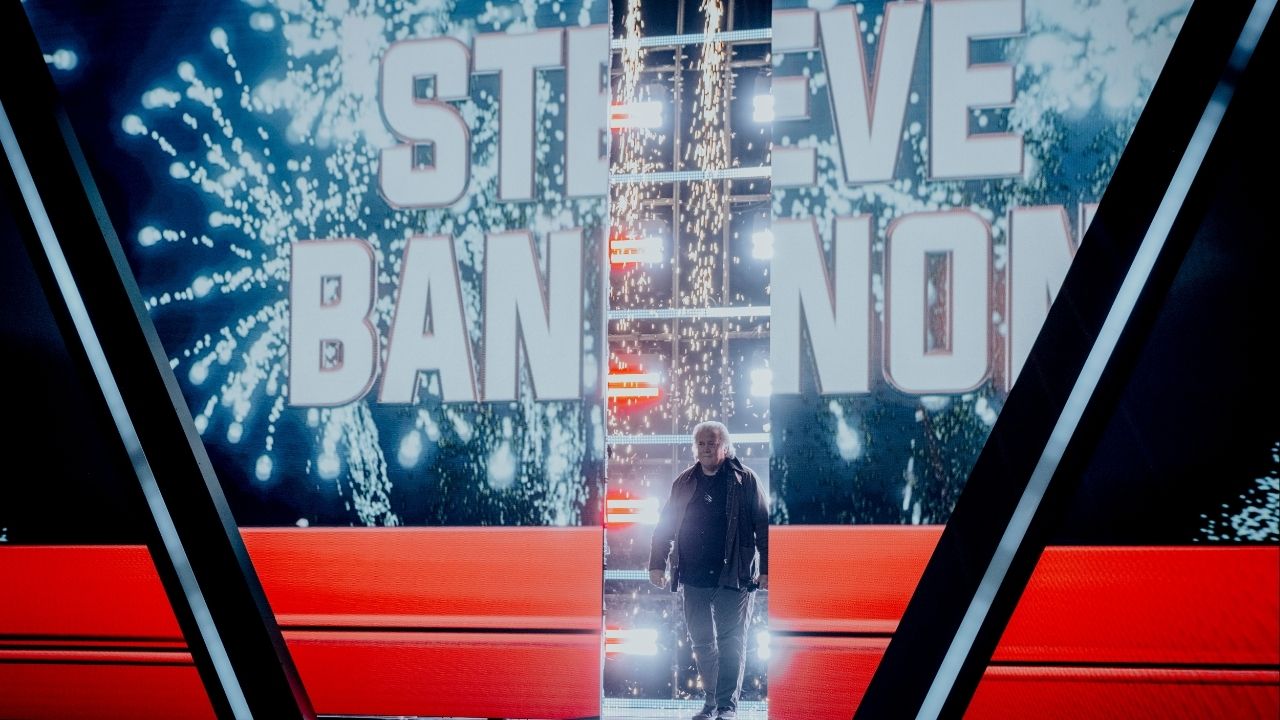
Midafternoon in late June 2019, Steve Bannon sent Jeffrey Epstein an excited series of texts. “Dude!!!!!” he wrote. “Is this real Tell me this is real.”
Epstein had just texted him a headline from The Miami Herald. It reported that victims of Epstein’s sexual abuse had lost a court battle to nullify a decade-old agreement that protected him from prosecution for those crimes.
Off and on for months, Bannon, a leader in the MAGA movement and a former top aide to President Donald Trump, had been advising Epstein on how to handle resurrected allegations that he was a serial pedophile. Bannon recommended which lawyers to hire — his own — when to lie low and when he should jump on an opening to push his narrative. He scheduled what the two men called “media training.”

“First we need to push back on the lies; then crush the pedo/trafficking narrative; then rebuild your image as philanthropist,” Bannon wrote to Epstein in April 2019. That was five months after a Miami Herald series exposed how prosecutors had ignored evidence of Epstein’s crimes.
The 3 million pages of Epstein-related documents released by the Justice Department on Jan. 30 reveal for the first time the extent of Bannon’s efforts to advise Epstein when many of his friends were abandoning him. In the six months before Epstein was arrested and charged with the sex trafficking of minors in July 2019, Bannon’s name appears nearly every day in the files, often because the two men exchanged texts.
In a statement to The New York Times, Bannon said his relationship with Epstein was strictly professional.
“I am a filmmaker and TV host with decades of experience interviewing controversial figures,” he said. “That’s the only lens through which these private communications should be viewed — a documentary filmmaker working, over a period of time, to secure 50 hours of interviews from a reclusive subject.”
He said the film would fully expose Epstein and “destroy the very myths he created.” A spokesperson said Bannon planned to release the film, now six years in the making, later this year.
Bannon is one of the biggest political names to be caught up in the latest chapter of the Epstein scandal. Bannon is a headline speaker at major Republican political events and hosts one of the nation’s top political podcasts. Like many other prominent members of the MAGA movement, he had called for the release of the files pertaining to Epstein.
A torrent of text and email exchanges show that after Bannon and Epstein met in late 2017, Bannon promised to help Epstein rehabilitate his reputation. As Epstein’s legal troubles mounted in 2019, Bannon helped strategize a defense, the documents indicate.
He told Epstein several months before his arrest: “we must counter ‘rapist who traffics in female children to be raped by worlds most powerful, richest men’ — that can’t be redeemed.”
A spokesperson for Bannon said his client sought only to ingratiate himself with Epstein for the documentary. But written communications during the year and a half before Epstein’s death in custody in August 2019 suggest that far from wary, Epstein was eager to cater to Bannon’s wishes and needs.
He shipped Bannon and his son Apple watches. He offered Bannon his private jet to fly around Europe, joking: “How does it feel to have the most highly paid travel agent in history?”
He proposed that Bannon get a full medical workup in Epstein’s “private area” at a high-end concierge emergency clinic, telling him that “your medical expenses from a to z have been covered by me.” Bannon’s spokesperson said he never saw Epstein’s doctor nor did he fly on his private jet.
As Bannon promoted himself as a strategist to populist and nationalist political parties abroad, Epstein tried to help him build connections.
“Whatever you need, I’m in,” he wrote to Bannon in mid-2018.
A host of prominent figures in the United States and abroad have been tarnished and toppled by the documentation of their contacts with Epstein in the newly released files. Most recently, Kathryn Ruemmler, a former top Obama administration lawyer, resigned from Goldman Sachs after emails revealed a lengthy friendship with Epstein.
Bannon, 72, has faced a string of legal troubles in recent years. The court cases partly explain why the documentary has yet to be released, his spokesperson said.
He served four months in prison in 2024 for contempt of Congress after refusing to testify before the committee investigating the Jan. 6, 2021, attack on the Capitol. Trump’s Justice Department is now seeking to wipe out that conviction.
An effort to fund Trump’s wall on the border with Mexico led to charges that Bannon had pocketed hundreds of thousands of dollars in funds from contributors. A state court sentenced him to three years’ probation on a fraud charge in February 2025, but Bannon escaped a trial on related federal charges when Trump pardoned him just before leaving office in January 2021.
Bannon has continued to be a featured speaker at the influential Conservative Political Action Conference and at Turning Point USA, the conservative organization founded by Charlie Kirk. At a Turning Point event in July, he shouted to a crowd, “It’s deeper than Epstein!”
Epstein first tried to meet with Bannon in November 2016, after Trump won the presidency, the documents suggest. But Bannon, a top campaign strategist for Trump and later a senior White House official, agreed only after the president had fired him in August 2017.
The two men quickly seemed to bond over finance, science, politics and the ongoing drama in the Trump White House. “We have become friends,” Epstein wrote to an associate about Bannon in February 2018.
Bannon met Ehud Barak, the former Israeli prime minister, through Epstein. When Barak formed a new political party in Israel in June 2019, Bannon wrote to Epstein: “Can we announce I’m his strategic adviser?”
A spokesperson for Barak said he had never hired Bannon. On Saturday, Barak apologized for his friendship with Epstein.
Epstein’s itineraries show more than a dozen breakfasts, lunches and dinners with Bannon at Epstein’s seven-story New York City townhouse.
The texts reveal a level of seeming chumminess, with the two men exchanging political gossip and jokes about each other. Epstein repeatedly urged Bannon to care for himself, texting: “lucifer with a stroke. Bent horns and all Doesn’t look so good.”
Bannon’s spokesperson said that in addition to not taking up Epstein’s offers to hitch a ride on his plane, he never stayed overnight at any of Epstein’s residences.
Yet, some documents suggest that Bannon was willing to entertain such perks.
At the end of March 2019, Epstein was staying at his luxurious apartment near the Arc de Triomphe in Paris. He had told his pilot that Bannon would be flying back to New York with him April 2.
Bannon texted him March 29 from Rome: “Is it possible to get your plane here to collect me?” Epstein replied that the plane was unavailable but offered to pay for a charter flight.
Two days later, Bannon wrote that he was flying to Paris that evening and asked, “I’m staying with you tonight??”
“Yes stay,” Epstein replied. “Enroute,” Bannon texted a few hours later. The next morning, Epstein wrote to an associate: “Steve Bannon is here with me.”
Bannon’s spokesperson said Bannon decided to stay in a hotel that he had already booked but said Bannon declined to provide a receipt to the Times.
Bannon’s spokesperson said he conducted about 12 hours of interviews with Epstein for the documentary. But for reasons that remain unclear, the newly released files contain only two hours of interviews.
In those segments, shot in Epstein’s grand library in New York, Bannon asked Epstein whether he had reflected upon how he ended up behind bars in 2008. “No,” Epstein replied. “I would just say how strange that this happens.”
Bannon did not ask Epstein directly about his treatment of women, although Epstein acknowledged to him that he had been classified as a sexual predator. His spokesperson said Bannon did not get deeper into that topic in 12 hours of interviews but planned to address it later on.
After news broke in early February 2019 that federal prosecutors were reviewing the handling of Epstein’s 2008 criminal case, the messages between the two men took on a new urgency.
Epstein asked whether he should respond to the reports.
“Have you lost your mind,” Bannon texted, using an expletive. “the moment you say ANYTHING this is global story#1!!!!!”
In the following weeks, Epstein peppered Bannon with questions: Should his lawyers grant the press an anonymous interview? Should he invite a reporter for The New Yorker to his house?
At one point, Epstein forwarded a transcript with an unnamed victim, “Jane Doe 1,” suggesting it supported his defense.
Bannon offered his own suggestions.
“Did u hire the crisis comms guy so we can drive the narrative off that great times piece,” he asked in March 2019. That was an apparent reference to a letter from Epstein’s lawyers, published in the Times the previous day, that contended that allegations against Epstein were greatly exaggerated.
He recommended that Epstein hire William A. Burck and Alex Spiro, who had represented Bannon during the special counsel investigation into Russian interference in the 2016 election. He referred to them as “my boys.”
Bannon notified Epstein of a meeting with Spiro in April 2019, but at the last minute Bannon texted: “Spiro out. Firm killed it just now.”
In a statement, Spiro said: “Several people asked me to represent or at least speak with Mr. Epstein. I categorically refused to do either.” Burck said he had no contact with Epstein.
That same week, Bannon texted Epstein: “Friday afternoon media training @ your place — 2 camera shoot; my crew so totally confidential.” Epstein replied that the three-hour session would be “trial by fire.” Bannon’s spokesperson said it was solely for the documentary.
Later, Epstein wanted a legal agreement, known as a Kovel, apparently designed to extend attorney-client privilege to his communications with Bannon, who is not a lawyer. Bannon wrote back: “we need a deal for the entire ‘training.’”
Bannon’s spokesperson said Bannon never signed the agreement and voluntarily shared his footage with federal prosecutors after Epstein’s death in a jail cell, ruled to be a suicide.
They had planned to meet on the first weekend of July 2019, after Epstein flew home from Paris. But he was apprehended that Saturday when his plane landed at a New Jersey airport.
“All canceled,” he texted. It was his last message to Bannon.
—
This article originally appeared in The New York Times.
By Sharon LaFraniere and Teresa Mondría Terol/Jordan Gale
c. 2026 The New York Times Company