
|
Getting your Trinity Audio player ready...
|
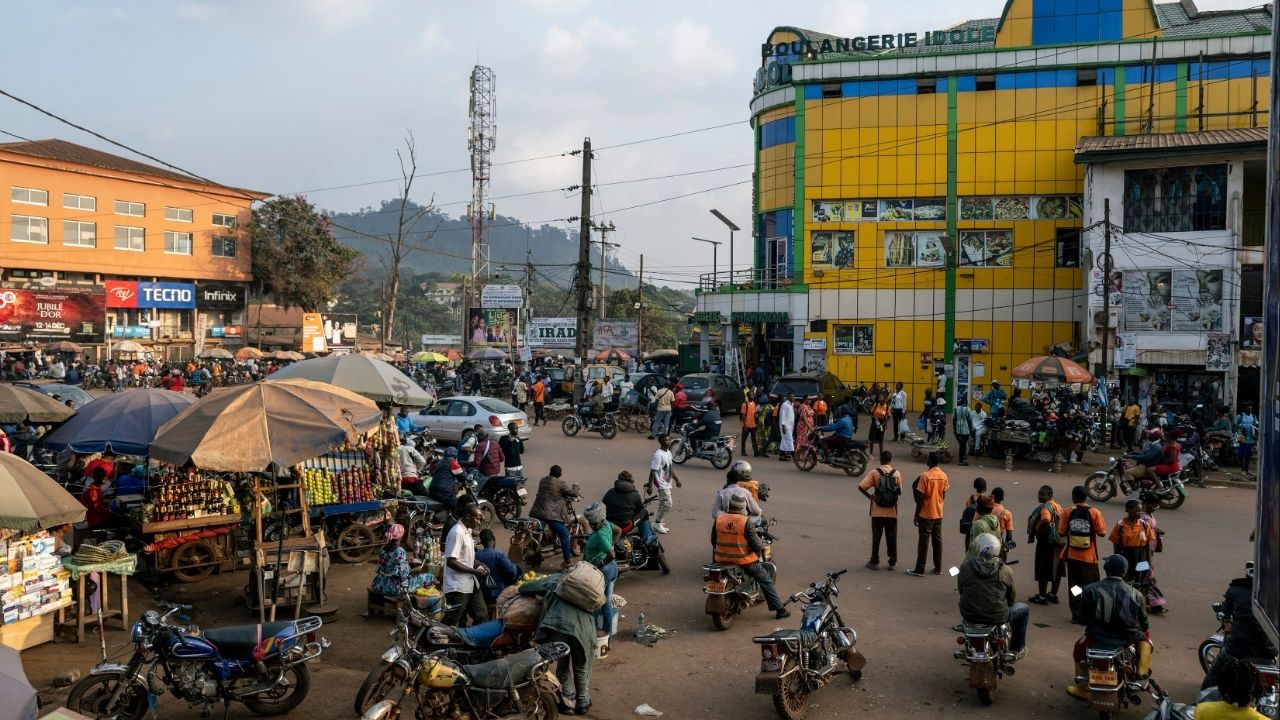
In a secret deportation arrangement, the Trump administration flew nine people, nearly all of whom had been granted U.S. court protections from being sent back to their home countries, to the African nation of Cameroon in January.
None of them are from Cameroon, according to government documents obtained by The New York Times and lawyers for the deportees, and the United States has not made any public deal with Cameroon to accept deportees who hail from other nations.
Several of the men and women deported — whose cases have not been previously reported — told the Times they did not know they were being sent to Cameroon until they were handcuffed and chained on a Department of Homeland Security flight leaving Alexandria, Louisiana, on Jan. 14.

Cameroon’s Ministry of External Affairs declined to comment when reached by phone, and the State Department said it would not comment on its “diplomatic communications with other governments” when asked about the terms of an agreement.
Most of those migrants and their lawyers say they have been detained since then at a state-owned compound in Yaoundé, Cameroon’s capital. They say they’ve been told by local authorities that they cannot leave the facility unless they agree to return to their home countries, from which they fled to escape war or persecution.
As far as is known, the deportations are the first such expulsions to Cameroon. They highlight the extraordinary secrecy that surrounds President Donald Trump’s global deportation effort. Through murky deals forged with willing governments — often in exchange for cash — the U.S. has deported hundreds of people to foreign countries that may not respect the removal protections they have been granted in U.S. courts, returning them to the dangers they fled.
The Times pieced together an account of the secret deportations to Cameroon through phone interviews with four people on the flight and their lawyers, and verified their deportations and protection statuses through government documents that showed most had removal protections. The migrants spoke on condition of anonymity, for fear of reprisals.
A 37-year-old man originally from Zimbabwe compared the deportation to a smuggling operation and said he and the other migrants were “dropped like UPS packages” in Cameroon. The man, who had been living in the United States for 15 years, said officials in Cameroon were pushing them to return to their home countries. He said he had left Zimbabwe after being arrested for refusing to join the military and feared for his life if he returned there.
The deportees described feeling traumatized and exhausted by the limbo they have found themselves tossed into. They recounted being forcibly transported by Department of Homeland Security officials from various immigration detention centers across the country — where some had been for over a year — to Alexandria, one of the Trump administration’s busiest deportations hubs, with no information about where they were being taken.
Joseph Awah Fru, a Cameroonian lawyer supporting the migrants in negotiations with the local authorities, said two of the nine who arrived in Cameroon on the flight chose to return to their home countries. Eight of the nine people on the flight, Fru added, had the removal protections afforded people who can convince a court that they are likely to face persecution if they are returned to their home countries.
Their lawyers said none of the deportees had any history of violent crime.
It was unclear if Cameroon received anything in exchange for accepting the deportees, but by some estimates, the U.S. government has paid upward of $40 million in third-country deportation deals, according to an investigation by the Senate Commitee on Foreign Relations that was released Friday.
The Trump administration has increasingly relied on deporting migrants to countries other than their own. It is a way to not only deter people from coming to the United States but also to quickly remove people whom it might be challenging to send to their home countries for various reasons, including a lack of diplomatic relations or difficulty getting travel documents.
Critics said it amounted to a circumvention of U.S. court orders. “Sending people to a third country where they are coerced into deportation to the country that we cannot deport them to is flatly illegal,” said Scott Shuchart, a former Immigration and Customs Enforcement official who worked in the Biden administration.
—
This article originally appeared in The New York Times.
By Pranav Baskar and Hamed Aleaziz/Arlette Bashizi
c. 2026 The New York Times Company