

|
Getting your Trinity Audio player ready...
|
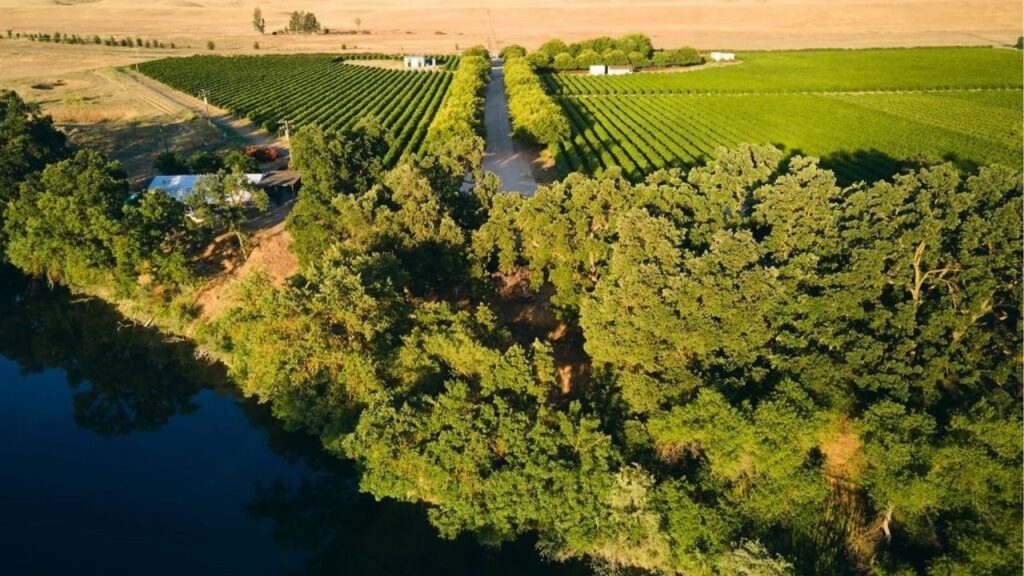
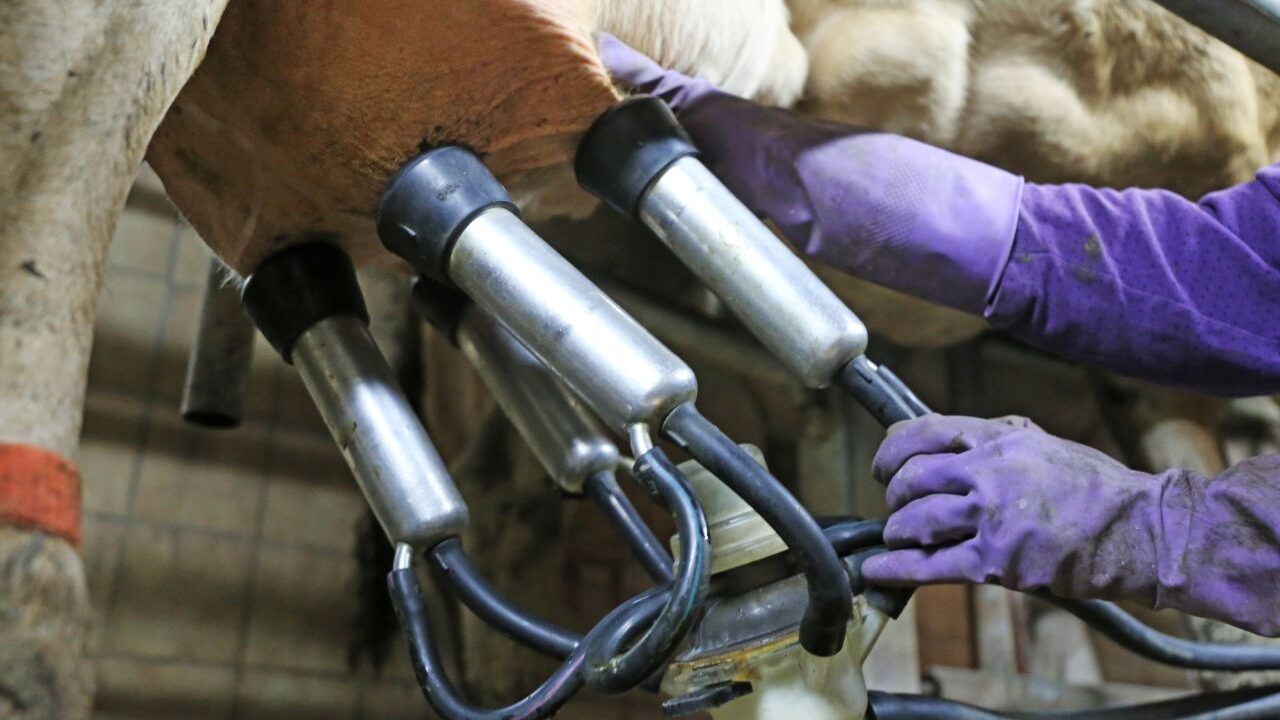
Most American dairy cows are milked by immigrants. On Dale Hemminger’s farm in upstate New York, the cows are milked by robots. When a cow wants to be milked, it walks up to a machine that cleans its udder, attaches cups to its teats, draws the milk and dispenses a treat.

In a barn that Hemminger plans to open this year, other robots will roam the floor like little automated pooper scoopers, picking up manure.
President Donald Trump should pay a visit. He might learn something about the limits of his plan to improve the fortunes of U.S. workers by forcing immigrants to leave the country.

There is a big hole in the seductively simple argument that Trump’s policy will push employers to hire Americans: For many jobs, the cheaper and more likely replacement is a robot. And the jobs that can’t be done by robots? Many will simply leave the country.
Farmers, in particular, are not facing a choice between employing immigrants and hiring Americans. Many of the jobs performed by immigrants are best understood as a kind of mirage. They exist only because immigrants are available to perform them. The most important reason, of course, is that recent immigrants often work for much lower wages than Americans. They also are more willing to do the dirty, dangerous and demanding jobs most Americans won’t even consider.
“I’m trying to put this gently because I don’t want to alienate my nonrobot customers, but it’s not the most desirable job,” said Whitney Davis, the automation specialist at Finger Lakes Dairy Services in upstate New York. “Hot in the summer, cold in the winter, cow manure — and on top of that, it’s really an assembly line job. People don’t know you can make more money milking cows than at McDonald’s, and even if they did, they still wouldn’t do it.”
Immigration Crackdown Will Accelerate Use of Robots
Employers have been replacing workers with machines at least since the invention of the plow about 6,000 years ago. In the United States in recent decades, the ready availability of low-cost immigrant labor slowed that march of progress. Milking robots are widely used on European dairy farms, but they are still a novelty in the United States.
The immigration crackdown is changing that calculus. More than 750,000 immigrants left the U.S. labor force during the first half of 2025, according to the Pew Research Center, creating a growing challenge for industries that rely heavily on those workers. Dairy farming is near the top of that list: Immigrants make up more than half of that sector’s labor force.
Hemminger was an early adopter, installing his first milking machines in 2007 after authorities arrested one of his workers. “I just decided I wasn’t going to risk having both my vegetables and the dairy both be dependent on a labor force whose paperwork could be challenged,” he said. “That was the main driver.”
Before he began using the robots, Hemminger’s farm produced about 800,000 pounds of milk per hour of human labor. Today the farm produces 2.5 million pounds of milk per hour of human labor. He employs half as many people as he would otherwise need — a dozen workers to manage his herd of more than 2,000 dairy cows.
AI Expands Ag Work Done by Robots
Artificial intelligence is expanding the range of work that can be performed by robots. Companies are rolling out machines like the LaserWeeder G2, which looks like a row of white metal filing cabinets mounted on a tractor but is basically a real-life Terminator: cameras for eyes, two Nvidia microchips for a brain and a pair of laser guns to zap weeds. It can weed as much cropland in a day as roughly 75 workers. And it doesn’t need rest.
Other industries that historically have relied on low-cost immigrant labor are racing to automate. White Castle is installing robots to staff the fry stations at its fast food restaurants, replacing one worker on each shift. Amazon, the nation’s second-largest private employer, estimates that automation will obviate more than half a million of the company’s workers by 2033.
Automating agriculture would be a worthy goal for any administration to pursue. It has long been one of the great engines of human progress. The American Farm Bureau Federation calculates that in 1940, the labor of one farmer provided the food for about 20 people. Today the labor of one farmer, amplified by a wide range of technology, provides food for more than 160 people. That has freed a lot of people to do a lot of other things with their lives.
Hemminger’s remaining employees earn more than typical farmworkers, their work is less taxing, and their hours are more reasonable. No one needs to be in the barn at 5 on a bitterly cold morning in the middle of February.
There Are Farm Jobs Robots Can’t Do
Trump, however, is trying to chase the existing farm labor force out of the United States much faster than automated alternatives can conceivably be introduced.
Automation requires big upfront investments; machines take time to make.
And there are still plenty of things that robots cannot do. Five calves are born on Hemminger’s farm on the average day, and a worker must be on call to help.
Hemminger also grows cabbage on his farm, a crop that is planted, tended and harvested by migrant workers who enter the country on seasonal visas. There are no robots to do that work, and he is convinced there are few, if any, Americans willing to take over.
In 2024 the average hourly farm wage was $18.12, about 60% of the average hourly wage for nonfarm work, according to the Department of Agriculture. Even if the jobs paid $30 an hour, would Americans return to the farm?
It seems unlikely. In 2011, of the roughly 500,000 unemployed North Carolina residents required to apply for work to get state benefits, only 268 applied for farm jobs, according to an analysis by economist Michael Clemens. Farms hired almost all of those applicants, but only two-thirds showed up on the first day, and only seven worked through the harvest.
The bottom line is simple, Hemminger said: If American farms cannot import labor from other countries, Americans will have to import the fruit of that labor instead.
Notwithstanding the president’s bluster, the Trump administration has been quietly trying to accommodate the reality that American farms need immigrant labor, at least for the foreseeable future.
‘None of the Americans I Know Want to Do Some of These Jobs’
“I would love for Americans to want to do those jobs,” Gov. Spencer Cox of Utah told the labor secretary, Lori Chavez-DeRemer, at a meeting of the Western Governors Association in June. “I can just tell you: None of the Americans I know want to do some of these jobs.”
That brought a sharp rebuttal from the secretary of agriculture, Brooke Rollins, who declared two weeks later that the administration remained committed to a “100% American” farm labor force. But her bravado did not last long. By September, she was reassuring farmers that the administration was doing “everything we can right now” to increase the number of seasonal visas for farmworkers.
In November the administration announced changes that are expected to allow more than half a million seasonal workers to enter the country each year — an increase of more than 25%. In a regulatory filing, the Department of Agriculture said the expansion was necessary because “qualified and eligible U.S. workers will not make themselves available in sufficient numbers.”
The chaos, the false hope, the frantic efforts to fix problems you’re in the process of creating — it’s all so painful and so pointless.
Another administration could have promised that shifting away from immigrant labor would deliver real benefits without misleading Americans about the nature of those benefits. It could have sought to help family farms — for example, by providing low-cost financing for automation. It could have dealt openly and fairly with immigrants who will continue to milk many of the nation’s cows for years to come.
Hemminger’s farm is a vision of a better future.
Trump doesn’t know how to get us there.
This article originally appeared in The New York Times.
c.2026 The New York Times Company