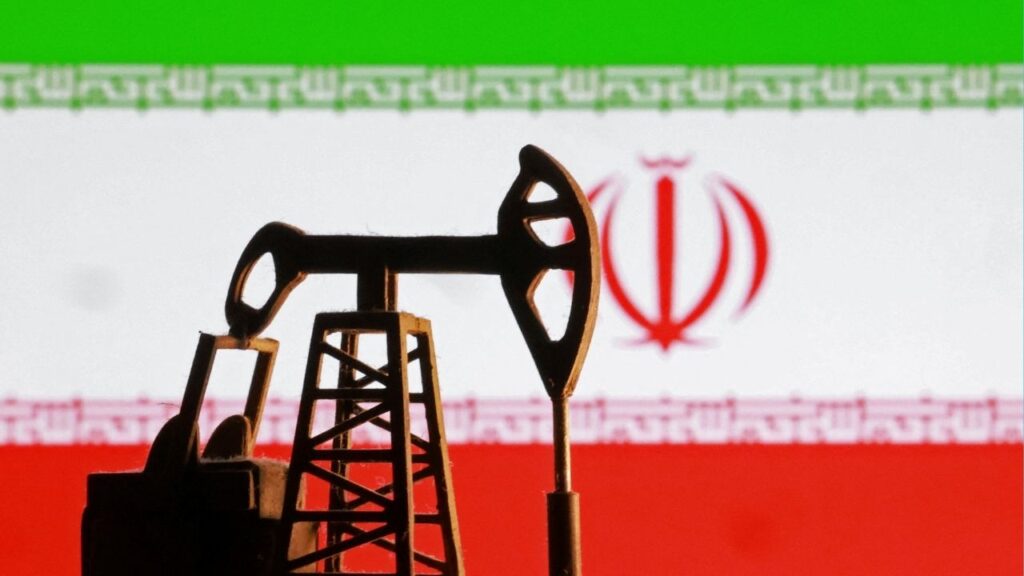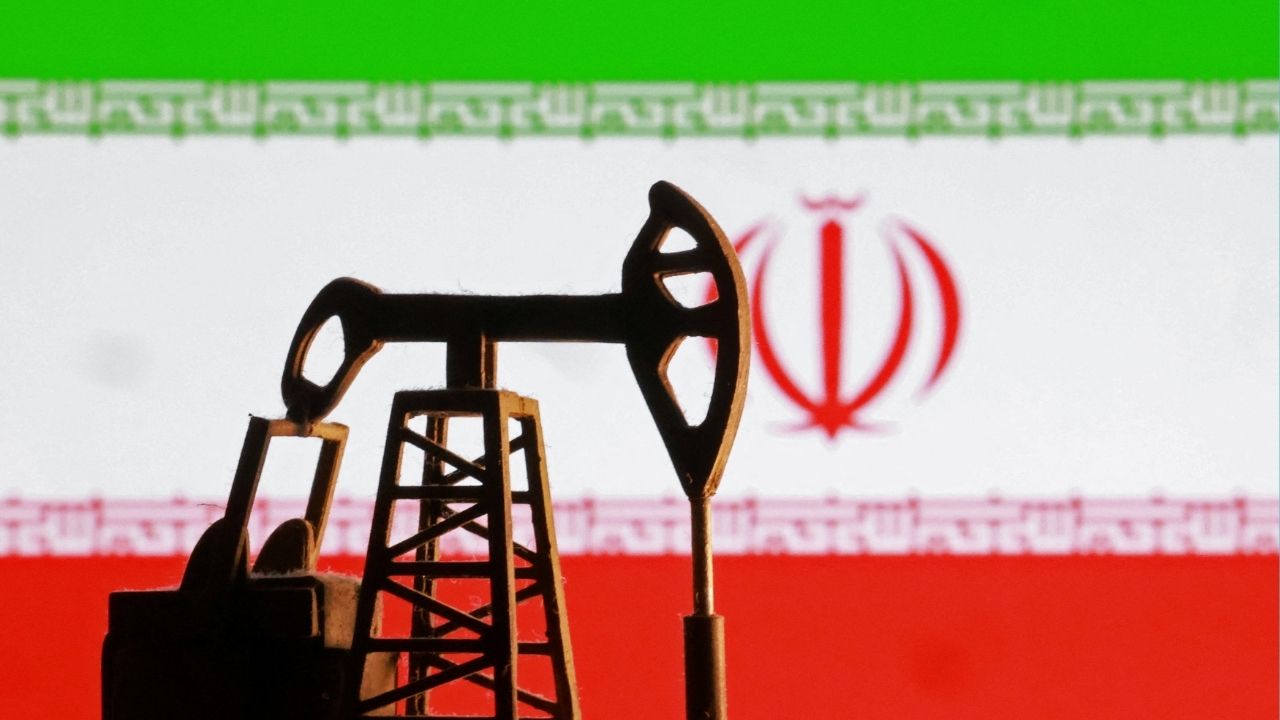
A model of an oil pump is seen in front of an Iranian flag in this illustration taken January 9, 2026. (Reuters/Dado Ruvic/Illustration)

Share
|
Getting your Trinity Audio player ready...
|
Oil prices rose about $1 per barrel on Monday after the U.S. Department of Transportation issued an advisory to U.S.-flagged vessels to stay as far as possible from Iranian territory while passing through the Strait of Hormuz and Gulf of Oman.
Brent crude oil futures were up $1.08, or 1.6%, at $69.13 a barrel by 1:31 p.m. EST (1831 GMT). U.S. West Texas Intermediate crude rose 95 cents, or 1.5%, to $64.50.
The U.S. DOT’s Maritime Administration agency on Monday noted that vessels going through the Strait of Hormuz and Gulf of Oman have historically faced the risk of being boarded by Iranian forces, including as recently as February 3.
The agency advised U.S.-flagged ships to stay close to Oman while eastbound in the Strait of Hormuz.
The move renewed concerns that tensions between the U.S. and Iran could lead to oil supply disruptions. About a fifth of the oil consumed globally passes through the Strait of Hormuz between Oman and Iran.
“This week’s crude trade, and possibly the rest of this month, will have little to do with oil fundamentals but much to do with injection and rejection of risk premium related to Iran,” said oil trading adviser Ritterbusch and Associates.
Oil prices had dropped earlier, extending last week’s losses, after the U.S. and Iran pledged to continue indirect talks after what both sides described as positive discussions.
Still, Iran’s foreign minister said on Saturday the country will strike U.S. bases in the Middle East if attacked by U.S. forces, which have built up their naval presence in the region.
“Extremely difficult to judge how it is evolving,” UBS oil analyst Giovanni Staunovo said, adding: “Watching day by day, now looking for a date to be set for round two of the talks”.
Investors are also monitoring Western efforts to curb Russia’s income from oil exports that support its war in Ukraine. The European Commission has proposed a sweeping ban on any services that support Russia’s seaborne crude oil exports.
Refiners in India, once the biggest buyer of this crude, are avoiding purchases for delivery in April, sources said. If India fully stopped Russian purchases “this would be a sustained bullish development,” said Sparta oil market analysts.
Meanwhile in Kazakhstan, the giant Chevron-led Tengiz oil field has recovered to around 60% of peak production and aims to reach full output by February 23, sources said.
—
(Reporting by Shariq Khan and Shadia Nasralla; Additional reporting by Florence Tan and Sudarshan Varadhan; Editing by Maju Samuel, David Gregorio and Alexander Smith)
RELATED TOPICS:
Categories

Billionaire Called Epstein a ‘Blessing’ as They Made Deals